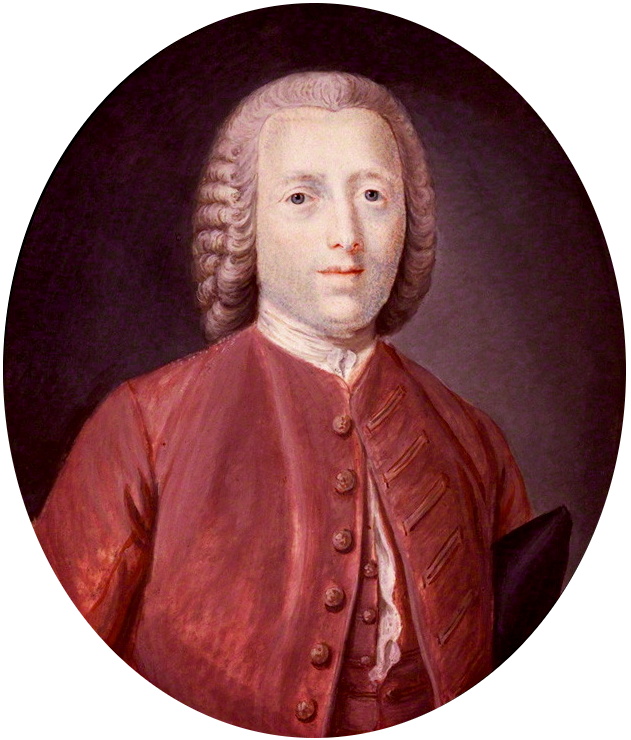
John Needham was born on sept. 10, 1713 in London. In his life he made important contributions to botany, supported spontaneous generation and explained the mechanics of pollen. During his youth Needham became a Franciscan and studied at the English College at Dubai in northern France from 1722-1736.(2) He was ordained in 1738, but spent most of his time as a teacher and tutor. From 1736-1744 Needham taught at multiple colleges.
Spontaneous Generation
During the time at the colleges he made microscopic observations on blighted wheat, and investigations into the organs of squids. These investigations were the subjects of his first works.(2) He returned to England in 1745 because of health reasons.(2) He became a staunch advocate of spontaneous generation (life from inorganic matter) from his previous observations.(1;2) In 1750 he presented his theory of spontaneous generation and showed his experimental evidence. In 1767 he retired to the English seminary at Paris to continue his scientific experiments.(1) He served as the director of the imperial academy at brussels until 1780 a year before his death.(1) He died on Dec. 30 1781 at age 68.(2)
Vitalism
In 1747 he was elected as a member of the Royal Society.(3) A year after in 1748 he was invited to examine fluids from reproductive organs of animals, and from his observations concluded that the globules he saw were organic molecules.(3) Needham thought that new organisms tooks shape from these globules.(3) He “saw” certain species of microorganisms give birth to other microscopic creatures.(3) This theory put Needham in the Vitalist camp on life.(3)
John Needham https://www.britannica.com/biography/John-Needham
John Needham https://www.famousscientists.org/john-needham/
