Showing posts with label priest. Show all posts

Saturday, December 29, 2018

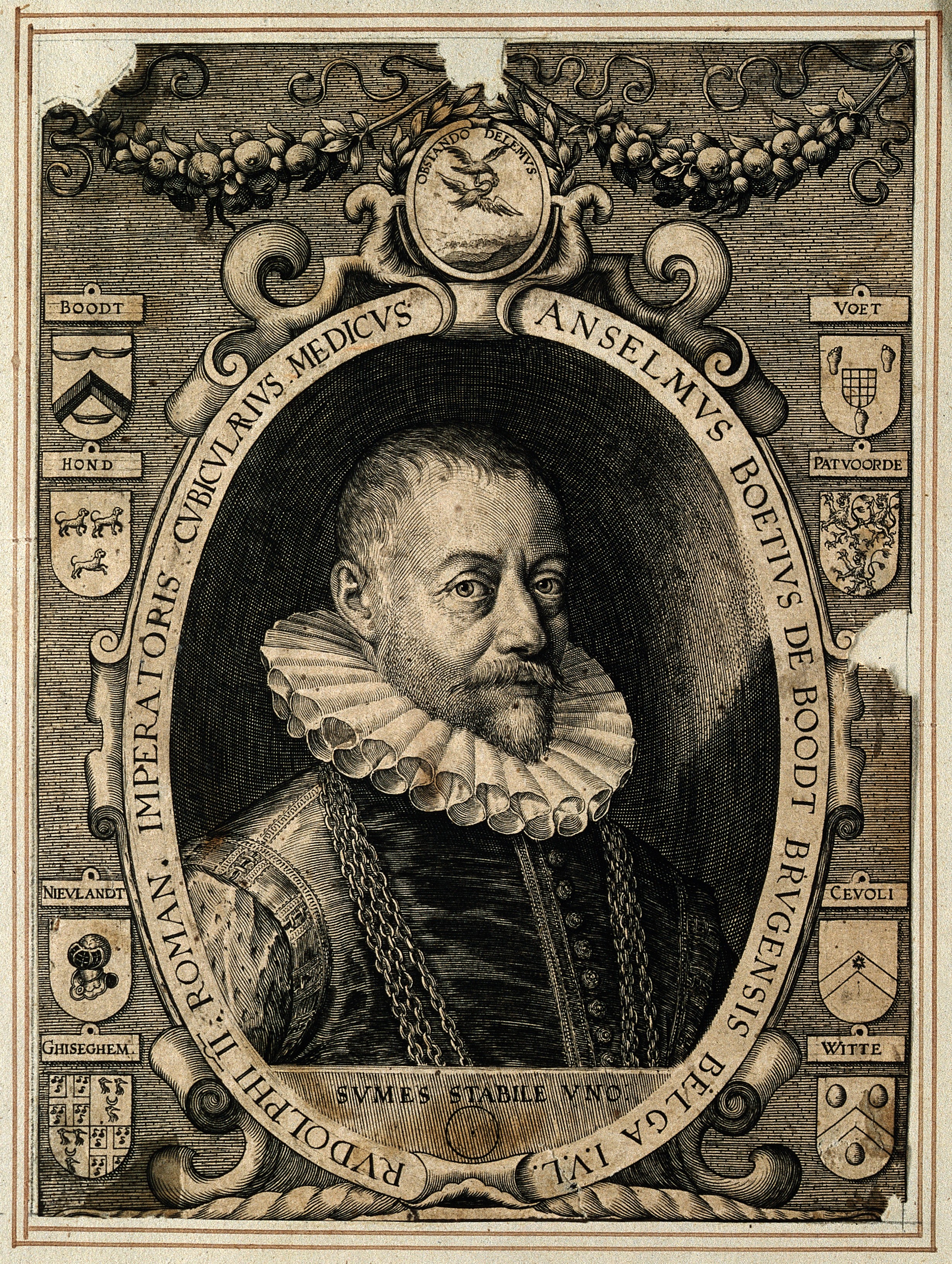
Anselmus De Boodt

Image result for anselmus de boodt

Anselmus De Boodt (1550-1632)

He was a Flemish humanist mineralogist physician and naturalist.(3) de Boodt and Georgius Agricola were fathers of modern mineralogy.(3)

Anselmus de Boodt was born in 1550 from an aristocratic family in Flanders.(3) He studied artes and canonical and civil law.(3) At the end of his studies he went to Padua around 1576.(3) Years later in 1583 De Boodt went to Bohemia where he was appointed personal physician of the holy roman Emperor Rudolf II, and the principal curator of Ridolf’s Kunstkammer in Prague, one of the greatest cabinets of curiosities in Europe.(1) During his stay at Emperor Rudolf II court he studied medicine. In 1584 was appointed canon(a priest) of St. Donat’s Church.

 In 1586 he returned to Padua to continue his medicine study, and obtained a doctorate. The next year he was installed in the imperial botanical garden of Emperor Rudolf II in Prague. One of his De Boodt’s special interests was in minerals, and in 1609 he published one of the first mineralogical treatises of the late Renaissance: Gemmarum et lapidum historia (History of Gems and Stones).(1) At the time of De Boodt fossils were considered to be stones.(1) Many of the illustrations in De Boodt’s books were of fossils. (1)

 He produced the first systematic treatise on minerals, called Gemmarum et lapidum historia. (2) In it, he describes and classifies over 600 minerals based on his own observations and lists over 200 more mentioned by others.(2) He used various categories to classify minerals, dividing them into great and small, rare and common, transparent to opaque, and combustible to incombustible, as well as noting crystalline structure. (2) He also used a three-degree scale of hardness.

De Boodt made many watercolours of native and exotic animals and plants.(3) He filled twelve volumes with 728 illustrations of quadrupeds reptiles birds fish insects and plants.(3) He aimed to depict all creatures of the natural world.(3) He developed a taxonomy and standardisation, which he added in many languages to his drawings. De Boodt made most drawings himself, but sometimes enlisted other artists, such has his compatriot, Elias verhulst.


Works Referenced
(1)https://www.lindahall.org/anselmus-de-boodt/
(2)https://www.encyclopedia.com/science/encyclopedias-almanacs-transcripts-and-maps/anselmus-boetius-de-boodt
(3)https://en.wikipedia.org/wiki/Anselmus_de_Boodt

John Needham


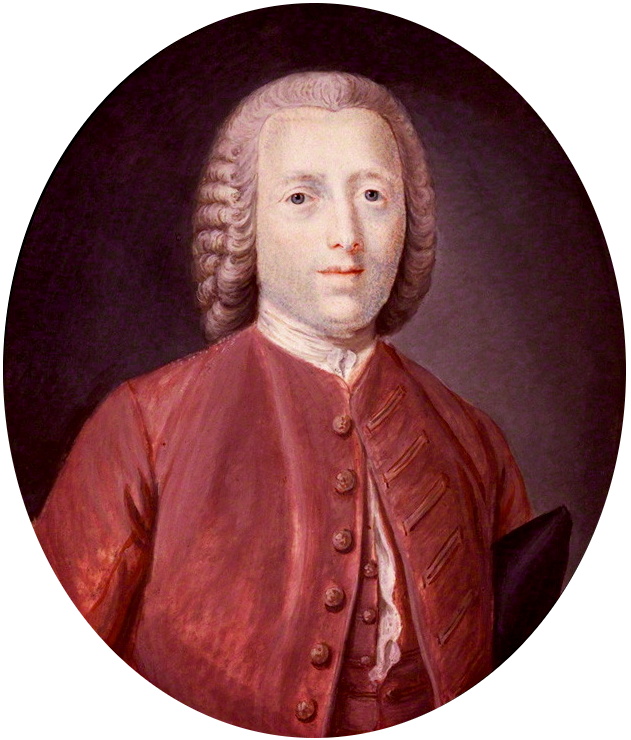
Image result for john needham image


John Needham was born on sept. 10, 1713 in London. In his life he made important contributions to botany, supported spontaneous generation and explained the mechanics of pollen. During his youth Needham became a Franciscan and studied at the English College at Dubai in northern France from 1722-1736.(2) He was ordained in 1738, but spent most of his time as a teacher and tutor. From 1736-1744 Needham taught at multiple colleges.

Spontaneous Generation
During the time at the colleges he made microscopic observations on blighted wheat, and investigations into the organs of squids. These investigations were the subjects of his first works.(2) He returned to England in 1745 because of health reasons.(2) He became a staunch advocate of spontaneous generation (life from inorganic matter) from his previous observations.(1;2) In 1750 he presented his theory of spontaneous generation and showed his experimental evidence. In 1767 he retired to the English seminary at Paris to continue his scientific experiments.(1) He served as the director of the imperial academy at brussels until 1780 a year before his death.(1) He died on Dec. 30 1781 at age 68.(2)

Vitalism
In 1747 he was elected as a member of the Royal Society.(3) A year after in 1748 he was invited to examine fluids from reproductive organs of animals, and from his observations concluded that the globules he saw were organic molecules.(3) Needham thought that new organisms tooks shape from these globules.(3) He “saw” certain species of microorganisms give birth to other microscopic creatures.(3) This theory put Needham in the Vitalist camp on life.(3)


Franz Xaver Von Wulfen

Franz Xaver von Wulfen was born in Belgrade.  After studies in Kaschau, Hungary, he joined the Jesuits in 1745. (1) In 1753, he became a teacher of grammar at Gorizia, then taught at the Theresianum in Vienna the year after. In 1755, he began theological studies in Graz, and in 1763 he was ordained a priest. The year after his ordination he moved to Klagenfurt, which remained his home until his death of pneumonia in 1805. From 1764 to 1768, he taught physics, mathematics, logic, and metaphysics, although not all at once. Then in 1768 he left teaching to become a pastor.

After 1773, he began extensive travel to Holland, Venice and Trieste, the coasts of the Adriatic Sea, and Istria (the last being the largest peninsula in the Adriatic Sea). There, he gathered information about rocks, flowers, and animals. He was a distinguished scholar and botanist and known for his exact descriptions of the areas he traveled through and the things he found there. “His floristic studies, which appeared in print, were characterized by good observation and accurate descriptions.” (2)

In 1775, he wrote the first detailed description of the mineral lead molybdenum, complete with colored illustrations of the crystal. In 1845, the mineralogist Wilhelm Karl von Haidinger named the lead molybdate mineral wulfenite after Fr. Wulfen. (3)

Wulfen was a dedicated botanist and distinguished scholar. (3)
Many plants bear the species/subspecies name “wulfenii” in his honor. (3)
Link
https://www.manresa-sj.org/stamps/3_Wulfen.htm
https://austria-forum.org/af/Biographien/Wulfen%2C_Franz_Xaver%2C_Freiherr_von
https://en.m.wikipedia.org/wiki/Franz_Xaver_von_Wulfen

Giuseppe Mercalli


Image result for Giuseppe Mercalli image
Italy 1850-1814 Giuseppe Mercalli was an Italian volcanologist, seismologist, and Roman Catholic Priest.(1) He is best known for developing an earthquake intensity scale. (1) Born and educated in Milan, he became a professor at a local seminary after graduating college. (1) Mercalli was soon removed from the seminary, but the Italian government quickly found him new positions in schools across the country.(1)


 In 1892, he had relocated to Naples, where he would spend the rest of his life by the volcano he studied most closely, Vesuvius.(1) He died a mysterious death in 1914, burning in a fire in his apartment. At first, it was deemed an accident, but within days speculation arose that he was murdered. (1)


His most famous achievement to solid earth science is his work on the earthquake intensity scale. While studying seismic activity in Italy in the late 19th century, his access to seismic instruments was limited. (1) Some seismographs and seismoscopes (devices that signal an earthquake has occured, and sometimes indicate direction) were available, but most of his information came from personal observation of damage and listening to accounts. (1) To provide some consistency to his earthquake analyses, he decided he need a method to rate the relative effects of each event.


 (1)  At first, his scale had six degrees, but he soon realized he needed more precision. (1) ARound the same time, another intensity scale, the deRossi-Forel scale was gaining in prominence. (1) It had ten degrees of intensity, but lacked detail in the description of each degree. In 1902 Mercalli modified this scale to include the detail he desired, and his new scale quickly caught on among Europe’s scientists. (1 )It was tweaked by other seismologists to twelve degrees and also had more refined descriptions. (1) This edited version was called the Modified Mercalli intensity Scale. (1)


The Mercalli intensity scale is from 1 to 12. This link will provide more information and a comparison between the Richter and Modified Mercalli scales: http://www.geo.mtu.edu/UPSeis/Mercalli.html


Works Referenced


Further Reading


Part 2 Earthquakes Intensity: Modified Mercalli Scale http://www.appstate.edu/~abbottrn/mercalli/intnsty.htm 

Niccolo Cabeo

Image result for niccolo cabeo image

Niccolo Cabeo (1561-1636)

Cabeo, a Catholic priest who joined the Jesuits in 1602, is known for his two major publications, Philosophia magnetica (Magnetic philosophy)and In quatuor libros meteorologicorum Aristotelis commentaria (Commentary in four books on Aristotle’s Meteorology).(1)

His academic career happened mainly in Parma, following typical Jesuit curriculum, and included studying logic, natural philosophy, metaphysics, and theology, as well as mathematics.(1) After finishing his studies in 1616, he taught theology, philosophy, and metaphysics at Parma until 1621, then spending several years living at the Jesuit college in Ferrara, his birthplace, and also taught theology in the late 1620s.(1)

 His first book explained not only his own experimental investigations of terrestrial magnetism but also Gilbert’s, as well as explaining magnetized iron and lodestone, the mineral magnetite. (2) He also contributed to physics experiments, observing the Giovanni Battista Baliani experiments about falling objects.(2)

 He also experimented with pendulums.(2) Niccolo thought that the earth was immobile, and had no magnetic field.(1) In his first book Philosophia magnetica Cabeo stressed that all of his work sought out the causes of natural effects, saying that every discussion and idea he had was based upon experimental work, with the experiments being repeatedly performed.(2) Cabeo also confirmed Galileo’s claims that two bodies, no matter the weight, tend to fall at the same rate, as opposed to the heavier one falling faster, as long as they were of the same material.(2)

 At the end of his life, he returned to teaching at a Jesuit college.(1)

Niccolo Cabeo presented a new style of natural and experimental philosophy, becoming one of the most influential Jesuit natural philosophers of his time.(2)

Sources cited:


Pierre-André Latreille

Image result for Pierre-AndrĂƒ© Latreille image


Pierre-AndrĂ© Latreille “studied theology and was ordained [as a] priest in 1786, after which he retired to Brives and spent his leisure in the study of entomology.” (4) 


"In 1790, the Civil Constitution of the Clergy was declared. This law required clergymen to take an oath that they would guard with care the dioceses confided to them, support the constitution decreed by the National Assembly, and be loyal to the nation, to the law, and … to the king.” (3) For one reason or another, Fr. Latreille did not attend the oath ceremony, and was subsequently arrested. He “endured a long imprisonment, first in Brive then in Bordeaux (from November 1793 to January 1795).” (2) During his imprisonment, he noticed  a rare kind of beetle, and commented on it to the prison doctor. “The ... doctor was so impressed by [the young man's] knowledge that, according to geriwalton.com, “[the doctor] sent the beetle to a 15-year-old local naturalist named Jean Baptiste Bory de Saint-Vincent. Bory de St.-Vincent was already well aware of Latreille’s remarkable work and because of Bory de St.-Vincent’s efforts, Latreille and one of his cellmates were released. This was fortunate because a month later Latreille’s other cellmates were executed.” I think the site is leaving something out, because a 15 year old man is not likely to have much power in local government, on average, but that may be my own modern biases.


“Latreille was also the first person to attempt to classify arthropods (an invertebrate animal like a insect or spider), and he added greatly to the number of known genera and then grouped the genera into families.” (3) His book, published in 1796, “marks the beginning of modern entomology,” and because of this he is known as the Father of Entomology. (1) Three years after he published the book, he became the head of the entomology department at the National Museum of Natural History in Paris. Then, “in 1829 he succeeded Jean Lamarck as professor of zoology in crustaceans, arachnids, and insects at the National Museum of Natural History.” (1)


Links


Saturday, August 11, 2018

Augustino Salumbrino

Malaria has been a scourge on humanity for many thousands of years, spread by parasites in mosquitoes. It rendered large swaths of the Earth essentially uninhabitable, killing millions of people across the world. Malaria was a serious threat for the ancient world, especially with the hegemony of the Roman Empire, possibly even assisting the fall of Rome. Unlike our modern cold and flu season, Malaria was very deadly, causing widespread panic with the major seasonal outbreaks. Large areas surrounding Rome could not be fully settled because of the danger of Malaria.

Even within the cities, a grave threat of Malaria outbreaks arose due to the great quantities of standing water for public baths and agriculture. The authorities eventually realized the dangers of standing water and ordered the creation of an entire sewer system in Rome, called the Cloaca Maxima. The drainage system reduced the magnitude of the threat sufficiently to keep Rome functional. (5) It was an enormous improvement, demonstrated in part by the abandonment of some of the cities that lacked drainage systems due to the threat of the persistent plague. Some researchers theorize that without the Cloaca Maxima, Rome may have become permanently crippled, thereby shifting the course of history. (5)

Meanwhile, in Asia the prevalence of Malaria slowed the development of Southern China, creating a noticable difference between the North and the South regions of China. Even the passage of time failed to fully blunt the threat of Malaria. Malaria dogged the soldiers of the Civil War and the workers at the Panama Canal. (6) Even during the early years of WWII, more American troops were dying because of Malaria than because of enemy action. (4) Malaria also created severe issues in colonising Africa. The Americas, significant portions of Asia, and even Australia were conquered while only about a tenth of Africa had been colonized even into the 1800s. (5) Of course Africa was home to a variety of deadly diseases, which ravaged both native and foreigner alike, but Malaria was certainly a prominent reason Africa could not be easily colonized. (5)

In essence, Malaria was a worldwide threat which forced the creation of the CDC, Centers for Disease Control and Prevention. However, the balance shifted dramatically with the introduction of large scale doses of quinine available. (5) Quinine was a compound created from the bark of the cinchona tree, known also as the quina quina tree or the ‘fever tree’. The bark was dried, turned to powder, and put with water, sweetened in the hopes of hiding the taste, then distributed as medication.(5) The actual compound of quinine wasn’t isolated until 1820. (4) When the British got ahold of this medicine, they tried combining it with gin, thus creating the gin and tonic. (3)

It was quite an effective treatment and once Dutch plantations at Java were created, there was a good supply of quinine. (4) Of course, getting that supply was quite tricky once Spain managed to establish a monopoly on the Andes supply source and it took until 1865 before the Dutch got ahold of enough seeds for their plantations at Java.(5)

But how did this start? In the 1600s, the Jesuits were in Peru trying to convert the natives and while on their theological mission, discovered the effects of the bark of a particular tree. (4) The three most notable Jesuits were Antonio de la Calancha, Agustino Salumbrino, Bernabé de Cobo, though Cardinal Juan de Lugo is another contender. (5, 4) Of the three, Antonio de la Calancha is the most certain to have some bearing on the tale. He was the first European to record the effects of the cinchona bark on fever in general, and Malaria in particular. So far, so simple.

The trick is to determine who precisely brought the Jesuit bark back to Europe.Note that the bark may also be referred to as Countess’s Bark (2) or Cardinal’s Bark (4)  due to conflicting accounts of who sent the quinine bark -- not to mention titles like ‘fever bark’ or ‘Peruvian bark’ that are simply too generic and vague to be useful. (4) The countess allegedly discovered the effects of the bark while dying of malaria and either went herself or sent her husband to Europe with the cure. The largest issue with this claim is the Count’s diary, found in 1930, contradicts it (5, pg 60).

One source claimed that it was quinine was sent to Europe by an unknown monk named Agustino Sulumbrino, but he is unfortunately just that, almost entirely unknown. (2) If Agustino Salumbrino had, in fact, distributed the cure, he may have done so because Pope Urban VIII requested it. Urban had seen the effects of Malaria firsthand while he and the other cardinals had been gathered to elect the next Pope. (2) Assuming Salumbrino was responsible, the cure reached Europe in the 1630s. Another possibility is that Jesuit missionary Bernebé de Cobo was travelling to Peru and personally took samples back to Spain, then Rome in 1632.(5)

Either way, a Jesuit priest attempting to help the native Peruvians was responsible for finding the effect, and another was responsible for getting initial shipments to Europe. Once the cure arrived in Rome, Cardinal Juan de Lugo’s role was quite plain. Getting distribution well underway. He was extremely excited with the new remedy and decided to show it to suffering residents of Rome, in a sort of preliminary clinical trial. Extraordinarily pleased with the fabulous results, he went on to personally distribute the cure to the poor and recommended it be sent throughout Europe through the Catholic missions. The tree bark remedy quickly entered the Roman pharmaceutical handbook, Schedula Romana. (5)

Protestants had rather a different take. They were deeply distrustful of anything Catholic to begin with, and acknowledging the Catholics were a) correct, and b) not trying to harm them,  were extremely difficult hurdles to pass over. (5) Of course, this skepticism was not solely limited to Protestants, but the most vehement skeptics were Protestant, with the frequent belief anything coming from Catholics was a vengeful scheme. In the case of quinine, some were convinced it was some kind of poison. (5) Over time, Jesuit’s bark was gradually accepted, but it took over a century and multiple high-profile cases before the remedy was accepted. (5)


Works Referenced
1) Blass, B. (April 24, 2015) Basic Principles of Drug Discovery and Development
https://books.google.com/books?id=YTvLAwAAQBAJ&pg=PA38&dq
2) Mukhtar, O. The Miraculous Fever Tree: Malaria, Medicine, and the Cure that Changed
the World [Review]  (July 9th, 2003) https://www.ncbi.nlm.nih.gov/pmc/articles/PMC1126547/
3) Eplett, L. (August 20, 2015). Quinine and Empire.
https://blogs.scientificamerican.com/food-matters/quinine-and-empire/
4) National Academies Press (September 9th, 2004). Saving Lives, Buying Time:
Economics of Malaria Drugs in a Age of Resistance. https://www.ncbi.nlm.nih.gov/books/NBK215638/
5) Loomis. J. S. (January 18, 2018)  Epidemics: The Impact of Germs and Their Power
Over Humanity (pages 57-61) https://books.google.com/books?id=sDFEDwAAQBAJ&pg=PA60&lpg
6) Tale of a bark with bite (April 30, 2004) https://www.timeshighereducation.com/books/tale-of-a-bark-with-bite/188411.article


Further Reading
Antonio de La Calancha
https://www.catholic.com/encyclopedia/antonio-de-la-calancha

Economics and Ethics: Juan de Lugo’s Theory of the Just Price, or the Responsibility of Living
in Society. http://www.academia.edu/28956811/Economics_and_Ethics_Juan_de_Lugos_Theory_of_the_Just_Price_or_the_Responsibility_of_Living_in_Society

Full Text of “The cinchona barks : pharmacognostically considered”
https://archive.org/stream/b28131393/b28131393_djvu.txt

Pierre-Joseph Pelletier http://www.newadvent.org/cathen/11609a.htm
Louis Receuver

Jean François, Count of Lapérouse (also a Rear Admiral), commanded the world-spanning voyage at the behest of the reigning French King Louis in in 1785 as a French followup to the voyages of Captain Cook. The general scope of the mission was the Pacific, Asia, and Australia, with a secondary motive being to establish further trading contacts. However, the voyage ended up including such diverse locations as Chile, Russia, and Alaska--in addition to the general stipulations.4

They arrived at Botany Bay in 1788, sending off a report with the British ship Sirius and subsequently disappearing near the island of Vanikoro where shipwrecks were subsequently discovered.

The voyage had two ships, the Astrolabe (spelling varies) and the Boussole.4 The
As the purpose of the trip was scientific, Lapérouse brought a selection of scientists along, 17 to be specific.3 There were two priests along as well, Fathers Louis Receveur and Jean André Mongez.2 Both priests acted as scientists in addition to their religious duties. Receveur was a Franciscan Friar who had surprising experience in a variety of scientific fields despite his youth, twenty one or so at the start of the voyage. Prior to the journey, Receuver had

At the start of the voyage, Receuver was offered  a double paycheck, one for being a chaplain and the second for acting as a natural historian. He acted tireleslessly in his scientific role, observing the geological formations when unable to do anything else, and ascending mountains to expand his knowledge of the area.1 His attitude towards gathering data earned him praise from his commanders and meant he was frequently included on the expeditions to land.

All the scientists took every opportunity to gather information, but eventually the expedition as a whole ran into trouble in 1788, a dozen members killed by natives at the Samoan Island of Tutuila, including a senior scientist.1 2 3  Receuver probably survived this attack, but died within a fortnight after, possibly because of the injuries sustained.2 3


Works Referenced
Pere Louis Receuver http://laperouse.info/recreation/receveur/
Receuver Laperouse & the First Fleet
https://trove.nla.gov.au/newspaper/article/16956884
Receuver Monument https://laperouseheadland.com/receveur-monument/
The Voyage of La Perouse Round the World in the years 1785, 1786, 1787, and 1788,
1798 https://www.rmg.co.uk/discover/behind-the-scenes/blog/voyage-la-perouse-round-world-years-1785-1786-1787-and-1788-1798

Friday, August 10, 2018

Eugenio Barsanti

Italy (1821-1864)
Priest, Physicist, and Mathematician.

Eugenio Barsanti was born in 1821. After he’d gotten old enough to talk, walk, and make decisions about his own education, he joined the convent of Sant’ Agostino in Pretsanta to study at the  convent’s  scientific school. He obtained “higher studies with excellent results in all subjects, … [particularly]... scientific subjects,” (1) and went on to be ordained a priest.  After his novitiate, Fr. Barsanti decided to attend San Giovannino college. At some point, he was even a Professor of physics in the college of S. Giovannino.

He also taught physics and mathematics in Volterra at the college of San Michele. There, Fr. Barsanti developed a way “to use the bursting of air and gas to produce a new driving force.” He did this using “a reproduction of Alessandro Volta’s gun” which he built himself. He then filled it with hydrogen and air, and hermetically sealed it using a cork cap and a brass bar. The electrologopneumatic gun burst the seal, sending it flying toward the ceiling. This was a classroom demonstration.

After some time in Volterra, Fr. Barsanti continued “his experiments in physics at the Ximeniano Observatory in Florence … where he … had the opportunity to meet Felice Matteucci.” Felice Matteucci was also from Lucca, Italy and was working on reclamation of the Bientina lake. Barsanti was a physicist, Matteucci an engineer, and they worked well together.

The two worked together on creating an internal combustion engine. “Research and experiments [began in 1851]... with a cast-iron cylinder with a piston and valves, through which they studied the effects of some explosive mixtures.” (2) Once Barsanti and Matteucci created a prototype, they decided to patent their invention. “They applied for authorship in England, at the time the leading European country in the field of trade and industry.” (2) They also filed patents in 1853 in  France, Germany, and Italy.In 1854, they got their patent from England. They finished building the engine in 1860.  They also set up a company around the invention, an engine which featured a two-cylinder engine, twenty horsepower.  However, while the invention was brilliant in scientific terms and useful in economic ones (the force of a steam engine cost 12 cents, while their invention produced a force at 2 cents)(2), non-Italian countries initially stuck with a later, similar invention created by Etienne Lenoir and patented in 1859. In fact, for several decades no one discussed Barsanti and Matteucci’s invention at all, instead beginning the history of internal combustion engines with Lenoir’s invention.  (3)

Nonetheless, Matteucci and Fr. Barsanti continued their collaboration and created new prototypes of their engine. Then, in 1864, John Cockeril’s mining company in Belgium “decided to use [Father] Barsanti’s engine for a first series production, [as the new prototype was] much more efficient than Lenoir’s engine.” (1)

Fr. Barsanti’s life was filled with study, physical experimentation, and ecclesiastical duty.  He died at age 43, 1864 of typhoid fever, shortly before he was intended to participate “in the start of series construction of his engine” (1)

Works Referenced

Francesco Maurolico

Sicily (1494–1575)


Francesco Maurolico was born in 1494, and twenty-seven years later, in 1521, he was ordained a priest. At this point, Francesco was the eldest surviving son. This meant that when his father died, Maurolico received the inheritance, which allowed him to “concentrate on his scholarly pursuits [...] and [produce] significant contributions in a broad range of different topics, although his best work was done on mathematics.” (1)


However, Maurolico was not wealthy; at times he was only able to publish works thanks to support from patrons, who were often leading men in Messina. (1)


In 1532, he completed a translation and rearrangement of "part of Euclid's Elements,” although it wasn’t published until fifty-three years later, with the posthumous release of "Opuscula Mathematica” in 1575. The book also contained seven of Maurolico’s treatises, including De instrumentis astronomicis “on the theory and use of the principal astronomical instruments.” (1)


In 1535, Maurolico wrote Cosmographia. In this book, he provided "methods for measuring the Earth … which were later used by Jean Picard in measuring the meridian in 1670.” (1)


Maurolico also wrote important books on Greek Mathematics, restored ancient works, and translated many ancient texts. This was no easy task given that the only surviving pieces of the work often covered only a couple chapters of information. Even without the discoveries that he made on his own, this is a clear demonstration of his intelligence and expertise. In one case, “Maurolico completed a restoration of books V and VI of Apollonius's Conics in 1547 working from the scant details that Apollonius gives in the Preface to the work. [The books] were not published until 1654, about 80 years after his death, as Emendatio et restitutio conicorum Apollonii Pergaei. Both Guglielmo Libri and Gino Loria claimed that this achievement alone showed that Maurolico was a genius.” (1) At the very least, it showed that he was good at convincing his readers that he knew what Apollonius was thinking.


In 1550, Maurolico became a Benedictine. (1) At the time, the Benedictine order was “one of ... two main monastic orders which formed the basis of Christian life in Sicily.” His life as a Benedictine didn’t bring an end to his writing. In fact, from 1552 to 1554, the Senate of Messina paid him to write the history of Sicily and on mathematics texts.” (1) The history was “published under the title Sicanicarum reum compendium in 1562.” (1) 


Additionally, in 1558, Maurolico wrote the Theodosii Sphaericorum Elementorum Libri iii, which included 9 separate works by Maurolico himself, translations and commentaries on other works, a table of secants which included a couple original proofs, and a book that he wrote called De Sphaera Sermo.


Then in 1569, Maurolico became a math professor at the Jesuit college in Messina; among the requirements in his contract was the obligation to teach music theory from the angle of mathematics. (1)


Maurolico later became an abbot in Messina.


[Edited for clarity June 30, 2022] 


Works Referenced 

RenĂ© Just HaĂ¼y

France, (1743-1822)
RenĂ© Just HaĂ¼y was a French mineralogist who studied pyroelectricity and piezoelectricity in crystals (1). He is “one of the founders of the study of crystallography” (1), and was a pioneer in the development of pyroelectricity. Pyroelectricity is created by applying temperature change to a crystal, (1a) while piezoelectricity is created by putting crystals under mechanical pressure (1b).

“He derived a ... theory of crystal structure” (1) based on repeated experiments, which he began after accidentally dropping a calcite sample and seeing the fragmentation of the crystal. He “subsequently applied his theory to the classification of minerals.” (1) HaĂ¼y built a coherent structural theory of advances made by other scientists based on the idea that crystals are built up by stacking together a basic structural unit. He found that the external form of a crystal does not determine its composition. He also established the law of symmetry and that “the forms of crystal are perfectly definite and based on fixed laws.” (4)

HaĂ¼y also studied theology, and by 1770 he was ordained a priest. He was nearly executed during the French Revolution for refusing to swear an oath of allegiance to the new regime, and was imprisoned for it at the Seminaire de Saint-Firmin. (3, 4) Even so, Napoleon knew him well enough that he was willing to ask HaĂ¼y to write the book that became TraitĂ© de physique. 

 He published six major works from 1784 to 1817. These included the TraitĂ© de physique, published in 1803 at Napoleon’s request and Tableau compartif, a mineralogical classification published in 1809. It also includes the Essai, published in 1784.

Through his work he has earned the title Father of Modern Crystallography.


Works Referenced
(1) https://www.britannica.com/biography/Rene-Just-Hauy
(1a) https://www.britannica.com/science/pyroelectricity
(1b) https://www.britannica.com/science/piezoelectricity
(2) http://www.oxfordreference.com/view/10.1093/oi/authority.20110803095924649
(3) http://www.scs.illinois.edu/xray_exhibit/books/hauy.php
(4) http://www.newadvent.org/cathen/07152a.htm

Giovanni Battista Venturi

Italy (1746-1822)

Giovanni Battista Venturi is an Italian scientist born in 1746. Venturi was "fascinated by the history of science as [..  well as] by its application," and was "one of the first to call attention to Leonardo Da Vinci's ‘work as a scientist and engineer" (2). He was also the first to note the effects of constricted channels on fluid flow (1).

Giovanni Venturi's primary expertise was in fluid dynamics and hydraulic engineering. He built on “the work performed by David Bernoulli and Leonard Euler”(2). Venturi discovered that when fluid goes into a constricted area of a pipe, the fluid’s velocity increases and its static pressure decreases. If the velocity stayed constant, rather than increasing, then weird things would happen to the matter present in the pipe, breaking the law of the conservation of matter. Meanwhile, if the pressure stayed constant, rather than decreasing, then the kinetic energy produced by the velocity would not follow the law of conservation of energy, again causing physics problems.

By 1769, 23-year-old Giovanni Venturi was ordained and became a professor. In 1774, he was appointed as professor of geometry and philosophy at the University of Modena. (2) In 1778, he was promoted to Professor of experimental physics. During his tenure, he was also the state engineer and state auditor for the Duke of Modena, as well as ducal mathematician. He “served in many diplomatic appointments on France & Switzerland” and met with fellow scientists there. He retired in 1813, “but continued to publish his own works and compile works of other famous scientists until his death in 1822.” (2)

The Venturi effect is something we use to this day. For example, a Venturi nozzle can generate a velocity high enough and a pressure low enough to draw a vacuum.

[Edited June 30 2022 for clarity]


Works Referenced

Andreas Tacquet


Belgium (1612–1660)
Andreas Tacquet went to a Jesuit college for his higher education and joined the Jesuit order in 1629. The same year, he began studying at Malines, Belgium. Then, partway through 1631, he went to Louvain and continued his studies. He studied mathematics under William Boalmans, who had been taught by Gregorius Saint Vincent (1). He also studied logic and physics.

From 1634 to 1639, Tacquet taught at Jesuit colleges, and then from 1640 to 1644, he studied theology at Louvean. This was followed by a year or so of teaching math at Louvean. Then, in November 1646, he took his vows and continued to teach math (1).

He published several works, and was known for "great clarity" in his writing (3). His works included Cylindrieorum et annularium, which has some original theorems on cylinders and rings; Elementara geometriae, a well organized paraphrase of parts of Euclid and Archimedes; and a posthumously published work called Opera mathematica (1). The final book, published in 1669, was described by Henry Oldenburg as ‘one of the best books ever written in Mathematics (2), and "contained works on astronomy, spherical trigonometry, practical geometry, and fortification” (3).

Tacquet helped to pave the way for Calculus. Previously people had thought of lines as being composed of points. He introduced the idea that a moving point could generate a line -- or a curve. This, and other ideas, influenced the thinking of Pascal and his contemporaries, and acted as a foundation for future progress (3).

Tacquet was a “brilliant mathematician of international repute.” His books were frequently reprinted and there were several Italian and English editions (1, 2). The Elementara geometriae was one of several math textbooks that he wrote for students in his math class. (3).

Works Referenced
 
Edited for clarity on August 12th, 2021 

Niccolo Cabeo

Niccolo Cabeo (1561-1636)

Cabeo, a Catholic priest who joined the Jesuits in 1602, is known for his two major publications, Philosophia magnetica (Magnetic philosophy)and In quatuor libros meteorologicorum Aristotelis commentaria (Commentary in four books on Aristotle’s Meteorology).(1)

His academic career happened mainly in Parma, following typical Jesuit curriculum, and included studying logic, natural philosophy, metaphysics, and theology, as well as mathematics.(1) After finishing his studies in 1616, he taught theology, philosophy, and metaphysics at Parma until 1621, then spending several years living at the Jesuit college in Ferrara, his birthplace, and also taught theology in the late 1620s.(1)

 His first book explained not only his own experimental investigations of terrestrial magnetism but also Gilbert’s, as well as explaining magnetized iron and lodestone, the mineral magnetite. (2) He also contributed to physics experiments, observing the Giovanni Battista Baliani experiments about falling objects.(2)

 He also experimented with pendulums.(2) Niccolo thought that the earth was immobile, and had no magnetic field.(1) In his first book Philosophia magnetica Cabeo stressed that all of his work sought out the causes of natural effects, saying that every discussion and idea he had was based upon experimental work, with the experiments being repeatedly performed.(2) Cabeo also confirmed Galileo’s claims that two bodies, no matter the weight, tend to fall at the same rate, as opposed to the heavier one falling faster, as long as they were of the same material.(2)

 At the end of his life, he returned to teaching at a Jesuit college.(1)

Niccolo Cabeo presented a new style of natural and experimental philosophy, becoming one of the most influential Jesuit natural philosophers of his time.(2)

Sources cited:

Cabeo, Niccolo https://www.encyclopedia.com/people/science-and-technology/physics-biographies/niccolo-cabeo

(2) Niccolo Cabeo https://prezi.com/s8qaxwvififh/niccolo-cabeo/

Roberto Landell de Moura

Roberto Landell de Moura (1861-1928)

Born in 1861, he was educated in Jesuit schools and attended Colegio Pio Americano in Brazil and also the Pontifical Unversidade Gregoriana in Italy, to study physics.(2) He was ordained to the priesthood in 1886 in Rome, where he began studying physics and electricity. He then traveled back to Brazil and taught himself, continuing his studies.(4)

 There he conducted his first public experiment, sending a transmission eight kilometers. He then developed a wireless transmitter in 1892. The Brazilian government granted him patent number 3279 for “... equipment for the purpose of phonetic transmissions through space, land and water elements at a distance with or without the use of wires, through space, earth and water.” (2)

He then obtained a few more wireless patents and left for the US with the intent of repeating the process. He obtained three: the Wave Transmitter, the Wireless Telephone, and the Wireless Telegraph, which appeared to be fully functional.(2) Unappreciated, he returned to the priesthood.(2) He died in 1928.

He was a great inventor, but unfortunately, he was called crazy and spiritist while trying to create his wireless inventions, and shut off from testing his devices. Because of this, he now lies in obscurity.

Sources cited:

(1)Roberto Landell de Moura
https://skankinglozer.weebly.com/

(2)Roberto Landell de Moura http://tenwatts.blogspot.com/2014/03/roberto-landell-de-moura.html

(3)Roberto Landell de Moura
https://super.abril.com.br/historia/roberto-landell-de-moura/

(4)Roberto Landell de Moura
http://www.sarmento.eng.br/Padre_Roberto_Landell_de_Moura.htm

Thursday, August 9, 2018

Julian Edmund Tenison-Woods

Julian Edmund Tenison-Woods (1832-1889)

He was born in England, went to Thomas Hunt’s Catholic school. After that, he had a brief period at Newington Grammar School. He worked for The Times and became intrigued about the work of the catholic schools. When he was 18, he tried joining the Passionist novitiate, but his poor health forced him out.

Afterwards, he taught in the south of France at Mont-Bel college for naval cadets at Toulon, where he became interested in natural science and geology. He met Bishop Willson of Hobart Town, Tasmania, whom he accompanied there in 1854. After a disagreement, however, they parted ways and he went to Adelaide, becoming sub-editor of the “Adelaide Times”. In Adelaide, he resumed his studies for the priesthood and was ordained priest in 1857.

He had a large tract of country in the south-eastern district was entrusted to him, and he founded the Sisters of St. Joseph of the Sacred Heart, placing Miss Mary MacKillop in charge of the first school. He then accepted the demanding job of director-general of Catholic schools and secretary and chaplain to Bishop Sheil. He was a missionary in Tasmania and founded the Sisters of Perpetual Adoration in Brisbane. He was an observer of the world around him and made many contributions to Australian geology, going all over Australia observing the varied rocks and natural flora and fauna and also assisted in its zoology and palaentology.(1)

He traveled to many locations in Australia and published many papers, contributed popular scientific articles, and aided government departments by his many reports of geological surveys of natural resources and published a book titled History of the Discovery and Exploration of Australia in two volumes. (1) In 1887, due to his many travels, his health was failing, and he returned from the Northern Territory to Sydney, and he died of paralysis in 1889.

He was a strong leader, a good priest, an advanced educator, and a dedicated scientist. (1)

Sources cited:

(1)Tenison-Woods, Julian Edmund http://adb.anu.edu.au/biography/tenison-woods-julian-edmund-4700

(2)Julian’s Story
https://www.sosj.org.au/our-founder-julian-tenison-woods/julians-story/

(3)Julian Edmund Tenison Woods
https://www.catholic.org/encyclopedia/view.php?id=12442

Tuesday, August 7, 2018

Alessandro Serpieri

Alessandro Serpieri (1823-1885) Known for his work in seismic waves and meteor showers

Alessandro Serpieri was born at S. Giovanni in Marignano, near Rimini.(1) He received his early education from the priest brothers Speranza in Rimini.(1) His classical studies were at College of the Scolopians in Urbino, of which the distinguished Latin scholar, Father Angelo Bonucelli, was the rector.(1) He entered their novitiate at Florence in November of 1838.(1) He studied philosophy and the exact sciences for three years at the Ximenian College.(1) Serpieri was only 20 when he was appointed instructor for the college in Siena, where excelled and became known as a model teacher due to his clear style of exposition, his eloquence, and his manners.(1)

Three years later, in 1846, his superior appointed him professor at the college of Urbino. (1) Two months after that, the Papal government chose him for the chair of physics in the same city.(1) Two years later, he was ordained priest, and in 1857 he became rector of the college. During his time at the college, he applied himself to astronomy, theoretical and experimental physics, meteorology, and specifically seismology.(1)

 In astronomy, his major work was in shooting stars, where he discovered that the August meteors originate near Gamma Persei, and established an observatory at Urbino. His work on the electric potential… was praised for its system, clearness, and conciseness.(1)

He also worked on absolute measures, especially in physics. His chief accomplishments, however, were in the field seismology. His major work was discovering what caused animal “premonitions” before an earthquake and managing to invent a device that detected start location, direction and time of seismic waves cheaply and easily. The device’s design, however, was lost, and we only have general descriptions and images of this device.(2) 

 His career at the college ended, however, when, in 1884, the secularization of education began. While he could have remained at the college, he resigned to show his disgust in such an unjust decree. This shock, combined with his already failing health, caused a near-fatal shock, and he died a year later, in 1885.

Works Cited


(1) The Nineteenth Century http://physlab.uniurb.it/Physics04.html