Showing posts with label teacher. Show all posts

Friday, August 10, 2018

Eugenio Barsanti

Italy (1821-1864)
Priest, Physicist, and Mathematician.

Eugenio Barsanti was born in 1821. After he’d gotten old enough to talk, walk, and make decisions about his own education, he joined the convent of Sant’ Agostino in Pretsanta to study at the  convent’s  scientific school. He obtained “higher studies with excellent results in all subjects, … [particularly]... scientific subjects,” (1) and went on to be ordained a priest.  After his novitiate, Fr. Barsanti decided to attend San Giovannino college. At some point, he was even a Professor of physics in the college of S. Giovannino.

He also taught physics and mathematics in Volterra at the college of San Michele. There, Fr. Barsanti developed a way “to use the bursting of air and gas to produce a new driving force.” He did this using “a reproduction of Alessandro Volta’s gun” which he built himself. He then filled it with hydrogen and air, and hermetically sealed it using a cork cap and a brass bar. The electrologopneumatic gun burst the seal, sending it flying toward the ceiling. This was a classroom demonstration.

After some time in Volterra, Fr. Barsanti continued “his experiments in physics at the Ximeniano Observatory in Florence … where he … had the opportunity to meet Felice Matteucci.” Felice Matteucci was also from Lucca, Italy and was working on reclamation of the Bientina lake. Barsanti was a physicist, Matteucci an engineer, and they worked well together.

The two worked together on creating an internal combustion engine. “Research and experiments [began in 1851]... with a cast-iron cylinder with a piston and valves, through which they studied the effects of some explosive mixtures.” (2) Once Barsanti and Matteucci created a prototype, they decided to patent their invention. “They applied for authorship in England, at the time the leading European country in the field of trade and industry.” (2) They also filed patents in 1853 in  France, Germany, and Italy.In 1854, they got their patent from England. They finished building the engine in 1860.  They also set up a company around the invention, an engine which featured a two-cylinder engine, twenty horsepower.  However, while the invention was brilliant in scientific terms and useful in economic ones (the force of a steam engine cost 12 cents, while their invention produced a force at 2 cents)(2), non-Italian countries initially stuck with a later, similar invention created by Etienne Lenoir and patented in 1859. In fact, for several decades no one discussed Barsanti and Matteucci’s invention at all, instead beginning the history of internal combustion engines with Lenoir’s invention.  (3)

Nonetheless, Matteucci and Fr. Barsanti continued their collaboration and created new prototypes of their engine. Then, in 1864, John Cockeril’s mining company in Belgium “decided to use [Father] Barsanti’s engine for a first series production, [as the new prototype was] much more efficient than Lenoir’s engine.” (1)

Fr. Barsanti’s life was filled with study, physical experimentation, and ecclesiastical duty.  He died at age 43, 1864 of typhoid fever, shortly before he was intended to participate “in the start of series construction of his engine” (1)

Works Referenced

Monday, June 25, 2018

Juan Ignacio Molina

Chile 1740-1829


Juan Ignacio Molina was born in Chile in 1740 and was entered into the Jesuit Order when he was fifteen, though he was not a full Jesuit for the next eighteen years while he completed his training. He learned a variety of subjects, scientific and philosophical, and gained fluency in five languages: Spanish, Greek, Latin, Italian, French. (2) Additionally, Molina was a poet. A particularly notable poem, written in Latin and titled ‘Latin Elegies’ detailed his debilitating experience of smallpox. (2, 8) He was a teacher for a few years, though his talent was too great to solely be a teacher and he was reassigned to studying theology. (4) Throughout his scholastic career he shifted through the various towns of Chile, becoming a professor and librarian in the Jesuit’s Santiago station, capital of Chile. (4)

However, in 1767 all the Jesuits were exiled from Chile by order of the Spanish King, Carlos III (4) The Jesuits were exiled because of how they had hindered the colonizing efforts of various European powers. (7) Therefore, at age twenty-seven Molina and his fellow Jesuits were thrust into Europe. However, their journey was not quite direct. First, the Jesuits had to travel to Peru, then over the Atlantic Ocean. When he was exiled from Chile, he had to go to Peru first, then travel over the Atlantic to reach Europe. (9) Even during his exile to Europe, Molina continued note the wildlife around him, observing flying fish and whales. (9) Their journey did not end in Spain, the home country of the Jesuits, because other exiles had already filled their doors. Instead, Molina and the other Jesuits journeyed to Imola, Italy, a small town near Bologna. (4) 

Upon their arrival in Italy, in 1769, the Jesuits were first settled in Imola, a small town near Bologna. Immediately, Molina’s knowledge served him well as he was able to talk to the Italian governor and discuss natural history, a topic which fascinated the governor. (9) 

Eventually, Molina moved to the nearby city of Bologna and became the chair of Greek at the University of Bologna. Eventually, he became a professor of natural sciences, the work for which he is best known. (2) Molina was the first American member of Italian Institute of Science and Arts (2). He continued to study and teach, slowly making his way to official membership in the order. He finally passed the necessary exams and became a full member of the Jesuit order on August 15th, feast of the Assumption, 1773, at thirty-three years of age. (4) 

Then on August 25th, the Pope published the order to suppress the Jesuits and Molina was forced to leave the order, after mere ten days. (4) Nearly all the European nations had gotten tired of Jesuits resisting their wishes and pressured the Pope. Clement XIV, into suppressing the order outright. All Jesuits had to officially leave the order, though some former Jesuits were highly regarded. (7) Russia was the only exception to the suppression order and became the only country where the Jesuit order remained, preferring to have the Jesuits around to revitalize their educational system. (7)

Molina would remain in Italy for the rest of his life. It was here that he began publishing scientific works, all of which were in Italian. (3) The first was the ‘Compendium of the Geographical, Natural, and Civil History of the Kingdom of Chile’ which explained a variety of aspects of Chile from its geography animal life to historical and anthropological elements. (2, 5, 6) The work is divided among three parts, Geography, Natural History, and Civil History. (6). The geographic discussion included the approximate size of the country, the basic political division and some geological information. (5) Natural History was a catchall term for several pursuits including botany and zoology, but essentially means biology. The Civil History section detailed the history of Chile from a cultural perspective, how Chile came to be. 

Molina was a very thorough writer, trying to communicate information as swiftly and succinctly as possible, and used extensive footnote asides to achieve his aims. By necessity, this work was assembled from suboptimal sources; Molina’s manuscript had been detained at a ship in Peru, where the Jesuits had traveled before journeying to Europe. (2. 9)

In 1774, Molina moved to Bologna and started teaching at a school that taught a significant portion of the poorer students for free. (9) However, between widespread misinformation surrounding America, and his own nostalgia, Molina decided to write a book to explain Chile to Europe. (9) 

Molina’s first attempt was the ‘Compendium of the Geographical, Natural, and Civil History of the Kingdom of Chile,’ a work divided into two parts and published in 1776. (9) The first dealt with the geography of Chile, its mountains, its size, the landscape and so on; the second part explained the culture of Chile’s native and Spanish populations. (9)  The timing was excellent: interest in America had increased significantly because of the American Revolution, and Molina’s work provided insight into a portion of the New World. (9)

It was successful, but the sources were not as comprehensive as Molina wished; the majority of Molina’s meticulous notes had been taken by customs agents when left Chile. After some years, he acquired his notes, and started again. He was so dedicated to providing a superior source that he published this second volume at his own expense in 1784. It was entitled ‘Essay on the Natural History of Chile.’ (9) The ‘Essay on Natural History’ was more detailed than its predecessor, included a newer map, and was divided into four books. Molina aimed to use this book to prove the similarities between the New World and the Old, starting with a direct comparison in the introduction. (9) The ‘Essay on Natural History’ was extremely successful and translated into German, Spanish, French, and English. (2)

Molina’s writing was crucial because of its ability to dispel common myths of the time regarding America. Oftentimes, writers never actually had gone to America and were just making details up out of whole cloth. (9) Molina’s detailed and scientifically accurate work was a revolutionary take on America. Also, America was in a revolution at the time which generated significant interest in the American continent. (9)

Book One covered the geographical, climate, and natural disasters common in Chile, and Molina again made comparison to Italy. (9) One particular piece of misinformation Molina tried to correct was the notion that a 1751 earthquake had destroyed a city and redirected a river. (9) In reality, there were actually no casualties, in part because of a series of shocks before the main disaster. Molina continued this geological discussion, and used his own experience and observations to explain events, an attitude that distinguished him as a scientist. (9)

The Second Book examined the mineral aspect of Chile including rivers, lakes, rocks and soil. (9) As part of this section, Molina looked at the mining industry and agriculture. For one, Molina describes in detail the process of acquiring gold, from mining the ore to processing it at the foundry. (9) Molina also writes about geography in this section, noting the presence of various marine caves in Chile. (9)

Books Three and Four changed the focus from geographic and geological to biological. (9) Here, Molina explored the flora and fauna of Chile and organized them according to Linnaeus’ system. (3) He also wrote wrote about crops, general vegetation in the area, herbs, and the wine of Chile as compared to Italian wine. (9) Book Four was concerned with animals of all kinds whether in the sea, the air, or on the land. Molina also described the culture of Chile once again. (9)

Molina finished the book with two catalogs. The first listed all the new species he had described, even including rocks and minerals, according to Linnaeus’ classification. The second catalog was a glossary of various words particular to natural sciences at the time. (9) Even though it was a nostalgic work, it was very clearly of scientific value. 

Molina continued as a professor of natural history in Bologna, though he contributed a last influential volume during this time. This volume, titled Memories on Natural History, was a collection of fourteen ‘memories,’ lectures Molina delivered from 1805 to 1815. (9)

  1. Study of thermal springs 
  2. Physical and Mineral Study of the Bologna Mountains 
  3. On the Cultivation of Olives 
  4. On Marls 
  5. Coffee 
  6. ‘Less Noticed Analogies of the Three Kingdoms of Nature’
  7. Gardens in Towns (green cities)
  8. Whales in the South
  9. Growing Trees
  10. On Coal
  11. Peru’s Mountain of Silver
  12. ‘On the Propagation of the Human Race in Different Parts of the World’
  13. Cocoa, Vanilla, and Canela
  14. Sugar

The sixth was the most controversial, though the twelfth is also particularly noteworthy. (9) Overall, his lectures demonstrate an extensive grasp of scientific knowledge, but can mainly by split into two categories: geology and biology. (9) Lectures 1, 2, 10, and 11 deal with geology and mineralogy while lectures 3, 4, 5, 6, 7, 8, 9, 10, 12, 13, and 14 deal principally with biology and agriculture.

Agriculture and environmentalism were a significant topic among these lectures; four of the fourteen were dedicated to the subject in various forms.The first lecture on the subject [#3] discussed the possibility of growing olives in the area around Bologna. Then, Molina discussed marls in #4, a type of calcium rich mud and its possible application as fertilizer. (9) He drew on his geological knowledge to explain the two varieties, marine volcanic and outcropper. He exposited why volcanic was the inferior option, and how to test for the ratio of clay to calcium carbonate. He recommended marls as fertilizer particularly in acidic soils, because of the presence of the basic calcium carbonate, and argued England already was using marls as fertilizer. Molina even had samples on hand for after the lecture. (9)
Molina was well-known for his knowledge of Agriculture and was given honorary membership of the Academia Private dei Georgofili in 1817 as a result. His seventh lecture was on the subject of enhancing the greenery in cities, again arguing England had already introduced this to their cities. Molina closed the lecture by discussing various types of trees present in the area near Bologna. The ninth lecture continued in that same vein by discussing the possibility, or necessity, of regrowing trees. (9)

His eighth lecture, Whales in the South, would be an environmental topic today, but at the time it was simply another scientific lecture. Molina set out to prove that European scientists were wrong about Chile and that whales actually existed in that region of the world. Discussed the methods of whale-hunting. (9) Molina also discussed various exoctic plants and possible health hazards. Specifically: Coffee [#5], Vanilla and other spices [#13], and Sugar [#14]. He also covered the coffee plant and how the drink was prepared in various places. Molina also brought up an example of fatal coffee overdosage. (9) Vanilla and other spices were commonly assumed to have health benefits, though these spices could pose a health hazard. He also talked about the widespread use of sugar and its health effects (9)

His sixth lecture was the one that merited the most controversy, however. He gave this lecture in three parts, and it was called ‘Less Noticed Analogies of the Three Kingdoms of Nature’ (9) It was delivered in 1815. Molina thought that the Three Kingdoms: Animal, Vegetable, Mineral, are interconnected. (9) He provided various evidence including the similarities between animal eggs and plant seeds, and the shape of crystals and plants’ fractal-like shapes. However, in discussing the widespread similarities, Molina unclearly used words so that it sounded as though he was attributing intelligence and reason to animals. (9) It could also be construed as an early version of evolution. (3)

This went against the philosophy of the time, the Great Chain of Being, which stated that everything exists in hierarchy in which God is at the summit and goes down to angels, men, animals, plants, and eventually matter in general. Each category has at least one superior attribute the category below lacks. (10) For example, Animals have existence, life, and a will, but not reason while humans have existence, life, a will and reason. (10) The categories are subdivided into further chains. For animals, the more rational-acting and noble a creature is, the higher it is on the chain, though still without reason. (10)

He was investigated for heresy and lost his teaching license. After years of investigation, he was finally acquitted, though his books were still reviewed and censored as deemed necessary. (9) Molina explained he had meant the words as an analogy, not literally. (9)

Rather than evolution however, Molina’s theory could be seen as reinforcing the preexisting philosophy of the ‘Great Chain of Being.’ Molina’s work fits well into this idea, and not as much into evolution. His work did not suggest that different categories of living things morphed from one to another, merely that they were connected more directly than previously assumed. (9, 10) Furthermore, Molina still believed everything was planned and created by God. (9)

Molina also wrote about the migration of humans to spread out across the Earth and argued they had crossed all manner of natural barriers, arguing humans did not just appear in Italy, as some people claimed at the time, but had travelled there. Molina also lectured on the settlement of America. He claimed that various parts of America were peopled at different times due to cultural differences. (9) The first humans appeared in America about a century after the biblical Great Flood, which was then believed to have been responsible for all fossils observed. (9) Later on, people like the Chilean natives came. Molina argued they arrived around the time Alexander the Great came to the Indus River because of the significant similarities to the Grecian and Asian culture. Molina also explained that people appear different because of their environment, not because they are actually that different. Humans at similar latitudes turned out completely differently given differing climates. (9)

The first, second, tenth, and eleventh memories were concerned with mineralogy and geology. (9) A smaller number of lectures perhaps, but still a significant portion of Molina’s work. None of these were so eye-catching as memories #6 or #12, just solid scientific work.

The first memory detailed his scientific expedition to thermal springs near Bologna where he conducted a geological analysis. He argues these springs could not have been created by volcanoes. It was too localized for seismological activities and lacked evidence for volcanic activity. (9) Instead, he argues that it was formed by flooding. The theory of diluvialism was quite popular at the time. Diluvialism was the idea that the Great Flood of Noah caused fossils. (9) In addition to his theories of how the mountains were formed, Molina returns to his favorite subject: the similarities between Chile and Italy. This time, the characteristics of volcanoes off the coast. (9)

The second memory was concerned with the allegation of the presence of gold, silver, and copper in the area, but Molina doubted the truth of these tales. (9) He argued ores similar in appearance, such as pyrite may have started these rumors, but they were definitely untrue. (9) He also discussed other materials like sandstone and gypsum, proposing his own theories and trying to correct misinformation. (9) The tenth memory was concerned with coal including how it was mined and used. (9) In the eleventh memory, Molina talked about Peru’s Mountain of Silver and its alleged existence. (9)

In 1798, the new king of Spain, Charles IV, allowed the former Jesuits to return to Chile. Molina decided not to; by that point, the political situation in Chile was volatile and Molina was in already almost sixty. (9) Only thirty-one Jesuits actually decided to return to Chile. (9)

Molina’s work is also notable because of the turbulent times in which he was writing. The Bologna Institute of Science had been pillaged in 1796 by the French, and Bologna’s scientific reputation was starting to fall by the wayside. (9) Napoleon was causing international strife for much of Molina’s publication career. (9)

In 1814, after the destruction wrought by the the French Revolution and Napoleon’s conquest, Pope Pius VII decided to reinstate the Jesuits officially so they could assist the rebuilding of Europe (7). Molina therefore, had the opportunity to return to to the Jesuit order, though he did not. He had maintained cordial relations with other exiled Jesuits. (1)

Molina had a bold style, often refuting the knowledge of the time when he had reason to believe it wrong . Knew what subjects he excelled in and worked tirelessly observing the natural world and theorizing based on his observations. He provided a fascinating look at Chile, applied his knowledge to a new land, kept his knowledge relevant by relating it to the local area, and tried to show how the Old World and New World were really all part of the same Earth. Molina wanted to connect things, to explain geology, the connections between species, how the human race spread across the globe and the mechanisms of agriculture. His areas of knowledge sounds small, but it turns out to be an almost all-encompassing study of nature.

When he was exiled from Chile, he did not protest, but just kept working as he went. No matter what challenges he faced, Molina decided not to complain. He turned his exile into a means of spreading knowledge of his country’s wonders, even at his own expense. All in all, a very accomplished naturalist and inspiring man.


Works Referenced
  1. Juan Ignacio Molina: The World’s Window on Chile (review) https://muse.jhu.edu/article/40584 
  2. The Abbot Juan Ignacio Molina (1740-1829) http://www.memoriachilena.cl/602/w3-article-590.html  
  3. Biography of Juan Ignacio Molina (1740-1829) http://thebiography.us/en/molina-juan-ignacio 
  4. Juan Ignacio Molina (Abate) http://www.profesorenlinea.cl/biografias/MolinaAbate.htm  
  5. The Natural History of Chile [excerpt] http://assets.cambridge.org/97811080/49450/excerpt/9781108049450_excerpt.pdf
  6. Table of Contents http://assets.cambridge.org/97811080/49450/toc/9781108049450_toc.pdf 
  7. The Suppression and Restoration of the Jesuits http://www.jesuit.org.uk/suppression-and-restoration-jesuits 
  8. Latin elegies http://www.memoriachilena.cl/602/w3-article-93509.html 
  9. The geological perspectives of the Abate Juan Ignacio Molina on Italy and Chile between the 18th and 19th centuries  http://www.scielo.org.ar/scielo.php?script=sci_arttext&pid=S0004-48222011000300017 
  10. Great Chain of Being http://faculty.grandview.edu/ssnyder/121/121%20great%20chain.htm

Wednesday, June 20, 2018

Roger Joseph Boscovich

Croatia 1711-1787


Various versions of his name exist including the English, Roger Joseph Boscovich; the Italian, Ruggero Giuseppe Boscovich; and finally, in his native Croatian: Ruđer Josip Bošković. Boscovich was a Croatian Jesuit mathematician and atomic theorist, though his work and research touched on a plethora of fields. He was born in 1711 in Croatia, but could also be considered an Italian due to the sheer amount of time he spent in Italy. (2) Boscovich decided to attend the Jesuit College in Rome, the Collegium Romanum, and set off in 1725. (2) After a two year stint studying at the Church Sant'andrea delle Fratte, he began his studies at the Collegium Romanum, the premier Jesuit university of the time. (2, 3)

He finished his initial course in 1732, but needed to teach for five years as the next phase of training. (2) His amazing results as a student earned him a position at the Collegium Romanum. At the same time he began to study the work of Newton and started making astronomical observations. (2) His schedule was quite ambitious, too ambitious as it turned out. His health suffered from this schedule on multiple occasions. Nevertheless, he continued to work. He observed the transit of Mercury in 1736, and then next year published his findings on Mercury, his research on spherical and finished his second phase of study. (2) From here, he commenced theological study that would culminate in his ordination.

In 1740, he became a professor of mathematics at the College, but a couple of years later the Pope, Benedict XIV summoned him, and two other outstanding mathematicians to fix the dome of St. Peter’s Cathedral, which was starting to crack. (3) Boscovich surveyed the site with the others, but was forced to rely heavily on theoretical mathematics to come to their conclusion. (5) They decided the dome was insufficiently supported and required more iron support rings. (5) Had their calculations been entirely correct however, the dome could never have stood for any length of time. Furthermore, their solution was generally distrusted because of the reliance on mathematics, which was seen as unnecessary at the time. Nevertheless, the solution was effective and demonstrated Boscovich’s reliance on mathematics rather than conjecture. (5) In 1744 he was finally ordained.

Boscovich continued his work unrelentingly, publishing more than 70 papers on a variety of scientific topics including optics, gravitation, trigonometry, and astronomy. (2) He created a method to determine a planet’s orbit from three observations, and to calculate a planet’s equator based on three observations of a feature on the surface. (2)

But his work was not limited to research and theory. In 1752, he was once again called on to assist the Pope. On this occasion, he worked with Christopher Maire, an English Jesuit, to survey the boundaries of the Papal States and created the first accurate map of the territory. (3)  The survey was conducted directly north from Rome to Rimini and Boscovich used triangulation in order to create their map. They eventually published the map and the details of their expedition in 1755 and titled it ‘On the Scientific Expedition Through the Papal States.’ (9) The map was widely reproduced and is another demonstration of Boscovich’s ability to apply mathematics to real world problems. (9)

One of the challenges Boscovich faced at this point was widespread political dislike for the Jesuit order. Boscovich resolutely set out to use his considerable influence to save the order. He journeyed to Paris in 1759. Boscovich had a magnificent reputation there, for a variety of reasons. He had met two of the members of the Academy of Science while they were travelling through Italy. In 1752, Boscovich sent an account of his research on Saturn and Jupiter to the Grand Prix of the Academy of Sciences. Euler won, but at least Boscovich received an honourable mention. (2) Finally, his work in the surveying the Papal lands, astronomy, and the aurora borealis cemented his reputation as a renowned scientist. (2) At some point he became a member of the Academy of Science. (1) Boscovich’s reputation was such that he was able to convince Benedict XIV to remove Copernicus’ work from the the Index of Forbidden Books. (1)

After a few months in Paris, he set off for England and became a member of the Royal Society. Because of his extended absence, his job was given to another Jesuit, leaving him free to carry on, and with little reason to remain in any particular location. (6) Boscovich was determined to create as many contacts as possible, and travelled across Europe. (6) He returned to Rome in 1763, but not to the Jesuit College. Instead, he worked to drain the Pontine Marshes, and regulate the flow of the Tiber river. (7) Malaria was a pressing issue, partially addressed by the Jesuit introduction of quinine during the 1500s, but marshland still posed a significant health hazard.

However, the threat to the Jesuits loomed ever larger. The Jesuit suppression occurred for a variety of reasons, but in large part because of the Jesuit reduction settlements. (4) These settlements had helped the natives achieve a better standard of life and when the Portuguese attempted to expand and force the natives out, the natives decided to defend themselves. Jesuits specifically had stepped aside, but were blamed for inciting a war against monarchy anyway, and then the order was banned in Portugal in 1759, with France and Spain following in a few years. (4)

The French attacked the Jesuits because they were unable to repay loans taken out to build sugar plantations, despite king Louis XV attempts to protect them. (4) These events forced astronomical change on Boscovich. He had been invited to journey to Baja California to observe the transit of Venus, quite a rare event, many occur hundreds of years apart; only eighty-one occured over a six-thousand year period. Occasionally though, transits occur eight years apart, a double transit of sorts. (8) Boscovich was fortunate enough to have the opportunity to live during one of these eight year cycles. However, the first available transit, in 1761, saw Boscovich in Venice under a cloud-ridden sky, while he was attempting to make his way to Constantinople. (3) This second chance in 1769 offered him the opportunity to make up for having missed the previous chance, though it would be the last in his lifetime. However, the situation was too dire for the Jesuit order and so Boscovich declined the trip. Many of the astronomers died of disease on that trip, so it was probably just as well that he avoided it. (3)

The French monarch was willing to keep current Jesuits, but the courts had ruled no against the Jesuits novices could be taken on. (4) The Jesuit colleges were shut down, but their alleged riches were nowhere to be found. Various other European powers started exiling the Jesuits and pressuring the Pope to suppress the order. (4) Pope Clement XIII was unwilling to suppress the order of which he thought so highly, but with his death, a cardinal willing to suppress the order became Pope Clement XIV. Even then, Pope Clement XIV tried to appeal, pointing to the fact that Austria-Hungary’s ruler opposed the suppression of the order. However, Austria-Hungary wanted an alliance with another power and was willing to go along with the suppression to expedite their plans. Therefore in 1773, Pope Clement XIV finally had to give the order for the Jesuits to be suppressed. (4)

When the news of the Jesuit order’s suppression came to Boscovich and he decided to head back to his native Croatia when he was invited to Paris by King Louis XVI. (6) Boscovich received a significant salary, 8,000 and the ability to work with the French Navy (6, 7) One of his key projects while working for the French Navy was developing an achromatic telescope. An achromatic lens is a lens that does not separate light into its constituent colors, creating a superior image. However, he faced a few issues in France (3) Boscovich had become a French citizen to allay their issues with a foreigner directing the Optics of the French Navy, he’d had to defend his method of determining an orbit from three observations, and also had an issue with who was getting the new equipment he had created. (2) In the end, he stayed long enough to publish a book on eclipses, but ultimately thought it better to leave France in 1782 and return to Italy(4).

Boscovich regularly published on scientific or philosophical ideas, and was also a poet. (6) He improvised verse in public, created poems about scientific subjects, and was part of an Italian society of poetry (6) He wrote several books, as well. Teacher, Engineer, Astronomer, Poet, Mathematician, Physicist, Historian, Diplomat, Jesuit, Priest, Catholic.

However, one would be remiss for failing to mention Boscovich’s most famous work: the Theory of Natural Philosophy, first published in 1758. The volume dealt the nature of atoms, which Boscovich was certain must be tiny points, almost non-existent except for the forces they produced. (1, 6) Boscovich summarizes his theory as follows “Matter is composed of perfectly indivisible, non-extended, discrete points.” (7) Furthermore, he argues no atoms can be in the same place at the same time. He reasoned that in a three dimensional space the number of points is infinite, while there are a finite number of atoms, therefore without anybody manipulating them, atoms are infinitely improbable to be in the same place. (7) In addition, Boscovich finds that atoms can never touch, but the gap between them can be infinitely small. (7) These atoms would have a property essentially like inertia but without mass since any amount of mass in an infinitesimally small point would mean an infinite amount of mass in that singular point. (7) Rather, the inertia of these atoms exists based on the forces they produce. The accelerations they produce by their inherent force can come together when they are in a group which eventually comes together to explain gravity on a macroscale. (7)  Boscovich held that atoms must produce both attractive and repellent forces, and the force diminishes with distance. (1) The repulsive forces were active on the extremely microscopic scale, alternating as the scale progressed until settling on attractive forces at the macroscopic level. (2)


Works Referenced

  1. Roger Joseph Boscovich S. J. (1711-1787) http://www.faculty.fairfield.edu/jmac/sj/scientists/boscovich.htm 
  2. Ruggero Giuseppe Boscovich http://www-history.mcs.st-andrews.ac.uk/Biographies/Boscovich.html 
  3. Science in the Enlightenment: An Encyclopedia https://books.google.com/books?id=4H9_Zvp80nAC&pg=PA34&lpg=PA34&dq=Pontine+marshes+boscovich#v=onepage&q=Pontine%20marshes%20boscovich&f=false 
  4. Causes, Process, and consequences of the Jesuit Order’s suppression. https://www.timesofmalta.com/articles/view/20140601/life-features/Causes-process-and-consequences-of-the-Jesuit-Order-s-suppression.521790 
  5. History of Structural Engineering: St. Peter’s Dome http://www.aleckassociates.co.uk/structural-engineering/history-of-structural-engineering-st-peters-rome
  6. The Jesuit Suppression in Global Context: Causes, Events, and Consequences https://books.google.com/books?id=LUy2CgAAQBAJ&pg=PA265&lpg=#v=onepage&q&f=false 
  7. A Theory of Natural Philosophy https://books.google.com/books?id=RH5jw_7UOT4C&pg=PR7&lpg=PR7&dq=#v=onepage&q&f=false 
  8. Six Millenium of Venus Transits: 2000 BCE to 4000 CE https://eclipse.gsfc.nasa.gov/transit/catalog/VenusCatalog.html 
  9. First Modern Map of the Papal States https://www.researchgate.net/publication/299693061_Exploring_Along_the_Rome_Meridian_Roger_Boscovich_and_the_First_Modern_Map_of_the_Papal_States 

Alternate version of source #7
  • https://archive.org/details/theoryofnaturalp00boscrich

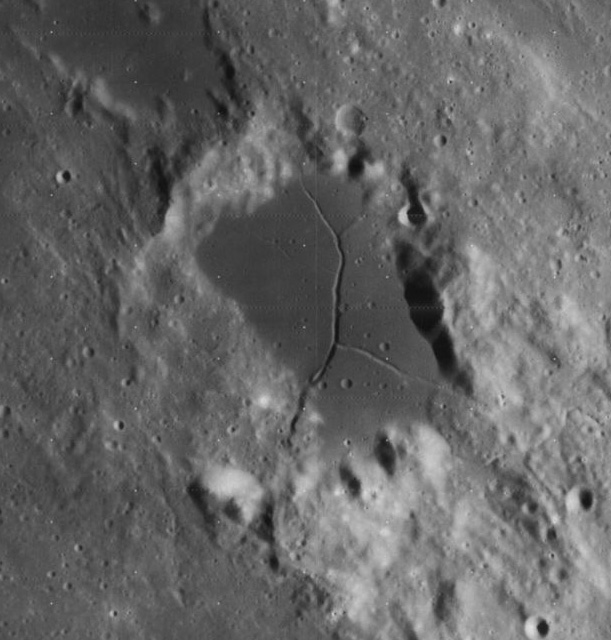
Lunar Crater Named in Boscovich's honor

Monday, June 18, 2018

Jean Baptiste Carnoy and Frans Alfons Janssens


Belgium, Jean-Baptiste Carnoy, 1836-1899


Jean Baptiste Carnoy, Belgian priest and microbiologist. (5) In 1884, Carnoy wrote a book detailing Cellular Biology Comparative Study in the Two Kingdoms. Even the very start of the book has valuable information as it lays out a few basic facts about his situation. Carnoy was a teacher of botany and biology, with a doctorate in natural sciences at the Catholic University of Louvain. (5) He first came to the school in 1876 with the express intent of creating a microscope laboratory to study cell biology. He acknowledges the assistance given by the bishops over the years as he has, as of 1884, close to two hundred students, Belgian or foreign, eager to learn. (5)

Carnoy wanted systemic changes to the process of teaching, and a greater focus on cytology, the study of plant and animal cells. Carnoy’s desire was to, as fully as possible given the current state of science, study cytology in general. (5) Carnoy pointed out that, at the time, there were no courses on the subject of cellular biology, outside of Louvain,yet the esteemed Walther Flemming, founder of the field of cytology, believed all illnesses or biological functions would ultimately have to be traced back to the individual cells to be understood, thereby necessitating a good understanding of the inner workings of cells.(4, 5) Carnoy additionally argued that biology at the time was advancing against all logic because they tried to tackle the complex systems before understanding the basic systems, the cells. (5)

Furthermore, the study must be general enough to draw comparisons between animal and plant life for completeness as all cells have great similarities. Carnoy also explained the current methods for teaching cellular biology were far too heavily reliant on theory at the time and because the faculty were unwilling to adapt to the changing understanding of science, cytology would be stymied simply due to systemic flaws. Instead, he declared cytology could only be taught in labs with microscopes so the across to students could see the cell for themselves, feel the excitement of watching these processes unfold, not simply memorize information. (5)


Belgium, Frans Alfons Janssens, 1865-1924


While teaching at the university, Carnoy had a student named Frans Alfons Janssens who would go on to be his protegé. Janssens was also Belgian priest and went on to carry on Carnoy’s work after his death. (4) Janssens had a wide variety of knowledge, studying theology and creating a zoology thesis while studying with Carnoy. (4) After graduating from Louvain, Janssens visited France, Italy, and the Netherlands before returning to Belgium to teach at Louvain.(4)

One of his significant contributions to biology was in advancing Mendel’s theories. In 1909 he published a paper, The Theory of Chiasmatype, in discussing how the chromosomes combined in meiosis and mixed to give rise to the differences Mendel observed. (4) Actually, he had a draft completed in 1908 and dropped it off at the Belgian Royal Academy even though he was not a member.

The current theory believed that the parental and maternal chromosomes lined up at opposite sides of the cell and then divided on their own separate corners to account for the genetic mixing that was known to occur due to Mendel’s data.(4)

Furthermore, the theory was that divisions of the same chromosomes stayed together, though this failed to explain the grand diversity of traits. If all the chromosomes stayed in their own separate areas, there would be no way for the volume of diversity observed. (4)

In his research Janssens used a camera lucida, a device that allowed an artist to look at the paper and see the subject simultaneously, to capture sketches of the action.4 Among other things, he found the parental and maternal chromosomes were not simply contacting each other, but actually breaking apart and reassembling combined with each other. (4)

He was clearly excited at the time, hoping he had successfully described one of the secrets of meiosis, musing that “time will tell,” which it did. (4)  Although his his findings were not greatly appreciated at the time, nowadays his findings are so thoroughly accepted they are simply part of biology taught at any school.

Works Referenced
  1. Album of a scientific world https://books.google.com/books?id=JcXzORDCmCcC&pg=PT34&lpg=PT34&dq\#v=onepage&q&f=false
  2. Carnoy, Jean Baptiste https://translate.google.com/translate?hl=en&sl=fr&u=https://archives.uclouvain.be/histoire-medecine/exhibits/show/professeurs/c/carnoy-jean-baptiste&prev=search 
  3. The Centenary of Janssens’s Chiasmatype Theory https://www.ncbi.nlm.nih.gov/pmc/articles/PMC3374303/ 
  4. Walther Flemming https://www.britannica.com/biography/Walther-Flemming 
  5. Cellular Biology Comparative Study in the Two Kingdoms http://gallica.bnf.fr/ark:/12148/bpt6k486072j/f7.image.texteImage