Showing posts with label catholic. Show all posts

Saturday, December 29, 2018

John Needham


Image result for john needham image


John Needham was born on sept. 10, 1713 in London. In his life he made important contributions to botany, supported spontaneous generation and explained the mechanics of pollen. During his youth Needham became a Franciscan and studied at the English College at Dubai in northern France from 1722-1736.(2) He was ordained in 1738, but spent most of his time as a teacher and tutor. From 1736-1744 Needham taught at multiple colleges.

Spontaneous Generation
During the time at the colleges he made microscopic observations on blighted wheat, and investigations into the organs of squids. These investigations were the subjects of his first works.(2) He returned to England in 1745 because of health reasons.(2) He became a staunch advocate of spontaneous generation (life from inorganic matter) from his previous observations.(1;2) In 1750 he presented his theory of spontaneous generation and showed his experimental evidence. In 1767 he retired to the English seminary at Paris to continue his scientific experiments.(1) He served as the director of the imperial academy at brussels until 1780 a year before his death.(1) He died on Dec. 30 1781 at age 68.(2)

Vitalism
In 1747 he was elected as a member of the Royal Society.(3) A year after in 1748 he was invited to examine fluids from reproductive organs of animals, and from his observations concluded that the globules he saw were organic molecules.(3) Needham thought that new organisms tooks shape from these globules.(3) He “saw” certain species of microorganisms give birth to other microscopic creatures.(3) This theory put Needham in the Vitalist camp on life.(3)


Giuseppe Mercalli


Image result for Giuseppe Mercalli image
Italy 1850-1814 Giuseppe Mercalli was an Italian volcanologist, seismologist, and Roman Catholic Priest.(1) He is best known for developing an earthquake intensity scale. (1) Born and educated in Milan, he became a professor at a local seminary after graduating college. (1) Mercalli was soon removed from the seminary, but the Italian government quickly found him new positions in schools across the country.(1)


 In 1892, he had relocated to Naples, where he would spend the rest of his life by the volcano he studied most closely, Vesuvius.(1) He died a mysterious death in 1914, burning in a fire in his apartment. At first, it was deemed an accident, but within days speculation arose that he was murdered. (1)


His most famous achievement to solid earth science is his work on the earthquake intensity scale. While studying seismic activity in Italy in the late 19th century, his access to seismic instruments was limited. (1) Some seismographs and seismoscopes (devices that signal an earthquake has occured, and sometimes indicate direction) were available, but most of his information came from personal observation of damage and listening to accounts. (1) To provide some consistency to his earthquake analyses, he decided he need a method to rate the relative effects of each event.


 (1)  At first, his scale had six degrees, but he soon realized he needed more precision. (1) ARound the same time, another intensity scale, the deRossi-Forel scale was gaining in prominence. (1) It had ten degrees of intensity, but lacked detail in the description of each degree. In 1902 Mercalli modified this scale to include the detail he desired, and his new scale quickly caught on among Europe’s scientists. (1 )It was tweaked by other seismologists to twelve degrees and also had more refined descriptions. (1) This edited version was called the Modified Mercalli intensity Scale. (1)


The Mercalli intensity scale is from 1 to 12. This link will provide more information and a comparison between the Richter and Modified Mercalli scales: http://www.geo.mtu.edu/UPSeis/Mercalli.html


Works Referenced


Further Reading


Part 2 Earthquakes Intensity: Modified Mercalli Scale http://www.appstate.edu/~abbottrn/mercalli/intnsty.htm 

Saturday, August 11, 2018

Augustino Salumbrino

Malaria has been a scourge on humanity for many thousands of years, spread by parasites in mosquitoes. It rendered large swaths of the Earth essentially uninhabitable, killing millions of people across the world. Malaria was a serious threat for the ancient world, especially with the hegemony of the Roman Empire, possibly even assisting the fall of Rome. Unlike our modern cold and flu season, Malaria was very deadly, causing widespread panic with the major seasonal outbreaks. Large areas surrounding Rome could not be fully settled because of the danger of Malaria.

Even within the cities, a grave threat of Malaria outbreaks arose due to the great quantities of standing water for public baths and agriculture. The authorities eventually realized the dangers of standing water and ordered the creation of an entire sewer system in Rome, called the Cloaca Maxima. The drainage system reduced the magnitude of the threat sufficiently to keep Rome functional. (5) It was an enormous improvement, demonstrated in part by the abandonment of some of the cities that lacked drainage systems due to the threat of the persistent plague. Some researchers theorize that without the Cloaca Maxima, Rome may have become permanently crippled, thereby shifting the course of history. (5)

Meanwhile, in Asia the prevalence of Malaria slowed the development of Southern China, creating a noticable difference between the North and the South regions of China. Even the passage of time failed to fully blunt the threat of Malaria. Malaria dogged the soldiers of the Civil War and the workers at the Panama Canal. (6) Even during the early years of WWII, more American troops were dying because of Malaria than because of enemy action. (4) Malaria also created severe issues in colonising Africa. The Americas, significant portions of Asia, and even Australia were conquered while only about a tenth of Africa had been colonized even into the 1800s. (5) Of course Africa was home to a variety of deadly diseases, which ravaged both native and foreigner alike, but Malaria was certainly a prominent reason Africa could not be easily colonized. (5)

In essence, Malaria was a worldwide threat which forced the creation of the CDC, Centers for Disease Control and Prevention. However, the balance shifted dramatically with the introduction of large scale doses of quinine available. (5) Quinine was a compound created from the bark of the cinchona tree, known also as the quina quina tree or the ‘fever tree’. The bark was dried, turned to powder, and put with water, sweetened in the hopes of hiding the taste, then distributed as medication.(5) The actual compound of quinine wasn’t isolated until 1820. (4) When the British got ahold of this medicine, they tried combining it with gin, thus creating the gin and tonic. (3)

It was quite an effective treatment and once Dutch plantations at Java were created, there was a good supply of quinine. (4) Of course, getting that supply was quite tricky once Spain managed to establish a monopoly on the Andes supply source and it took until 1865 before the Dutch got ahold of enough seeds for their plantations at Java.(5)

But how did this start? In the 1600s, the Jesuits were in Peru trying to convert the natives and while on their theological mission, discovered the effects of the bark of a particular tree. (4) The three most notable Jesuits were Antonio de la Calancha, Agustino Salumbrino, Bernabé de Cobo, though Cardinal Juan de Lugo is another contender. (5, 4) Of the three, Antonio de la Calancha is the most certain to have some bearing on the tale. He was the first European to record the effects of the cinchona bark on fever in general, and Malaria in particular. So far, so simple.

The trick is to determine who precisely brought the Jesuit bark back to Europe.Note that the bark may also be referred to as Countess’s Bark (2) or Cardinal’s Bark (4)  due to conflicting accounts of who sent the quinine bark -- not to mention titles like ‘fever bark’ or ‘Peruvian bark’ that are simply too generic and vague to be useful. (4) The countess allegedly discovered the effects of the bark while dying of malaria and either went herself or sent her husband to Europe with the cure. The largest issue with this claim is the Count’s diary, found in 1930, contradicts it (5, pg 60).

One source claimed that it was quinine was sent to Europe by an unknown monk named Agustino Sulumbrino, but he is unfortunately just that, almost entirely unknown. (2) If Agustino Salumbrino had, in fact, distributed the cure, he may have done so because Pope Urban VIII requested it. Urban had seen the effects of Malaria firsthand while he and the other cardinals had been gathered to elect the next Pope. (2) Assuming Salumbrino was responsible, the cure reached Europe in the 1630s. Another possibility is that Jesuit missionary Bernebé de Cobo was travelling to Peru and personally took samples back to Spain, then Rome in 1632.(5)

Either way, a Jesuit priest attempting to help the native Peruvians was responsible for finding the effect, and another was responsible for getting initial shipments to Europe. Once the cure arrived in Rome, Cardinal Juan de Lugo’s role was quite plain. Getting distribution well underway. He was extremely excited with the new remedy and decided to show it to suffering residents of Rome, in a sort of preliminary clinical trial. Extraordinarily pleased with the fabulous results, he went on to personally distribute the cure to the poor and recommended it be sent throughout Europe through the Catholic missions. The tree bark remedy quickly entered the Roman pharmaceutical handbook, Schedula Romana. (5)

Protestants had rather a different take. They were deeply distrustful of anything Catholic to begin with, and acknowledging the Catholics were a) correct, and b) not trying to harm them,  were extremely difficult hurdles to pass over. (5) Of course, this skepticism was not solely limited to Protestants, but the most vehement skeptics were Protestant, with the frequent belief anything coming from Catholics was a vengeful scheme. In the case of quinine, some were convinced it was some kind of poison. (5) Over time, Jesuit’s bark was gradually accepted, but it took over a century and multiple high-profile cases before the remedy was accepted. (5)


Works Referenced
1) Blass, B. (April 24, 2015) Basic Principles of Drug Discovery and Development
https://books.google.com/books?id=YTvLAwAAQBAJ&pg=PA38&dq
2) Mukhtar, O. The Miraculous Fever Tree: Malaria, Medicine, and the Cure that Changed
the World [Review]  (July 9th, 2003) https://www.ncbi.nlm.nih.gov/pmc/articles/PMC1126547/
3) Eplett, L. (August 20, 2015). Quinine and Empire.
https://blogs.scientificamerican.com/food-matters/quinine-and-empire/
4) National Academies Press (September 9th, 2004). Saving Lives, Buying Time:
Economics of Malaria Drugs in a Age of Resistance. https://www.ncbi.nlm.nih.gov/books/NBK215638/
5) Loomis. J. S. (January 18, 2018)  Epidemics: The Impact of Germs and Their Power
Over Humanity (pages 57-61) https://books.google.com/books?id=sDFEDwAAQBAJ&pg=PA60&lpg
6) Tale of a bark with bite (April 30, 2004) https://www.timeshighereducation.com/books/tale-of-a-bark-with-bite/188411.article


Further Reading
Antonio de La Calancha
https://www.catholic.com/encyclopedia/antonio-de-la-calancha

Economics and Ethics: Juan de Lugo’s Theory of the Just Price, or the Responsibility of Living
in Society. http://www.academia.edu/28956811/Economics_and_Ethics_Juan_de_Lugos_Theory_of_the_Just_Price_or_the_Responsibility_of_Living_in_Society

Full Text of “The cinchona barks : pharmacognostically considered”
https://archive.org/stream/b28131393/b28131393_djvu.txt

Pierre-Joseph Pelletier http://www.newadvent.org/cathen/11609a.htm

Friday, August 10, 2018

Eugenio Barsanti

Italy (1821-1864)
Priest, Physicist, and Mathematician.

Eugenio Barsanti was born in 1821. After he’d gotten old enough to talk, walk, and make decisions about his own education, he joined the convent of Sant’ Agostino in Pretsanta to study at the  convent’s  scientific school. He obtained “higher studies with excellent results in all subjects, … [particularly]... scientific subjects,” (1) and went on to be ordained a priest.  After his novitiate, Fr. Barsanti decided to attend San Giovannino college. At some point, he was even a Professor of physics in the college of S. Giovannino.

He also taught physics and mathematics in Volterra at the college of San Michele. There, Fr. Barsanti developed a way “to use the bursting of air and gas to produce a new driving force.” He did this using “a reproduction of Alessandro Volta’s gun” which he built himself. He then filled it with hydrogen and air, and hermetically sealed it using a cork cap and a brass bar. The electrologopneumatic gun burst the seal, sending it flying toward the ceiling. This was a classroom demonstration.

After some time in Volterra, Fr. Barsanti continued “his experiments in physics at the Ximeniano Observatory in Florence … where he … had the opportunity to meet Felice Matteucci.” Felice Matteucci was also from Lucca, Italy and was working on reclamation of the Bientina lake. Barsanti was a physicist, Matteucci an engineer, and they worked well together.

The two worked together on creating an internal combustion engine. “Research and experiments [began in 1851]... with a cast-iron cylinder with a piston and valves, through which they studied the effects of some explosive mixtures.” (2) Once Barsanti and Matteucci created a prototype, they decided to patent their invention. “They applied for authorship in England, at the time the leading European country in the field of trade and industry.” (2) They also filed patents in 1853 in  France, Germany, and Italy.In 1854, they got their patent from England. They finished building the engine in 1860.  They also set up a company around the invention, an engine which featured a two-cylinder engine, twenty horsepower.  However, while the invention was brilliant in scientific terms and useful in economic ones (the force of a steam engine cost 12 cents, while their invention produced a force at 2 cents)(2), non-Italian countries initially stuck with a later, similar invention created by Etienne Lenoir and patented in 1859. In fact, for several decades no one discussed Barsanti and Matteucci’s invention at all, instead beginning the history of internal combustion engines with Lenoir’s invention.  (3)

Nonetheless, Matteucci and Fr. Barsanti continued their collaboration and created new prototypes of their engine. Then, in 1864, John Cockeril’s mining company in Belgium “decided to use [Father] Barsanti’s engine for a first series production, [as the new prototype was] much more efficient than Lenoir’s engine.” (1)

Fr. Barsanti’s life was filled with study, physical experimentation, and ecclesiastical duty.  He died at age 43, 1864 of typhoid fever, shortly before he was intended to participate “in the start of series construction of his engine” (1)

Works Referenced

Francesco Maurolico

Sicily (1494–1575)


Francesco Maurolico was born in 1494, and twenty-seven years later, in 1521, he was ordained a priest. At this point, Francesco was the eldest surviving son. This meant that when his father died, Maurolico received the inheritance, which allowed him to “concentrate on his scholarly pursuits [...] and [produce] significant contributions in a broad range of different topics, although his best work was done on mathematics.” (1)


However, Maurolico was not wealthy; at times he was only able to publish works thanks to support from patrons, who were often leading men in Messina. (1)


In 1532, he completed a translation and rearrangement of "part of Euclid's Elements,” although it wasn’t published until fifty-three years later, with the posthumous release of "Opuscula Mathematica” in 1575. The book also contained seven of Maurolico’s treatises, including De instrumentis astronomicis “on the theory and use of the principal astronomical instruments.” (1)


In 1535, Maurolico wrote Cosmographia. In this book, he provided "methods for measuring the Earth … which were later used by Jean Picard in measuring the meridian in 1670.” (1)


Maurolico also wrote important books on Greek Mathematics, restored ancient works, and translated many ancient texts. This was no easy task given that the only surviving pieces of the work often covered only a couple chapters of information. Even without the discoveries that he made on his own, this is a clear demonstration of his intelligence and expertise. In one case, “Maurolico completed a restoration of books V and VI of Apollonius's Conics in 1547 working from the scant details that Apollonius gives in the Preface to the work. [The books] were not published until 1654, about 80 years after his death, as Emendatio et restitutio conicorum Apollonii Pergaei. Both Guglielmo Libri and Gino Loria claimed that this achievement alone showed that Maurolico was a genius.” (1) At the very least, it showed that he was good at convincing his readers that he knew what Apollonius was thinking.


In 1550, Maurolico became a Benedictine. (1) At the time, the Benedictine order was “one of ... two main monastic orders which formed the basis of Christian life in Sicily.” His life as a Benedictine didn’t bring an end to his writing. In fact, from 1552 to 1554, the Senate of Messina paid him to write the history of Sicily and on mathematics texts.” (1) The history was “published under the title Sicanicarum reum compendium in 1562.” (1) 


Additionally, in 1558, Maurolico wrote the Theodosii Sphaericorum Elementorum Libri iii, which included 9 separate works by Maurolico himself, translations and commentaries on other works, a table of secants which included a couple original proofs, and a book that he wrote called De Sphaera Sermo.


Then in 1569, Maurolico became a math professor at the Jesuit college in Messina; among the requirements in his contract was the obligation to teach music theory from the angle of mathematics. (1)


Maurolico later became an abbot in Messina.


[Edited for clarity June 30, 2022] 


Works Referenced 

René Just Haüy

France, (1743-1822)
René Just Haüy was a French mineralogist who studied pyroelectricity and piezoelectricity in crystals (1). He is “one of the founders of the study of crystallography” (1), and was a pioneer in the development of pyroelectricity. Pyroelectricity is created by applying temperature change to a crystal, (1a) while piezoelectricity is created by putting crystals under mechanical pressure (1b).

“He derived a ... theory of crystal structure” (1) based on repeated experiments, which he began after accidentally dropping a calcite sample and seeing the fragmentation of the crystal. He “subsequently applied his theory to the classification of minerals.” (1) Haüy built a coherent structural theory of advances made by other scientists based on the idea that crystals are built up by stacking together a basic structural unit. He found that the external form of a crystal does not determine its composition. He also established the law of symmetry and that “the forms of crystal are perfectly definite and based on fixed laws.” (4)

Haüy also studied theology, and by 1770 he was ordained a priest. He was nearly executed during the French Revolution for refusing to swear an oath of allegiance to the new regime, and was imprisoned for it at the Seminaire de Saint-Firmin. (3, 4) Even so, Napoleon knew him well enough that he was willing to ask Haüy to write the book that became Traité de physique. 

 He published six major works from 1784 to 1817. These included the Traité de physique, published in 1803 at Napoleon’s request and Tableau compartif, a mineralogical classification published in 1809. It also includes the Essai, published in 1784.

Through his work he has earned the title Father of Modern Crystallography.


Works Referenced
(1) https://www.britannica.com/biography/Rene-Just-Hauy
(1a) https://www.britannica.com/science/pyroelectricity
(1b) https://www.britannica.com/science/piezoelectricity
(2) http://www.oxfordreference.com/view/10.1093/oi/authority.20110803095924649
(3) http://www.scs.illinois.edu/xray_exhibit/books/hauy.php
(4) http://www.newadvent.org/cathen/07152a.htm

Giovanni Battista Venturi

Italy (1746-1822)

Giovanni Battista Venturi is an Italian scientist born in 1746. Venturi was "fascinated by the history of science as [..  well as] by its application," and was "one of the first to call attention to Leonardo Da Vinci's ‘work as a scientist and engineer" (2). He was also the first to note the effects of constricted channels on fluid flow (1).

Giovanni Venturi's primary expertise was in fluid dynamics and hydraulic engineering. He built on “the work performed by David Bernoulli and Leonard Euler”(2). Venturi discovered that when fluid goes into a constricted area of a pipe, the fluid’s velocity increases and its static pressure decreases. If the velocity stayed constant, rather than increasing, then weird things would happen to the matter present in the pipe, breaking the law of the conservation of matter. Meanwhile, if the pressure stayed constant, rather than decreasing, then the kinetic energy produced by the velocity would not follow the law of conservation of energy, again causing physics problems.

By 1769, 23-year-old Giovanni Venturi was ordained and became a professor. In 1774, he was appointed as professor of geometry and philosophy at the University of Modena. (2) In 1778, he was promoted to Professor of experimental physics. During his tenure, he was also the state engineer and state auditor for the Duke of Modena, as well as ducal mathematician. He “served in many diplomatic appointments on France & Switzerland” and met with fellow scientists there. He retired in 1813, “but continued to publish his own works and compile works of other famous scientists until his death in 1822.” (2)

The Venturi effect is something we use to this day. For example, a Venturi nozzle can generate a velocity high enough and a pressure low enough to draw a vacuum.

[Edited June 30 2022 for clarity]


Works Referenced

Andreas Tacquet


Belgium (1612–1660)
Andreas Tacquet went to a Jesuit college for his higher education and joined the Jesuit order in 1629. The same year, he began studying at Malines, Belgium. Then, partway through 1631, he went to Louvain and continued his studies. He studied mathematics under William Boalmans, who had been taught by Gregorius Saint Vincent (1). He also studied logic and physics.

From 1634 to 1639, Tacquet taught at Jesuit colleges, and then from 1640 to 1644, he studied theology at Louvean. This was followed by a year or so of teaching math at Louvean. Then, in November 1646, he took his vows and continued to teach math (1).

He published several works, and was known for "great clarity" in his writing (3). His works included Cylindrieorum et annularium, which has some original theorems on cylinders and rings; Elementara geometriae, a well organized paraphrase of parts of Euclid and Archimedes; and a posthumously published work called Opera mathematica (1). The final book, published in 1669, was described by Henry Oldenburg as ‘one of the best books ever written in Mathematics (2), and "contained works on astronomy, spherical trigonometry, practical geometry, and fortification” (3).

Tacquet helped to pave the way for Calculus. Previously people had thought of lines as being composed of points. He introduced the idea that a moving point could generate a line -- or a curve. This, and other ideas, influenced the thinking of Pascal and his contemporaries, and acted as a foundation for future progress (3).

Tacquet was a “brilliant mathematician of international repute.” His books were frequently reprinted and there were several Italian and English editions (1, 2). The Elementara geometriae was one of several math textbooks that he wrote for students in his math class. (3).

Works Referenced
 
Edited for clarity on August 12th, 2021 

Niccolo Cabeo

Niccolo Cabeo (1561-1636)

Cabeo, a Catholic priest who joined the Jesuits in 1602, is known for his two major publications, Philosophia magnetica (Magnetic philosophy)and In quatuor libros meteorologicorum Aristotelis commentaria (Commentary in four books on Aristotle’s Meteorology).(1)

His academic career happened mainly in Parma, following typical Jesuit curriculum, and included studying logic, natural philosophy, metaphysics, and theology, as well as mathematics.(1) After finishing his studies in 1616, he taught theology, philosophy, and metaphysics at Parma until 1621, then spending several years living at the Jesuit college in Ferrara, his birthplace, and also taught theology in the late 1620s.(1)

 His first book explained not only his own experimental investigations of terrestrial magnetism but also Gilbert’s, as well as explaining magnetized iron and lodestone, the mineral magnetite. (2) He also contributed to physics experiments, observing the Giovanni Battista Baliani experiments about falling objects.(2)

 He also experimented with pendulums.(2) Niccolo thought that the earth was immobile, and had no magnetic field.(1) In his first book Philosophia magnetica Cabeo stressed that all of his work sought out the causes of natural effects, saying that every discussion and idea he had was based upon experimental work, with the experiments being repeatedly performed.(2) Cabeo also confirmed Galileo’s claims that two bodies, no matter the weight, tend to fall at the same rate, as opposed to the heavier one falling faster, as long as they were of the same material.(2)

 At the end of his life, he returned to teaching at a Jesuit college.(1)

Niccolo Cabeo presented a new style of natural and experimental philosophy, becoming one of the most influential Jesuit natural philosophers of his time.(2)

Sources cited:

Cabeo, Niccolo https://www.encyclopedia.com/people/science-and-technology/physics-biographies/niccolo-cabeo

(2) Niccolo Cabeo https://prezi.com/s8qaxwvififh/niccolo-cabeo/

Roberto Landell de Moura

Roberto Landell de Moura (1861-1928)

Born in 1861, he was educated in Jesuit schools and attended Colegio Pio Americano in Brazil and also the Pontifical Unversidade Gregoriana in Italy, to study physics.(2) He was ordained to the priesthood in 1886 in Rome, where he began studying physics and electricity. He then traveled back to Brazil and taught himself, continuing his studies.(4)

 There he conducted his first public experiment, sending a transmission eight kilometers. He then developed a wireless transmitter in 1892. The Brazilian government granted him patent number 3279 for “... equipment for the purpose of phonetic transmissions through space, land and water elements at a distance with or without the use of wires, through space, earth and water.” (2)

He then obtained a few more wireless patents and left for the US with the intent of repeating the process. He obtained three: the Wave Transmitter, the Wireless Telephone, and the Wireless Telegraph, which appeared to be fully functional.(2) Unappreciated, he returned to the priesthood.(2) He died in 1928.

He was a great inventor, but unfortunately, he was called crazy and spiritist while trying to create his wireless inventions, and shut off from testing his devices. Because of this, he now lies in obscurity.

Sources cited:

(1)Roberto Landell de Moura
https://skankinglozer.weebly.com/

(2)Roberto Landell de Moura http://tenwatts.blogspot.com/2014/03/roberto-landell-de-moura.html

(3)Roberto Landell de Moura
https://super.abril.com.br/historia/roberto-landell-de-moura/

(4)Roberto Landell de Moura
http://www.sarmento.eng.br/Padre_Roberto_Landell_de_Moura.htm

Thursday, August 9, 2018

Julian Edmund Tenison-Woods

Julian Edmund Tenison-Woods (1832-1889)

He was born in England, went to Thomas Hunt’s Catholic school. After that, he had a brief period at Newington Grammar School. He worked for The Times and became intrigued about the work of the catholic schools. When he was 18, he tried joining the Passionist novitiate, but his poor health forced him out.

Afterwards, he taught in the south of France at Mont-Bel college for naval cadets at Toulon, where he became interested in natural science and geology. He met Bishop Willson of Hobart Town, Tasmania, whom he accompanied there in 1854. After a disagreement, however, they parted ways and he went to Adelaide, becoming sub-editor of the “Adelaide Times”. In Adelaide, he resumed his studies for the priesthood and was ordained priest in 1857.

He had a large tract of country in the south-eastern district was entrusted to him, and he founded the Sisters of St. Joseph of the Sacred Heart, placing Miss Mary MacKillop in charge of the first school. He then accepted the demanding job of director-general of Catholic schools and secretary and chaplain to Bishop Sheil. He was a missionary in Tasmania and founded the Sisters of Perpetual Adoration in Brisbane. He was an observer of the world around him and made many contributions to Australian geology, going all over Australia observing the varied rocks and natural flora and fauna and also assisted in its zoology and palaentology.(1)

He traveled to many locations in Australia and published many papers, contributed popular scientific articles, and aided government departments by his many reports of geological surveys of natural resources and published a book titled History of the Discovery and Exploration of Australia in two volumes. (1) In 1887, due to his many travels, his health was failing, and he returned from the Northern Territory to Sydney, and he died of paralysis in 1889.

He was a strong leader, a good priest, an advanced educator, and a dedicated scientist. (1)

Sources cited:

(1)Tenison-Woods, Julian Edmund http://adb.anu.edu.au/biography/tenison-woods-julian-edmund-4700

(2)Julian’s Story
https://www.sosj.org.au/our-founder-julian-tenison-woods/julians-story/

(3)Julian Edmund Tenison Woods
https://www.catholic.org/encyclopedia/view.php?id=12442

Friday, June 29, 2018

Ferdinand Verbiest


Belgium/China 1623-1688


Ferdinand Verbiest was born in what is now Belgium in 1623 and joined the Jesuit order at age 18. (2) He was ordained in 1655. (10) Originally he wanted to go to South America, but was called to China because of Adam Schall von Bell. (7) He was 35 at the time. After preliminary work in the rural areas, Verbiest was summoned to Beijing to assist Johann Adam Schall von Bell with astronomy. By the time he arrived Beijing, the other Jesuits were imprisoned. Verbiest‘s attempts to free the Jesuits were of no avail and he joined them in the terrible conditions. (1, 7)

However an earthquake struck the wing of the palace where they were to be executed so in 1668 Emperor K’ang Hsi (also known as Kangxi), organized a contest of skill between Verbiest and the Mandarin who had started the persecution. (2, 4, 7) The contest was composed of three parts: to determine the shadow on a sundial on a given day, when a lunar eclipse was to take place, and the location of various planets on a specified date. (2) The losing astronomer was exiled and Verbiest became the President of the Bureau of Mathematics. This new position afforded him an excellent ability to influence the Emperor and the persecution ceased.

Verbiest won both the contest and the favor of the emperor. 
He was assigned the board of Mathematics and made a very bold demand; the ‘Perpetual Calendar of the Kangxi Emperor’ must be altered! (7) This was unthinkable. Not only did millions of people use the official calendar, but the emperor himself had approved it! (1) Furthermore, this was no quibbling change, Verbiest wanted to remove an entire month! The officials pleaded with Verbiest to change his futile course of action, but he replied that “It is not within my power to make the heavens to agree with your calendar.” (1)

It was changed. 

The emperor liked him and learned whatever Verbiest could teach him. Verbiest translated 
six books of Euclid into Manchu, and taught geometry, philosophy and music. The Emperor made Verbiest the highest level of Mandarin, included him on journeys across the Empire and allowed him to preach Christianity. (1) In his efforts to fit in, Verbiest studied Machu and Chinese and took a Chinese name, Nan Huairen. (7)

Being a missionary was Verbiest’s entire purpose for being in China so he leapt at the opportunity and included Christianity whenever he could. (1) Verbiest worked so diligently at his posts because he hoped he could thereby convince the Emperor to become Catholic. (4) Unfortunately this did not occur. Verbiest’s position allowed him much greater influence however, and he was able to reach much farther with his writing and preaching than his fellows as a result. (4) He soon became involved in essentially every project, including the creation of 132 advanced and modern cannon for use by the Imperial Army to stop a rebellion. Verbiest also designed a new type of gun carriage. (1, 4)

Verbiest continued his astronomical work by assembling a table of eclipses, lunar and solar, for the next two thousand years. The emperor was overjoyed with the wondrous progress and promptly made Verbiest in charge of the Imperial Astronomy Observatory. (1)

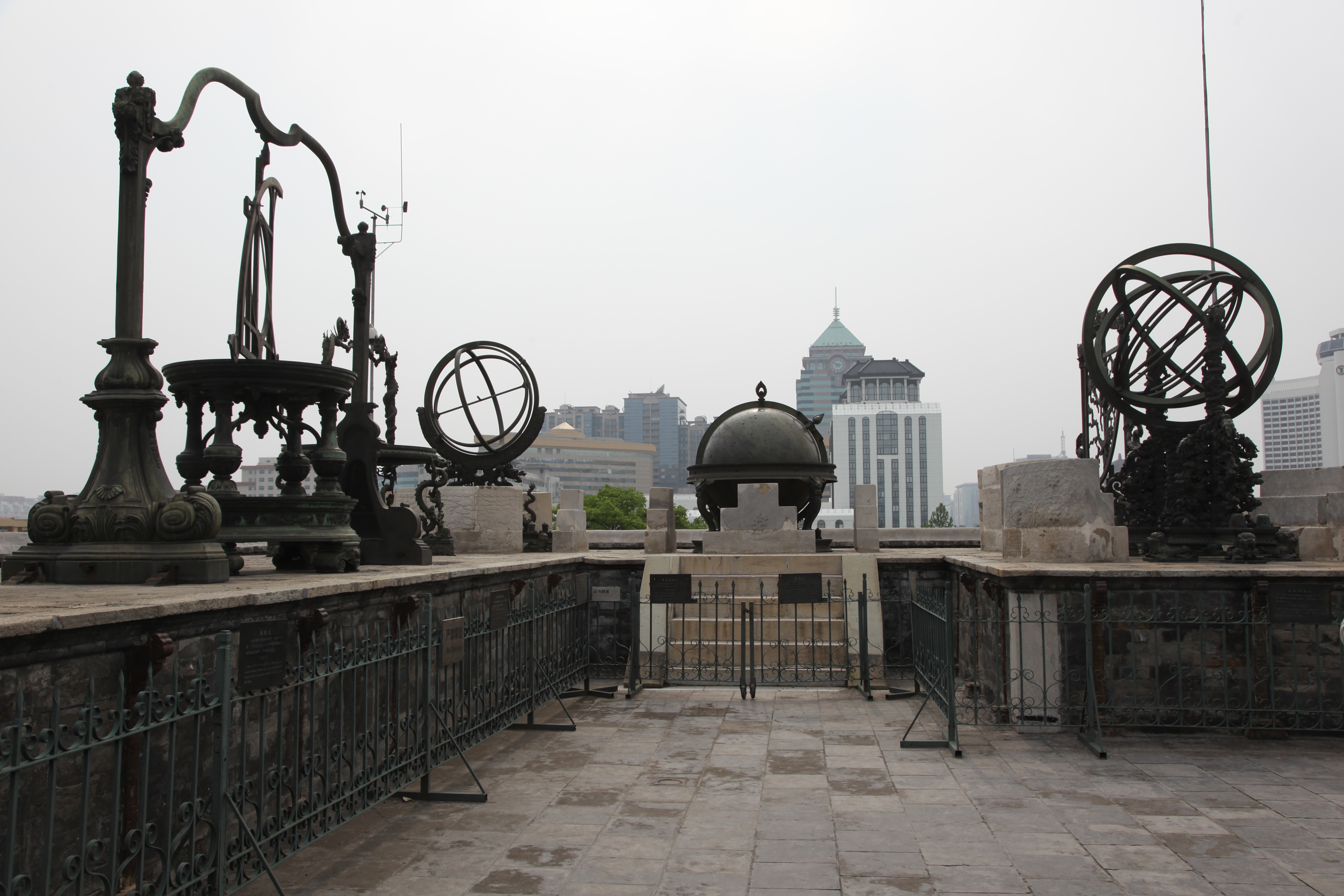
This post was challenging because the structure had been finished in 1279 and so its instruments were extremely… obsolete. Between about 1669 and 1674, Verbiest faced this challenge by assembling a team of master metalworking artisans to make designs imported from Europe. The final instruments were precise enough to measure fifteen seconds, or a nine hundredth of a single degree. (4, 7)
Verbiest documented his work in a 1674 manuscript titled ‘Disclosure on the Newly-Built Astronomical Instruments in the Observatory’ in which he described the design and function of the instruments very precisely so they could be reproduced. It was such detail that for the six instruments he created it took 16 volumes to contain his descriptions. (7)
He created two separate versions of an armillary sphere, an altazimuth, a quadrant, a sextant, celestial globe. These instruments were then put atop the observatory. It may seem rather odd that such a small amount of instruments could take sixteen volumes to describe. (7) One reason for this apparent oddity is the size of the instrumentation. Each was six feet or more in diameter so they were at least the height of a man, and intricately detailed, including multiple dragons per instrument. (4, 7)


Verbiest created a steam engine for ships, designed pumps, built an aqueduct, created numerous maps, and thirty books. His books covered astronomy, Chinese grammar, and he translated a missal into Chinese as well as producing a Chinese book to explain Christianity in simple terms. (1) 

Verbiest also designed the first car. It was slightly over two feet long and powered by steam, but the idea of having a self-propelling machine was present. (9) The machine carried a contained or water over a bed of coals and the steam was directed at a turbine which provided the power for it to move. (9) Whether it was actually built is an open question, but the designs were completed. 


He was also able to simplify Chinese geometry by reducing the number of degrees in a circle from 365.25 to 360. (7) He was put in charge of public works, assisted China in negotiating their border with Russia, and even sent a missal translated to Chinese to the Pope as evidence of his mission. (2)

The Pope sent him a letter congratulating him for his work, and in 1677 Verbiest was appointed head of all Jesuits in China. (4) He recognized the great opportunities open, but also the desperate need for more priests. He urged missionaries to come from Europe, but also looked to China so that the Chinese could be reached by their own countrymen. (4)

One of the particular needs for Chinese priests was the ability to use Chinese instead of Latin, but Verbiest was not able to obtain this permission. Instead, a few more Jesuits were sent from France. Verbiest used his influence to admit the group to Beijing as swiftly as possible, though he sadly died before they arrived. (4) The emperor delayed the funeral so that the Jesuits could attend and Verbiest was buried next to Ricci and Schall. (1) The emperor was so impressed with Verbiest’s work he bestowed a posthumous name, an honor normally associated with former emperors. (10)

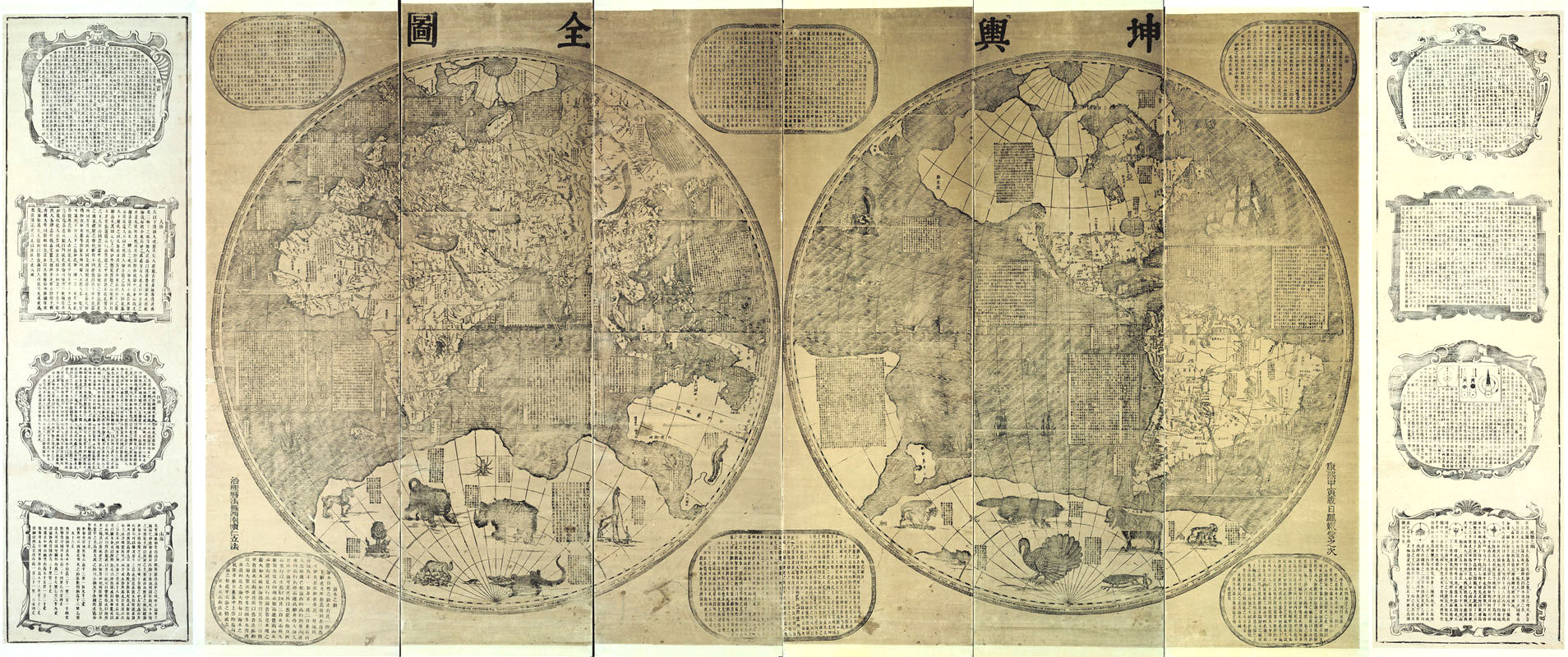
Another of Verbiest’s masterpieces was his 1674 world map. Each of the eight sections was 5.8 foot by 1.77 foot sections. (6) The Verbiest map was part of a larger geographical work, ‘Illustrated Discussion of the Geography of the World.’ (5) (An amazing interactive version of Verbiest’s map here: http://verbiest.asianart.org)


The world map was quite marvelous. Besides the map itself, Verbiest included all sorts of secondary details to enhance the appearance or usefulness. The entire map bears signs of diligent craftsmanship from the oceans of carefully crafted waves to the intricate illustrations of animals. (3) Verbiest included a variety of fantastic animals, from the mighty unicorn to the humble beaver. (3) Each animal featured a short encyclopedic entry next to it. In fact, nearly all of the map was filled with annotations of one kind of another. Verbiest placed fourteen major essays around the exterior of the map to explain various high-level concepts including astronomy, humanity and morals, the ‘four’ elements, earthquakes. (3)

Verbiest also included whatever details he knew of the countries around the world and the inhabitants therein. (3) While there are some incorrect details, such as the cause of earthquakes, the inclusion of unicorns as real animals, and the portrayal of California as an island, the scale of the map is incredible. The entire map is filled with annotations in Chinese and Antarctica in particular is sprinkled with animal images and descriptions. (3)

Verbiest had converted many respected people including mandarins, princes, and scholars. Between his work and the other Jesuit missionaries, there were 800,000 Catholics in China when he died. (1) 


An Armillary Sphere in Action (8)


Works Referenced

  1. Fr. Ferdinand Verbiest, S. J. (1623-1688) a Jesuit scientist in China http://www.faculty.fairfield.edu/jmac/sj/scientists/verbiest.htm 
  2. Ferdinand Verbiest http://ricci.bc.edu/people/ferdinand-verbiest.html 
  3. A Complete Map of the World, 1674 http://verbiest.asianart.org 
  4. Ferdinand Verbiest http://www.newadvent.org/cathen/15346a.htm 
  5. Verbiest Map https://www.gla.ac.uk/hunterian/collections/collectionsummaries/archaeologyandworldcultures/worldcultures/verbiestmap/ 
  6. Matteo Ricci World Map http://www.myoldmaps.com/renaissance-maps-1490-1800/441-ricci.pdf 
  7. Ferdinand Verbiest [sic] (1562-1633) http://hua.umf.maine.edu/China/astronomy/tianpage/0029Verbiest9284crw.html
  8. Armillary Sphere animation https://www.youtube.com/watch?v=M0chCdFEaP0 
  9. The First Automobile of Any Type Was Built By This Flemish Priest In China https://jalopnik.com/the-first-automobile-of-any-type-was-built-by-this-flem-452218957 
  10. Ferdinand Verbiest: Early Visionary of Auto-motion http://www.autoviva.com/news/ferdinand_verbiest_early_visionary_of_auto_motion/575

Wednesday, June 27, 2018

Father Benito Viñes


Spain/Cuba 1837-1893

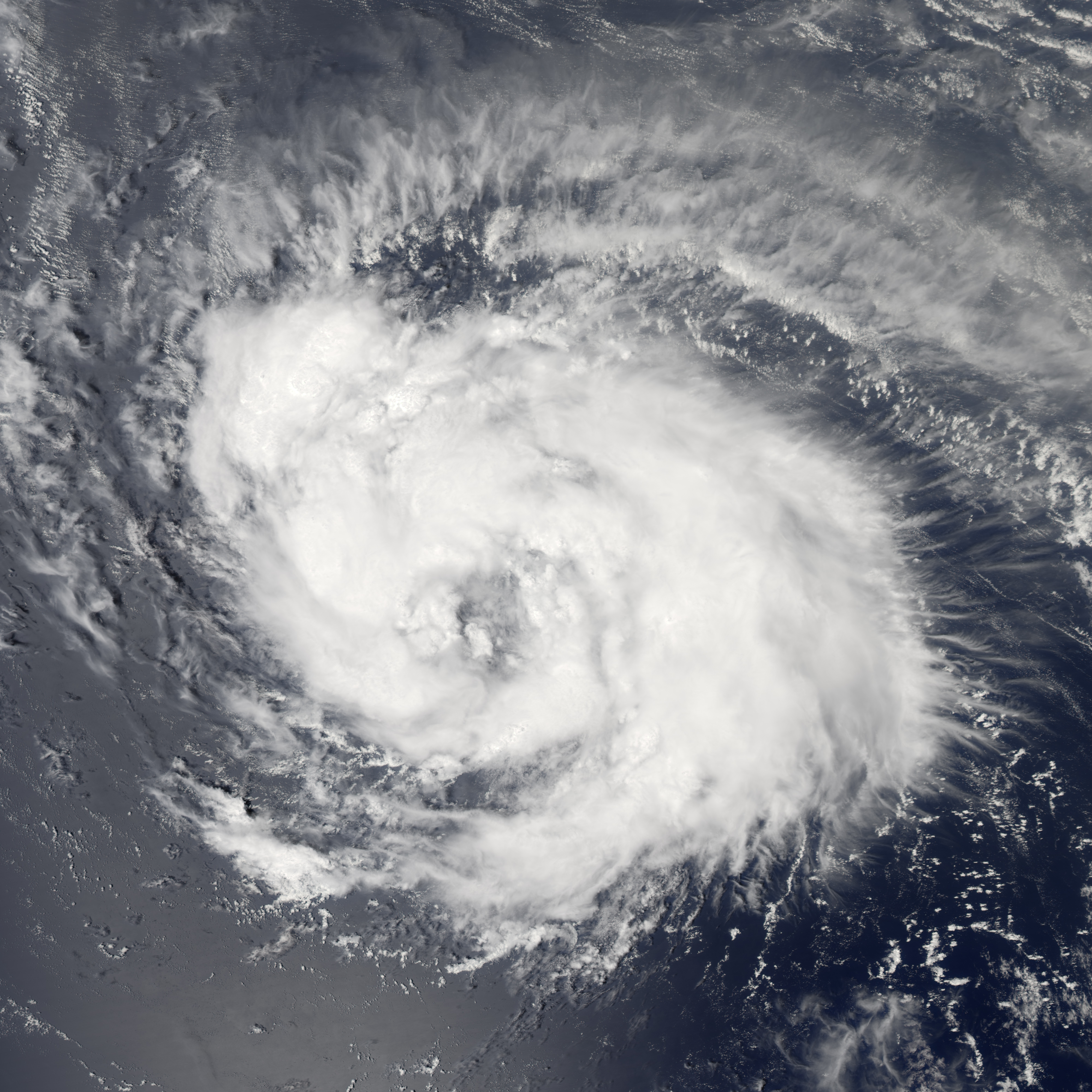
Father Benito Viñes was a Jesuit famous for his meteorological work in Cuba. He came to Cuba to direct the Jesuit Meteorological Observatory of the College of Belén, but became famous for creating created the first system to accurately predict hurricanes. He became known as “Father Hurricane” and “Founder of Tropical Meteorology.” (2, 3)

The former director of the Observatory after getting financial backing to upgrade the Cuban Observatory had left for France… only for the ten-year Cuban uprising to start. He never actually returned to Cuba, though he did continue to publish papers on cloud structure and hurricanes. (5)

Fr. Viñes, on the other hand was experiencing the 1868 revolution in Spain that sparked the Cuban revolution, so he left for France and was ordained. He was then assigned to Cuba to the Observatory at the College of Benén in Havana. (5) Fr. Viñes arrived at the Cuban Observatory in 1870 and before the year was out, a hurricane arrived and ripped the metal roof off of his observatory. (4, 5) After this harrowing experience, and because of hurricanes’ effects on the populace, Fr. Viñes dedicated his life to understanding the patterns of hurricanes. (4, 7) Cuba was a useful post for this mission because of the frequency of storms passing through the Gulf. (5) He looked everywhere he could to understand hurricanes: books, newspapers, the ocean levels, previous storm paths, and hurricanes themselves. (4) He kept notes on anything to help him in his quest; clouds, conversations with ship captains, telegraphs, and newspapers. (5)

Eventually, Fr. Viñes decided he needed to a network of observers to gather more data including sailors and reporters. The network reported to him by telegraph, and he shared the data he gathered with other weather watching organizations. (4)  Fr. Viñes took exhaustive measurements; ten observations daily including, though not limited to, barometer readings, evaporation levels, rainfall amount, wind speed,and cloud formation. (1)

However, over the next five years no seriously threatening hurricanes arrived. By then, he was ready. On September 8th, 1875, Fr. Viñes received telegraph reports through the Spanish navy that a hurricane had made landfall at Puerto Rico. (4, 5) He published a forecast in the newspaper and warned ships not to sail north or east out of Havana so they wouldn’t sail straight into a hurricane. (4) The only American ship that ignored the warning sailed into the hurricane and all the crew perished, though no Cuban passengers were aboard. (5)

In 1876, based solely on his own measurements, Fr. Viñes predicted an incoming hurricane two days before it made landfall. (5) This success gave Fr. Viñes the fame he needed to acquire a series of tours across the affected areas in Cuba, Hispaniola, and Puerto Rico over the 1876-1877 winter. (5) His interviews with the victims and observation of the physical evidence afforded him enough information to publish his first book describing hurricanes. It was published in English as “Practical Hints in Regard to West Indian Hurricanes” by the US Army (3) While only fifteen pages long, it contains a wealth of information and practical advice regarding identification of an approaching hurricane and how to navigate away from it. (10) 

He also distilled his extensive knowledge of hurricane detection into a device known either as an ‘inner phase cyclonoscope’ or an ‘antilles cyclonoscope.’ which assists meteorologists in locating the eye of a hurricane (2, 4, 7) The cyclonoscope was somewhat like a slide rule and was composed of two cards. Based on cloud and wind observations at the meteorologist’s site, the inner card could be rotated and the direction of the hurricane’s center could be determined. (7, 11) This simple tool simplified his years of observation and experience into essentially a hurricane calculator.

Fr. Viñes started exploring the possibility of assembling a network of amateur storm contacts by telegraph to expand his data before the 1876 season had ended, enlisting the aid of the Spanish Navy’s observations through various contacts including Cuban railroad operators, US Army signal corps operators. (5) Fr. Viñes also contacted a Spanish Jesuit in charge of the Manila observatory and inspired him to start issuing hurricane warnings in the Philippines. (5) The Filipino contact network even outlasted and outperformed Fr. Viñes’ significant efforts. 

Fr. Viñes traveled to England in 1882 to acquire more sophisticated observation equipment and the head of the Jesuit Observatory at Stonyhurst, Stephen Perry, personally trained Fr. Viñes and calibrated the equipment. (5) Later that year, Fr. Viñes also observed the transit of Venus. (5)

After a tremendously destructive hurricane season in 1886, Fr. Viñes finally got his wish to have a warning network that stretched across the Caribbean. In 1887, the Cuban Chamber of Commerce pitched in, creating a telegraphic network which included Spanish, British, French, Venezuelan, and Dominican lands, among others. Additionally, they placed the entire network at Fr. Viñes’ disposal. (5) Telegraph, railroad, and steamship companies were willing to offer their service for free to assist his lifesaving ventures. (8) Fr. Viñes was able to use his telegraph network to send warnings out across the Caribbean when he found a storm was approaching. (7)

The US foremost expert on hurricanes, Everett Hayden, traveled to Cuba to learn from Fr. Viñes and Hayden later mentioned Fr. Viñes’ work several times in his book, ‘The Modern Law of Storms’ (5, 6) The ‘Law of Storms’ that preceded Hayden’s book, attempted to predict storm behaviour, including hurricanes, by using winds at sea level. (12) Fr. Viñes’ criticized this theory as far too simplistic in his final work: ‘Investigation of Cyclonic Circulation and the Transitory Movement of West Indian Hurricanes’. Rather than seeing the complex structure and variation in wind direction and speed at different altitudes, it assumes that the wind at sea level is indicative of the entire structure. Fr. Viñes’ theory includes wind and cloud throughout the cloud to create a three dimensional understanding of hurricane structure. (9) 

The 35 page ‘Investigation of Cyclonic Circulation and the Transitory Movement of West Indian Hurricanes’ was finished two days before he died and contained of Fr. Vines’ rules for predicting hurricanes. It noted intricacies such as how hurricane season operates on a a sort of mirrored schedule so the first week of June ramps up around the same rate as the end of October ramps down. (9) 

To pull a couple of examples, cirrus clouds were useful as a first indicator of a hurricane’s location because they “fired out from the center of the hurricane.” (2) The color and type of clouds also helped him determine where the hurricane was located. (5)

The most difficult piece to accurately predict was the “law of recurvature” which came about as a result of the general tendency of hurricanes to head west and then turn to the northeast after a period. Many hurricanes followed this rule, but a significant portion failed to follow this idea, with one actually turning south instead of north. (5, 6)

That being said, his theory was a tremendous leap forward for storm prediction . After his death and with the US occupation after the Spanish-American War, the Caribbean network of storm observers no longer answered to the head of the Belén College so the new director was unable to issue a hurricane warning for a 1900 cyclone. The storm made landfall in Galveston on September 8th as predicted by Fr. Viñes’ theories and because of the lack of warning, it became the deadliest hurricane in US history. (5)

Before Fr. Viñes, there was no way to forecasting hurricanes. Through careful observation and study he created a new field, enlisted the help of hundreds of others, and helped save thousands of lives.In addition to his two books, Fr. Viñes wrote various articles on the subject of hurricanes that illuminated hurricane structure and motion. (4) Fr. Viñes was so influential that for a while, Hurricanes were just ‘Viñesa’ followed by a number, in honor of his work. Sadly, this didn’t last and his name has fallen into unwarranted obscurity. (2) 

Works Referenced

  1. Father Benito Viñes: The 19th Century Life and Contributions of a Cuban Hurricane Observer and Scientist by Luis E. Ramos Guadalupe (review) https://muse.jhu.edu/article/640782 
  2. Father Hurricane: A genius of meteorology  https://www.miamiarch.org/CatholicDiocese.php?op=Article_131017125417303 
  3. The Legacy of Fr Benito Vines http://www.actforlibraries.org/the-legacy-of-fr-benito-vines/ 
  4. 140th Anniversary of first hurricane forecast https://noaahrd.wordpress.com/2015/09/15/140th-anniversary-of-first-hurricane-forecast/ 
  5. Viñes Martorell, Carlos Benito José https://www.encyclopedia.com/science/dictionaries-thesauruses-pictures-and-press-releases/vines-martorell-carlos-benito-jose 
  6. The Modern Law of Storms https://books.google.com/books?id=5BLkVqGRrg8C&pg=PA181&lpg=PA181&dq 
  7. The Hurricane Man in Havana https://www.irishtimes.com/news/the-hurricane-man-in-havana-1.112176 
  8. Hurricanes: A Reference Handbook https://books.google.com/books?id=aJz0y__JHsYC&pg=PA228&lpg=PA228&dq
  9. Investigation of Cyclonic Circulation and the Transitory Movement of West Indian Hurricanes https://books.google.com/books/about/Investigation_of_the_Cyclonic_Circulatio.html?id=Tt4lAAAAMAAJ&printsec=frontcover&source=kp_read_button#v=onepage&q&f=false 
  10. Practical Hints in Regard to West Indian Hurricanes https://books.google.com/books?id=F8oOAAAAYAAJ&printsec=frontcover#v=onepage&q&f=false 
  11. The Century Dictionary and Cyclopedia https://books.google.com/books?id=oiFJAQAAMAAJ&pg=PA1423&lpg=PA1423&dq=
  12. The Law of Storms https://www.gutenberg.org/files/55774/55774-h/55774-h.htm 


Monday, June 25, 2018

Juan Ignacio Molina

Chile 1740-1829


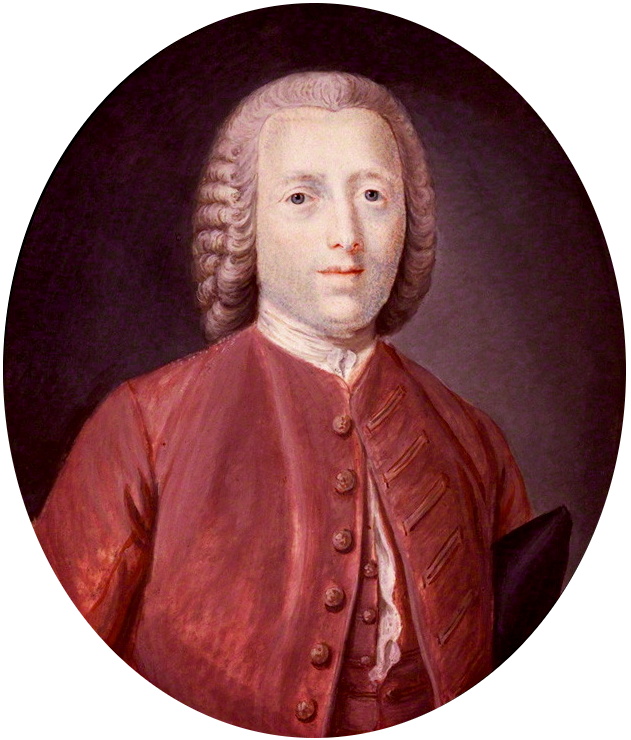
Juan Ignacio Molina was born in Chile in 1740 and was entered into the Jesuit Order when he was fifteen, though he was not a full Jesuit for the next eighteen years while he completed his training. He learned a variety of subjects, scientific and philosophical, and gained fluency in five languages: Spanish, Greek, Latin, Italian, French. (2) Additionally, Molina was a poet. A particularly notable poem, written in Latin and titled ‘Latin Elegies’ detailed his debilitating experience of smallpox. (2, 8) He was a teacher for a few years, though his talent was too great to solely be a teacher and he was reassigned to studying theology. (4) Throughout his scholastic career he shifted through the various towns of Chile, becoming a professor and librarian in the Jesuit’s Santiago station, capital of Chile. (4)

However, in 1767 all the Jesuits were exiled from Chile by order of the Spanish King, Carlos III (4) The Jesuits were exiled because of how they had hindered the colonizing efforts of various European powers. (7) Therefore, at age twenty-seven Molina and his fellow Jesuits were thrust into Europe. However, their journey was not quite direct. First, the Jesuits had to travel to Peru, then over the Atlantic Ocean. When he was exiled from Chile, he had to go to Peru first, then travel over the Atlantic to reach Europe. (9) Even during his exile to Europe, Molina continued note the wildlife around him, observing flying fish and whales. (9) Their journey did not end in Spain, the home country of the Jesuits, because other exiles had already filled their doors. Instead, Molina and the other Jesuits journeyed to Imola, Italy, a small town near Bologna. (4) 

Upon their arrival in Italy, in 1769, the Jesuits were first settled in Imola, a small town near Bologna. Immediately, Molina’s knowledge served him well as he was able to talk to the Italian governor and discuss natural history, a topic which fascinated the governor. (9) 

Eventually, Molina moved to the nearby city of Bologna and became the chair of Greek at the University of Bologna. Eventually, he became a professor of natural sciences, the work for which he is best known. (2) Molina was the first American member of Italian Institute of Science and Arts (2). He continued to study and teach, slowly making his way to official membership in the order. He finally passed the necessary exams and became a full member of the Jesuit order on August 15th, feast of the Assumption, 1773, at thirty-three years of age. (4) 

Then on August 25th, the Pope published the order to suppress the Jesuits and Molina was forced to leave the order, after mere ten days. (4) Nearly all the European nations had gotten tired of Jesuits resisting their wishes and pressured the Pope. Clement XIV, into suppressing the order outright. All Jesuits had to officially leave the order, though some former Jesuits were highly regarded. (7) Russia was the only exception to the suppression order and became the only country where the Jesuit order remained, preferring to have the Jesuits around to revitalize their educational system. (7)

Molina would remain in Italy for the rest of his life. It was here that he began publishing scientific works, all of which were in Italian. (3) The first was the ‘Compendium of the Geographical, Natural, and Civil History of the Kingdom of Chile’ which explained a variety of aspects of Chile from its geography animal life to historical and anthropological elements. (2, 5, 6) The work is divided among three parts, Geography, Natural History, and Civil History. (6). The geographic discussion included the approximate size of the country, the basic political division and some geological information. (5) Natural History was a catchall term for several pursuits including botany and zoology, but essentially means biology. The Civil History section detailed the history of Chile from a cultural perspective, how Chile came to be. 

Molina was a very thorough writer, trying to communicate information as swiftly and succinctly as possible, and used extensive footnote asides to achieve his aims. By necessity, this work was assembled from suboptimal sources; Molina’s manuscript had been detained at a ship in Peru, where the Jesuits had traveled before journeying to Europe. (2. 9)

In 1774, Molina moved to Bologna and started teaching at a school that taught a significant portion of the poorer students for free. (9) However, between widespread misinformation surrounding America, and his own nostalgia, Molina decided to write a book to explain Chile to Europe. (9) 

Molina’s first attempt was the ‘Compendium of the Geographical, Natural, and Civil History of the Kingdom of Chile,’ a work divided into two parts and published in 1776. (9) The first dealt with the geography of Chile, its mountains, its size, the landscape and so on; the second part explained the culture of Chile’s native and Spanish populations. (9)  The timing was excellent: interest in America had increased significantly because of the American Revolution, and Molina’s work provided insight into a portion of the New World. (9)

It was successful, but the sources were not as comprehensive as Molina wished; the majority of Molina’s meticulous notes had been taken by customs agents when left Chile. After some years, he acquired his notes, and started again. He was so dedicated to providing a superior source that he published this second volume at his own expense in 1784. It was entitled ‘Essay on the Natural History of Chile.’ (9) The ‘Essay on Natural History’ was more detailed than its predecessor, included a newer map, and was divided into four books. Molina aimed to use this book to prove the similarities between the New World and the Old, starting with a direct comparison in the introduction. (9) The ‘Essay on Natural History’ was extremely successful and translated into German, Spanish, French, and English. (2)

Molina’s writing was crucial because of its ability to dispel common myths of the time regarding America. Oftentimes, writers never actually had gone to America and were just making details up out of whole cloth. (9) Molina’s detailed and scientifically accurate work was a revolutionary take on America. Also, America was in a revolution at the time which generated significant interest in the American continent. (9)

Book One covered the geographical, climate, and natural disasters common in Chile, and Molina again made comparison to Italy. (9) One particular piece of misinformation Molina tried to correct was the notion that a 1751 earthquake had destroyed a city and redirected a river. (9) In reality, there were actually no casualties, in part because of a series of shocks before the main disaster. Molina continued this geological discussion, and used his own experience and observations to explain events, an attitude that distinguished him as a scientist. (9)

The Second Book examined the mineral aspect of Chile including rivers, lakes, rocks and soil. (9) As part of this section, Molina looked at the mining industry and agriculture. For one, Molina describes in detail the process of acquiring gold, from mining the ore to processing it at the foundry. (9) Molina also writes about geography in this section, noting the presence of various marine caves in Chile. (9)

Books Three and Four changed the focus from geographic and geological to biological. (9) Here, Molina explored the flora and fauna of Chile and organized them according to Linnaeus’ system. (3) He also wrote wrote about crops, general vegetation in the area, herbs, and the wine of Chile as compared to Italian wine. (9) Book Four was concerned with animals of all kinds whether in the sea, the air, or on the land. Molina also described the culture of Chile once again. (9)

Molina finished the book with two catalogs. The first listed all the new species he had described, even including rocks and minerals, according to Linnaeus’ classification. The second catalog was a glossary of various words particular to natural sciences at the time. (9) Even though it was a nostalgic work, it was very clearly of scientific value. 

Molina continued as a professor of natural history in Bologna, though he contributed a last influential volume during this time. This volume, titled Memories on Natural History, was a collection of fourteen ‘memories,’ lectures Molina delivered from 1805 to 1815. (9)

  1. Study of thermal springs 
  2. Physical and Mineral Study of the Bologna Mountains 
  3. On the Cultivation of Olives 
  4. On Marls 
  5. Coffee 
  6. ‘Less Noticed Analogies of the Three Kingdoms of Nature’
  7. Gardens in Towns (green cities)
  8. Whales in the South
  9. Growing Trees
  10. On Coal
  11. Peru’s Mountain of Silver
  12. ‘On the Propagation of the Human Race in Different Parts of the World’
  13. Cocoa, Vanilla, and Canela
  14. Sugar

The sixth was the most controversial, though the twelfth is also particularly noteworthy. (9) Overall, his lectures demonstrate an extensive grasp of scientific knowledge, but can mainly by split into two categories: geology and biology. (9) Lectures 1, 2, 10, and 11 deal with geology and mineralogy while lectures 3, 4, 5, 6, 7, 8, 9, 10, 12, 13, and 14 deal principally with biology and agriculture.

Agriculture and environmentalism were a significant topic among these lectures; four of the fourteen were dedicated to the subject in various forms.The first lecture on the subject [#3] discussed the possibility of growing olives in the area around Bologna. Then, Molina discussed marls in #4, a type of calcium rich mud and its possible application as fertilizer. (9) He drew on his geological knowledge to explain the two varieties, marine volcanic and outcropper. He exposited why volcanic was the inferior option, and how to test for the ratio of clay to calcium carbonate. He recommended marls as fertilizer particularly in acidic soils, because of the presence of the basic calcium carbonate, and argued England already was using marls as fertilizer. Molina even had samples on hand for after the lecture. (9)
Molina was well-known for his knowledge of Agriculture and was given honorary membership of the Academia Private dei Georgofili in 1817 as a result. His seventh lecture was on the subject of enhancing the greenery in cities, again arguing England had already introduced this to their cities. Molina closed the lecture by discussing various types of trees present in the area near Bologna. The ninth lecture continued in that same vein by discussing the possibility, or necessity, of regrowing trees. (9)

His eighth lecture, Whales in the South, would be an environmental topic today, but at the time it was simply another scientific lecture. Molina set out to prove that European scientists were wrong about Chile and that whales actually existed in that region of the world. Discussed the methods of whale-hunting. (9) Molina also discussed various exoctic plants and possible health hazards. Specifically: Coffee [#5], Vanilla and other spices [#13], and Sugar [#14]. He also covered the coffee plant and how the drink was prepared in various places. Molina also brought up an example of fatal coffee overdosage. (9) Vanilla and other spices were commonly assumed to have health benefits, though these spices could pose a health hazard. He also talked about the widespread use of sugar and its health effects (9)

His sixth lecture was the one that merited the most controversy, however. He gave this lecture in three parts, and it was called ‘Less Noticed Analogies of the Three Kingdoms of Nature’ (9) It was delivered in 1815. Molina thought that the Three Kingdoms: Animal, Vegetable, Mineral, are interconnected. (9) He provided various evidence including the similarities between animal eggs and plant seeds, and the shape of crystals and plants’ fractal-like shapes. However, in discussing the widespread similarities, Molina unclearly used words so that it sounded as though he was attributing intelligence and reason to animals. (9) It could also be construed as an early version of evolution. (3)

This went against the philosophy of the time, the Great Chain of Being, which stated that everything exists in hierarchy in which God is at the summit and goes down to angels, men, animals, plants, and eventually matter in general. Each category has at least one superior attribute the category below lacks. (10) For example, Animals have existence, life, and a will, but not reason while humans have existence, life, a will and reason. (10) The categories are subdivided into further chains. For animals, the more rational-acting and noble a creature is, the higher it is on the chain, though still without reason. (10)

He was investigated for heresy and lost his teaching license. After years of investigation, he was finally acquitted, though his books were still reviewed and censored as deemed necessary. (9) Molina explained he had meant the words as an analogy, not literally. (9)

Rather than evolution however, Molina’s theory could be seen as reinforcing the preexisting philosophy of the ‘Great Chain of Being.’ Molina’s work fits well into this idea, and not as much into evolution. His work did not suggest that different categories of living things morphed from one to another, merely that they were connected more directly than previously assumed. (9, 10) Furthermore, Molina still believed everything was planned and created by God. (9)

Molina also wrote about the migration of humans to spread out across the Earth and argued they had crossed all manner of natural barriers, arguing humans did not just appear in Italy, as some people claimed at the time, but had travelled there. Molina also lectured on the settlement of America. He claimed that various parts of America were peopled at different times due to cultural differences. (9) The first humans appeared in America about a century after the biblical Great Flood, which was then believed to have been responsible for all fossils observed. (9) Later on, people like the Chilean natives came. Molina argued they arrived around the time Alexander the Great came to the Indus River because of the significant similarities to the Grecian and Asian culture. Molina also explained that people appear different because of their environment, not because they are actually that different. Humans at similar latitudes turned out completely differently given differing climates. (9)

The first, second, tenth, and eleventh memories were concerned with mineralogy and geology. (9) A smaller number of lectures perhaps, but still a significant portion of Molina’s work. None of these were so eye-catching as memories #6 or #12, just solid scientific work.

The first memory detailed his scientific expedition to thermal springs near Bologna where he conducted a geological analysis. He argues these springs could not have been created by volcanoes. It was too localized for seismological activities and lacked evidence for volcanic activity. (9) Instead, he argues that it was formed by flooding. The theory of diluvialism was quite popular at the time. Diluvialism was the idea that the Great Flood of Noah caused fossils. (9) In addition to his theories of how the mountains were formed, Molina returns to his favorite subject: the similarities between Chile and Italy. This time, the characteristics of volcanoes off the coast. (9)

The second memory was concerned with the allegation of the presence of gold, silver, and copper in the area, but Molina doubted the truth of these tales. (9) He argued ores similar in appearance, such as pyrite may have started these rumors, but they were definitely untrue. (9) He also discussed other materials like sandstone and gypsum, proposing his own theories and trying to correct misinformation. (9) The tenth memory was concerned with coal including how it was mined and used. (9) In the eleventh memory, Molina talked about Peru’s Mountain of Silver and its alleged existence. (9)

In 1798, the new king of Spain, Charles IV, allowed the former Jesuits to return to Chile. Molina decided not to; by that point, the political situation in Chile was volatile and Molina was in already almost sixty. (9) Only thirty-one Jesuits actually decided to return to Chile. (9)

Molina’s work is also notable because of the turbulent times in which he was writing. The Bologna Institute of Science had been pillaged in 1796 by the French, and Bologna’s scientific reputation was starting to fall by the wayside. (9) Napoleon was causing international strife for much of Molina’s publication career. (9)

In 1814, after the destruction wrought by the the French Revolution and Napoleon’s conquest, Pope Pius VII decided to reinstate the Jesuits officially so they could assist the rebuilding of Europe (7). Molina therefore, had the opportunity to return to to the Jesuit order, though he did not. He had maintained cordial relations with other exiled Jesuits. (1)

Molina had a bold style, often refuting the knowledge of the time when he had reason to believe it wrong . Knew what subjects he excelled in and worked tirelessly observing the natural world and theorizing based on his observations. He provided a fascinating look at Chile, applied his knowledge to a new land, kept his knowledge relevant by relating it to the local area, and tried to show how the Old World and New World were really all part of the same Earth. Molina wanted to connect things, to explain geology, the connections between species, how the human race spread across the globe and the mechanisms of agriculture. His areas of knowledge sounds small, but it turns out to be an almost all-encompassing study of nature.

When he was exiled from Chile, he did not protest, but just kept working as he went. No matter what challenges he faced, Molina decided not to complain. He turned his exile into a means of spreading knowledge of his country’s wonders, even at his own expense. All in all, a very accomplished naturalist and inspiring man.

Works Referenced
  1. Juan Ignacio Molina: The World’s Window on Chile (review) https://muse.jhu.edu/article/40584 
  2. The Abbot Juan Ignacio Molina (1740-1829) http://www.memoriachilena.cl/602/w3-article-590.html  
  3. Biography of Juan Ignacio Molina (1740-1829) http://thebiography.us/en/molina-juan-ignacio 
  4. Juan Ignacio Molina (Abate) http://www.profesorenlinea.cl/biografias/MolinaAbate.htm  
  5. The Natural History of Chile [excerpt] http://assets.cambridge.org/97811080/49450/excerpt/9781108049450_excerpt.pdf
  6. Table of Contents http://assets.cambridge.org/97811080/49450/toc/9781108049450_toc.pdf 
  7. The Suppression and Restoration of the Jesuits http://www.jesuit.org.uk/suppression-and-restoration-jesuits 
  8. Latin elegies http://www.memoriachilena.cl/602/w3-article-93509.html 
  9. The geological perspectives of the Abate Juan Ignacio Molina on Italy and Chile between the 18th and 19th centuries  http://www.scielo.org.ar/scielo.php?script=sci_arttext&pid=S0004-48222011000300017 
  10. Great Chain of Being http://faculty.grandview.edu/ssnyder/121/121%20great%20chain.htm