Father Eugene Lafont started the science front in India, with his amazing presentations on new inventions, and with assisting in the formation of the The Indian Association for the Cultivation of Science. He used his observatory to predict a cyclone and save many lives, as well as aiding in the investigation of the rare Transit of Venus.
Eugene Lafont was born in March of 1837, in a southern town in Belgium called “Mons”.(1) His early education was at St. Barbara’s College at Ghent, where his father an army officer was posted.(1) Here he joined the Society of Jesus in December of 1854. After the necessary training of the Order, and being a teacher during 1857-1859 and 1862-1863, he went to Namur College for studying Philosophy and Natural Sciences, where he showed an aptitude for physical examination.(1;2) in 1865 the previous minister of Namur College, Father Deplechin, requested for the services of Father Lafont for teaching physics in the new (made in 1860) St. Xavier’s College in Calcutta(Kolkata), India.(1)
Father Lafont’s first assignment was to teach the 5th year or Pre-entrance class of the school.(1) Because the school was just made it did not have equipment for practical experiments, he fixed this by installing a laboratory, probably the first one in India, and an observatory.(2;3) In 1867 the observatory was able to, with the daily meteorological observations, anticipate a devastating cyclone and prevent the loss of many lives.(2) In the same year when the BA class opened at St. Xavier’s Father Lafont was promoted to take charge of the Natural Philosophy division. He also taught Mental and Moral Philosophy, and when he became comfortable with English (1870) he began to give scientific lectures for the public.(2) He had a gift in popularizing scientific knowledge, and all of the new scientific discoveries and inventions of the second half of the 19th century were made known with an examples of the invention.(2)
In 1871 he became the Rector of St. Xavier’s.(1) Three years later a high level international scientific expedition came to Calcutta on its way to Midnapore, a town to the south-west of Calcutta, to observe a rare astronomical event, the transit of Venus.(1) The leader of the expedition was Pietro Tacchini, the other members were Jesuit Angelo Secchi director of the observatory of collegio Romano, Alessandro Dorna of the observatory of Turin, Antonio Abetti of the observatory of Padua.(1) At the insistence of Father Lamouroux, Italian consul of Calcutta, and Lafont (who had been consulted), they went to the region now called West Bengal.(1) Lafont was invited to join the expedition, and he went with Prof. Dorna and carried out visual observations.(1) The spectroscopic observations were carried out by Prof. Tacchini and Abetti.(1) Weather hindered the observations, but they were still able to obtain important results.
Tacchini realized that having an observatory in India would work well because it’s warm climate would mean that they could be observing the stars even in the winter, as observatories do not work then.(1)Tacchini convinced Lafont to make an observatory in India at St. Xavier’s, and when the creation of the spectroscopic observatory in Calcutta was announced, the observatory was given grants by the government, and from the people. In 1875 Lafont wrote to Tacchini saying that the observatory would be complete in 18 months.(1) The observatory was the biggest housed on an educational campus. (3)
The Indian Association for the Cultivation of Science was established in 1876 with financial aid from Mahendra Lal Sircar.(2) It’s purpose was “to enable the Natives of India to cultivate Science in all its departments with a view to its advancement by original research, and (as it will necessarily follow) with a view to its varied applications to the arts and comforts of life.”(1) It was proposed to create mass interest in science and for the training of scientists for original research. (1) It was working in this institution that C. V. Raman brought the Nobel Science Prize to India.(1) Father Lafont lent his support to this idea, and also helped the Association develop in many ways.(1) The provisional committee that drew up a plan for the association was chaired by Lafont, and when the university began Lafont and Dr Sircar were honorary lecturers in Physics, with Dr. Kanai Lal Dey being an honorary lecturer in Chemistry.(1) Father Lafont gave on average 20-30 lectures a year, but his oratory skills were proverbial, with his lectures containing experimental demonstrations.(1)
Father Lafont was the teacher of the first modern scientist in India Jagadis Chandra Bose.(1) It was Father Lafont that inspired him in experimental science.(1) Bose thought very well of Father Lafont with his patient skill, and brilliance of experimentation, and Lafont thought likewise of Bose calling him “one of the best students we had in our College Department.”(1) Father Lafont believed that Bose had priority over Marconi in inventing the wireless telegraph, asking for his assistance in his presentation on the his public lecture “Telegraphy Without Wires”(1)
He continued to give regular lectures until 1893, when he continued to give popular science lectures at the association, but less often, but he still he participated in the annual meetings.(1) His last lectures was in 1903, and on the 30th annual general body meeting he supported the idea that the Association should move away from teaching, and concentrate original research.(1)
Works Cited
Lafont Father Eugene http://vigyanprasar.gov.in/lafont-father-eugene/
Eugène Lafont http://enacademic.com/dic.nsf/enwiki/7760958
150-year-old St Xavier's College's observatory restored https://timesofindia.indiatimes.com/city/kolkata/150-year-old-St-Xaviers-Colleges-observatory-restored/articleshow/31811293.cms
Showing posts with label physics. Show all posts
Showing posts with label physics. Show all posts
Saturday, August 11, 2018

Friday, August 10, 2018
Niccolo Cabeo
Niccolo Cabeo (1561-1636)
Cabeo, a Catholic priest who joined the Jesuits in 1602, is known for his two major publications, Philosophia magnetica (Magnetic philosophy)and In quatuor libros meteorologicorum Aristotelis commentaria (Commentary in four books on Aristotle’s Meteorology).(1)
His academic career happened mainly in Parma, following typical Jesuit curriculum, and included studying logic, natural philosophy, metaphysics, and theology, as well as mathematics.(1) After finishing his studies in 1616, he taught theology, philosophy, and metaphysics at Parma until 1621, then spending several years living at the Jesuit college in Ferrara, his birthplace, and also taught theology in the late 1620s.(1)
His first book explained not only his own experimental investigations of terrestrial magnetism but also Gilbert’s, as well as explaining magnetized iron and lodestone, the mineral magnetite. (2) He also contributed to physics experiments, observing the Giovanni Battista Baliani experiments about falling objects.(2)
He also experimented with pendulums.(2) Niccolo thought that the earth was immobile, and had no magnetic field.(1) In his first book Philosophia magnetica Cabeo stressed that all of his work sought out the causes of natural effects, saying that every discussion and idea he had was based upon experimental work, with the experiments being repeatedly performed.(2) Cabeo also confirmed Galileo’s claims that two bodies, no matter the weight, tend to fall at the same rate, as opposed to the heavier one falling faster, as long as they were of the same material.(2)
At the end of his life, he returned to teaching at a Jesuit college.(1)
Niccolo Cabeo presented a new style of natural and experimental philosophy, becoming one of the most influential Jesuit natural philosophers of his time.(2)
Sources cited:
Cabeo, Niccolo https://www.encyclopedia.com/people/science-and-technology/physics-biographies/niccolo-cabeo
(2) Niccolo Cabeo https://prezi.com/s8qaxwvififh/niccolo-cabeo/
Cabeo, a Catholic priest who joined the Jesuits in 1602, is known for his two major publications, Philosophia magnetica (Magnetic philosophy)and In quatuor libros meteorologicorum Aristotelis commentaria (Commentary in four books on Aristotle’s Meteorology).(1)
His academic career happened mainly in Parma, following typical Jesuit curriculum, and included studying logic, natural philosophy, metaphysics, and theology, as well as mathematics.(1) After finishing his studies in 1616, he taught theology, philosophy, and metaphysics at Parma until 1621, then spending several years living at the Jesuit college in Ferrara, his birthplace, and also taught theology in the late 1620s.(1)
His first book explained not only his own experimental investigations of terrestrial magnetism but also Gilbert’s, as well as explaining magnetized iron and lodestone, the mineral magnetite. (2) He also contributed to physics experiments, observing the Giovanni Battista Baliani experiments about falling objects.(2)
He also experimented with pendulums.(2) Niccolo thought that the earth was immobile, and had no magnetic field.(1) In his first book Philosophia magnetica Cabeo stressed that all of his work sought out the causes of natural effects, saying that every discussion and idea he had was based upon experimental work, with the experiments being repeatedly performed.(2) Cabeo also confirmed Galileo’s claims that two bodies, no matter the weight, tend to fall at the same rate, as opposed to the heavier one falling faster, as long as they were of the same material.(2)
At the end of his life, he returned to teaching at a Jesuit college.(1)
Niccolo Cabeo presented a new style of natural and experimental philosophy, becoming one of the most influential Jesuit natural philosophers of his time.(2)
Sources cited:
Cabeo, Niccolo https://www.encyclopedia.com/people/science-and-technology/physics-biographies/niccolo-cabeo
(2) Niccolo Cabeo https://prezi.com/s8qaxwvififh/niccolo-cabeo/
Roberto Landell de Moura
Roberto Landell de Moura (1861-1928)
Born in 1861, he was educated in Jesuit schools and attended Colegio Pio Americano in Brazil and also the Pontifical Unversidade Gregoriana in Italy, to study physics.(2) He was ordained to the priesthood in 1886 in Rome, where he began studying physics and electricity. He then traveled back to Brazil and taught himself, continuing his studies.(4)
There he conducted his first public experiment, sending a transmission eight kilometers. He then developed a wireless transmitter in 1892. The Brazilian government granted him patent number 3279 for “... equipment for the purpose of phonetic transmissions through space, land and water elements at a distance with or without the use of wires, through space, earth and water.” (2)
He then obtained a few more wireless patents and left for the US with the intent of repeating the process. He obtained three: the Wave Transmitter, the Wireless Telephone, and the Wireless Telegraph, which appeared to be fully functional.(2) Unappreciated, he returned to the priesthood.(2) He died in 1928.
He was a great inventor, but unfortunately, he was called crazy and spiritist while trying to create his wireless inventions, and shut off from testing his devices. Because of this, he now lies in obscurity.
Sources cited:
(1)Roberto Landell de Moura
https://skankinglozer.weebly.com/
(2)Roberto Landell de Moura http://tenwatts.blogspot.com/2014/03/roberto-landell-de-moura.html
(3)Roberto Landell de Moura
https://super.abril.com.br/historia/roberto-landell-de-moura/
(4)Roberto Landell de Moura
http://www.sarmento.eng.br/Padre_Roberto_Landell_de_Moura.htm
Born in 1861, he was educated in Jesuit schools and attended Colegio Pio Americano in Brazil and also the Pontifical Unversidade Gregoriana in Italy, to study physics.(2) He was ordained to the priesthood in 1886 in Rome, where he began studying physics and electricity. He then traveled back to Brazil and taught himself, continuing his studies.(4)
There he conducted his first public experiment, sending a transmission eight kilometers. He then developed a wireless transmitter in 1892. The Brazilian government granted him patent number 3279 for “... equipment for the purpose of phonetic transmissions through space, land and water elements at a distance with or without the use of wires, through space, earth and water.” (2)
He then obtained a few more wireless patents and left for the US with the intent of repeating the process. He obtained three: the Wave Transmitter, the Wireless Telephone, and the Wireless Telegraph, which appeared to be fully functional.(2) Unappreciated, he returned to the priesthood.(2) He died in 1928.
He was a great inventor, but unfortunately, he was called crazy and spiritist while trying to create his wireless inventions, and shut off from testing his devices. Because of this, he now lies in obscurity.
Sources cited:
(1)Roberto Landell de Moura
https://skankinglozer.weebly.com/
(2)Roberto Landell de Moura http://tenwatts.blogspot.com/2014/03/roberto-landell-de-moura.html
(3)Roberto Landell de Moura
https://super.abril.com.br/historia/roberto-landell-de-moura/
(4)Roberto Landell de Moura
http://www.sarmento.eng.br/Padre_Roberto_Landell_de_Moura.htm
Tuesday, August 7, 2018
Alessandro Serpieri
Alessandro Serpieri (1823-1885) Known for his work in seismic waves and meteor showers
Alessandro Serpieri was born at S. Giovanni in Marignano, near Rimini.(1) He received his early education from the priest brothers Speranza in Rimini.(1) His classical studies were at College of the Scolopians in Urbino, of which the distinguished Latin scholar, Father Angelo Bonucelli, was the rector.(1) He entered their novitiate at Florence in November of 1838.(1) He studied philosophy and the exact sciences for three years at the Ximenian College.(1) Serpieri was only 20 when he was appointed instructor for the college in Siena, where excelled and became known as a model teacher due to his clear style of exposition, his eloquence, and his manners.(1)
Three years later, in 1846, his superior appointed him professor at the college of Urbino. (1) Two months after that, the Papal government chose him for the chair of physics in the same city.(1) Two years later, he was ordained priest, and in 1857 he became rector of the college. During his time at the college, he applied himself to astronomy, theoretical and experimental physics, meteorology, and specifically seismology.(1)
In astronomy, his major work was in shooting stars, where he discovered that the August meteors originate near Gamma Persei, and established an observatory at Urbino. His work on the electric potential… was praised for its system, clearness, and conciseness.(1)
He also worked on absolute measures, especially in physics. His chief accomplishments, however, were in the field seismology. His major work was discovering what caused animal “premonitions” before an earthquake and managing to invent a device that detected start location, direction and time of seismic waves cheaply and easily. The device’s design, however, was lost, and we only have general descriptions and images of this device.(2)
His career at the college ended, however, when, in 1884, the secularization of education began. While he could have remained at the college, he resigned to show his disgust in such an unjust decree. This shock, combined with his already failing health, caused a near-fatal shock, and he died a year later, in 1885.
Works Cited
(1) Alessandro Serpieri http://www.newadvent.org/cathen/13730a.htm
(1) The Nineteenth Century http://physlab.uniurb.it/Physics04.html
Wednesday, June 20, 2018
Roger Joseph Boscovich
Croatia 1711-1787
.JPG)
Various versions of his name exist including the English, Roger Joseph Boscovich; the Italian, Ruggero Giuseppe Boscovich; and finally, in his native Croatian: Ruđer Josip Bošković. Boscovich was a Croatian Jesuit mathematician and atomic theorist, though his work and research touched on a plethora of fields. He was born in 1711 in Croatia, but could also be considered an Italian due to the sheer amount of time he spent in Italy. (2) Boscovich decided to attend the Jesuit College in Rome, the Collegium Romanum, and set off in 1725. (2) After a two year stint studying at the Church Sant'andrea delle Fratte, he began his studies at the Collegium Romanum, the premier Jesuit university of the time. (2, 3)
 He finished his initial course in 1732, but needed to teach for five years as the next phase of training. (2) His amazing results as a student earned him a position at the Collegium Romanum. At the same time he began to study the work of Newton and started making astronomical observations. (2) His schedule was quite ambitious, too ambitious as it turned out. His health suffered from this schedule on multiple occasions. Nevertheless, he continued to work. He observed the transit of Mercury in 1736, and then next year published his findings on Mercury, his research on spherical and finished his second phase of study. (2) From here, he commenced theological study that would culminate in his ordination.
In 1740, he became a professor of mathematics at the College, but a couple of years later the Pope, Benedict XIV summoned him, and two other outstanding mathematicians to fix the dome of St. Peter’s Cathedral, which was starting to crack. (3) Boscovich surveyed the site with the others, but was forced to rely heavily on theoretical mathematics to come to their conclusion. (5) They decided the dome was insufficiently supported and required more iron support rings. (5) Had their calculations been entirely correct however, the dome could never have stood for any length of time. Furthermore, their solution was generally distrusted because of the reliance on mathematics, which was seen as unnecessary at the time. Nevertheless, the solution was effective and demonstrated Boscovich’s reliance on mathematics rather than conjecture. (5) In 1744 he was finally ordained.
Boscovich continued his work unrelentingly, publishing more than 70 papers on a variety of scientific topics including optics, gravitation, trigonometry, and astronomy. (2) He created a method to determine a planet’s orbit from three observations, and to calculate a planet’s equator based on three observations of a feature on the surface. (2)
But his work was not limited to research and theory. In 1752, he was once again called on to assist the Pope. On this occasion, he worked with Christopher Maire, an English Jesuit, to survey the boundaries of the Papal States and created the first accurate map of the territory. (3) The survey was conducted directly north from Rome to Rimini and Boscovich used triangulation in order to create their map. They eventually published the map and the details of their expedition in 1755 and titled it ‘On the Scientific Expedition Through the Papal States.’ (9) The map was widely reproduced and is another demonstration of Boscovich’s ability to apply mathematics to real world problems. (9)
One of the challenges Boscovich faced at this point was widespread political dislike for the Jesuit order. Boscovich resolutely set out to use his considerable influence to save the order. He journeyed to Paris in 1759. Boscovich had a magnificent reputation there, for a variety of reasons. He had met two of the members of the Academy of Science while they were travelling through Italy. In 1752, Boscovich sent an account of his research on Saturn and Jupiter to the Grand Prix of the Academy of Sciences. Euler won, but at least Boscovich received an honourable mention. (2) Finally, his work in the surveying the Papal lands, astronomy, and the aurora borealis cemented his reputation as a renowned scientist. (2) At some point he became a member of the Academy of Science. (1) Boscovich’s reputation was such that he was able to convince Benedict XIV to remove Copernicus’ work from the the Index of Forbidden Books. (1)
After a few months in Paris, he set off for England and became a member of the Royal Society. Because of his extended absence, his job was given to another Jesuit, leaving him free to carry on, and with little reason to remain in any particular location. (6) Boscovich was determined to create as many contacts as possible, and travelled across Europe. (6) He returned to Rome in 1763, but not to the Jesuit College. Instead, he worked to drain the Pontine Marshes, and regulate the flow of the Tiber river. (7) Malaria was a pressing issue, partially addressed by the Jesuit introduction of quinine during the 1500s, but marshland still posed a significant health hazard.
However, the threat to the Jesuits loomed ever larger. The Jesuit suppression occurred for a variety of reasons, but in large part because of the Jesuit reduction settlements. (4) These settlements had helped the natives achieve a better standard of life and when the Portuguese attempted to expand and force the natives out, the natives decided to defend themselves. Jesuits specifically had stepped aside, but were blamed for inciting a war against monarchy anyway, and then the order was banned in Portugal in 1759, with France and Spain following in a few years. (4)
The French attacked the Jesuits because they were unable to repay loans taken out to build sugar plantations, despite king Louis XV attempts to protect them. (4) These events forced astronomical change on Boscovich. He had been invited to journey to Baja California to observe the transit of Venus, quite a rare event, many occur hundreds of years apart; only eighty-one occured over a six-thousand year period. Occasionally though, transits occur eight years apart, a double transit of sorts. (8) Boscovich was fortunate enough to have the opportunity to live during one of these eight year cycles. However, the first available transit, in 1761, saw Boscovich in Venice under a cloud-ridden sky, while he was attempting to make his way to Constantinople. (3) This second chance in 1769 offered him the opportunity to make up for having missed the previous chance, though it would be the last in his lifetime. However, the situation was too dire for the Jesuit order and so Boscovich declined the trip. Many of the astronomers died of disease on that trip, so it was probably just as well that he avoided it. (3)
The French monarch was willing to keep current Jesuits, but the courts had ruled no against the Jesuits novices could be taken on. (4) The Jesuit colleges were shut down, but their alleged riches were nowhere to be found. Various other European powers started exiling the Jesuits and pressuring the Pope to suppress the order. (4) Pope Clement XIII was unwilling to suppress the order of which he thought so highly, but with his death, a cardinal willing to suppress the order became Pope Clement XIV. Even then, Pope Clement XIV tried to appeal, pointing to the fact that Austria-Hungary’s ruler opposed the suppression of the order. However, Austria-Hungary wanted an alliance with another power and was willing to go along with the suppression to expedite their plans. Therefore in 1773, Pope Clement XIV finally had to give the order for the Jesuits to be suppressed. (4)
When the news of the Jesuit order’s suppression came to Boscovich and he decided to head back to his native Croatia when he was invited to Paris by King Louis XVI. (6) Boscovich received a significant salary, 8,000 and the ability to work with the French Navy (6, 7) One of his key projects while working for the French Navy was developing an achromatic telescope. An achromatic lens is a lens that does not separate light into its constituent colors, creating a superior image. However, he faced a few issues in France (3) Boscovich had become a French citizen to allay their issues with a foreigner directing the Optics of the French Navy, he’d had to defend his method of determining an orbit from three observations, and also had an issue with who was getting the new equipment he had created. (2) In the end, he stayed long enough to publish a book on eclipses, but ultimately thought it better to leave France in 1782 and return to Italy(4).
Boscovich regularly published on scientific or philosophical ideas, and was also a poet. (6) He improvised verse in public, created poems about scientific subjects, and was part of an Italian society of poetry (6) He wrote several books, as well. Teacher, Engineer, Astronomer, Poet, Mathematician, Physicist, Historian, Diplomat, Jesuit, Priest, Catholic.
However, one would be remiss for failing to mention Boscovich’s most famous work: the Theory of Natural Philosophy, first published in 1758. The volume dealt the nature of atoms, which Boscovich was certain must be tiny points, almost non-existent except for the forces they produced. (1, 6) Boscovich summarizes his theory as follows “Matter is composed of perfectly indivisible, non-extended, discrete points.” (7) Furthermore, he argues no atoms can be in the same place at the same time. He reasoned that in a three dimensional space the number of points is infinite, while there are a finite number of atoms, therefore without anybody manipulating them, atoms are infinitely improbable to be in the same place. (7) In addition, Boscovich finds that atoms can never touch, but the gap between them can be infinitely small. (7) These atoms would have a property essentially like inertia but without mass since any amount of mass in an infinitesimally small point would mean an infinite amount of mass in that singular point. (7) Rather, the inertia of these atoms exists based on the forces they produce. The accelerations they produce by their inherent force can come together when they are in a group which eventually comes together to explain gravity on a macroscale. (7) Boscovich held that atoms must produce both attractive and repellent forces, and the force diminishes with distance. (1) The repulsive forces were active on the extremely microscopic scale, alternating as the scale progressed until settling on attractive forces at the macroscopic level. (2)
Works Referenced
Lunar Crater Named in Boscovich's honor

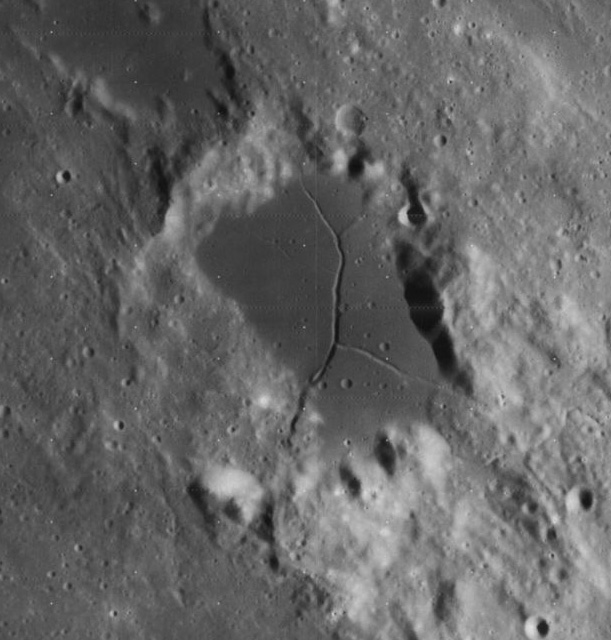
Various versions of his name exist including the English, Roger Joseph Boscovich; the Italian, Ruggero Giuseppe Boscovich; and finally, in his native Croatian: Ruđer Josip Bošković. Boscovich was a Croatian Jesuit mathematician and atomic theorist, though his work and research touched on a plethora of fields. He was born in 1711 in Croatia, but could also be considered an Italian due to the sheer amount of time he spent in Italy. (2) Boscovich decided to attend the Jesuit College in Rome, the Collegium Romanum, and set off in 1725. (2) After a two year stint studying at the Church Sant'andrea delle Fratte, he began his studies at the Collegium Romanum, the premier Jesuit university of the time. (2, 3)
He finished his initial course in 1732, but needed to teach for five years as the next phase of training. (2) His amazing results as a student earned him a position at the Collegium Romanum. At the same time he began to study the work of Newton and started making astronomical observations. (2) His schedule was quite ambitious, too ambitious as it turned out. His health suffered from this schedule on multiple occasions. Nevertheless, he continued to work. He observed the transit of Mercury in 1736, and then next year published his findings on Mercury, his research on spherical and finished his second phase of study. (2) From here, he commenced theological study that would culminate in his ordination.In 1740, he became a professor of mathematics at the College, but a couple of years later the Pope, Benedict XIV summoned him, and two other outstanding mathematicians to fix the dome of St. Peter’s Cathedral, which was starting to crack. (3) Boscovich surveyed the site with the others, but was forced to rely heavily on theoretical mathematics to come to their conclusion. (5) They decided the dome was insufficiently supported and required more iron support rings. (5) Had their calculations been entirely correct however, the dome could never have stood for any length of time. Furthermore, their solution was generally distrusted because of the reliance on mathematics, which was seen as unnecessary at the time. Nevertheless, the solution was effective and demonstrated Boscovich’s reliance on mathematics rather than conjecture. (5) In 1744 he was finally ordained.
Boscovich continued his work unrelentingly, publishing more than 70 papers on a variety of scientific topics including optics, gravitation, trigonometry, and astronomy. (2) He created a method to determine a planet’s orbit from three observations, and to calculate a planet’s equator based on three observations of a feature on the surface. (2)
But his work was not limited to research and theory. In 1752, he was once again called on to assist the Pope. On this occasion, he worked with Christopher Maire, an English Jesuit, to survey the boundaries of the Papal States and created the first accurate map of the territory. (3) The survey was conducted directly north from Rome to Rimini and Boscovich used triangulation in order to create their map. They eventually published the map and the details of their expedition in 1755 and titled it ‘On the Scientific Expedition Through the Papal States.’ (9) The map was widely reproduced and is another demonstration of Boscovich’s ability to apply mathematics to real world problems. (9)
One of the challenges Boscovich faced at this point was widespread political dislike for the Jesuit order. Boscovich resolutely set out to use his considerable influence to save the order. He journeyed to Paris in 1759. Boscovich had a magnificent reputation there, for a variety of reasons. He had met two of the members of the Academy of Science while they were travelling through Italy. In 1752, Boscovich sent an account of his research on Saturn and Jupiter to the Grand Prix of the Academy of Sciences. Euler won, but at least Boscovich received an honourable mention. (2) Finally, his work in the surveying the Papal lands, astronomy, and the aurora borealis cemented his reputation as a renowned scientist. (2) At some point he became a member of the Academy of Science. (1) Boscovich’s reputation was such that he was able to convince Benedict XIV to remove Copernicus’ work from the the Index of Forbidden Books. (1)
After a few months in Paris, he set off for England and became a member of the Royal Society. Because of his extended absence, his job was given to another Jesuit, leaving him free to carry on, and with little reason to remain in any particular location. (6) Boscovich was determined to create as many contacts as possible, and travelled across Europe. (6) He returned to Rome in 1763, but not to the Jesuit College. Instead, he worked to drain the Pontine Marshes, and regulate the flow of the Tiber river. (7) Malaria was a pressing issue, partially addressed by the Jesuit introduction of quinine during the 1500s, but marshland still posed a significant health hazard.
However, the threat to the Jesuits loomed ever larger. The Jesuit suppression occurred for a variety of reasons, but in large part because of the Jesuit reduction settlements. (4) These settlements had helped the natives achieve a better standard of life and when the Portuguese attempted to expand and force the natives out, the natives decided to defend themselves. Jesuits specifically had stepped aside, but were blamed for inciting a war against monarchy anyway, and then the order was banned in Portugal in 1759, with France and Spain following in a few years. (4)
The French attacked the Jesuits because they were unable to repay loans taken out to build sugar plantations, despite king Louis XV attempts to protect them. (4) These events forced astronomical change on Boscovich. He had been invited to journey to Baja California to observe the transit of Venus, quite a rare event, many occur hundreds of years apart; only eighty-one occured over a six-thousand year period. Occasionally though, transits occur eight years apart, a double transit of sorts. (8) Boscovich was fortunate enough to have the opportunity to live during one of these eight year cycles. However, the first available transit, in 1761, saw Boscovich in Venice under a cloud-ridden sky, while he was attempting to make his way to Constantinople. (3) This second chance in 1769 offered him the opportunity to make up for having missed the previous chance, though it would be the last in his lifetime. However, the situation was too dire for the Jesuit order and so Boscovich declined the trip. Many of the astronomers died of disease on that trip, so it was probably just as well that he avoided it. (3)
The French monarch was willing to keep current Jesuits, but the courts had ruled no against the Jesuits novices could be taken on. (4) The Jesuit colleges were shut down, but their alleged riches were nowhere to be found. Various other European powers started exiling the Jesuits and pressuring the Pope to suppress the order. (4) Pope Clement XIII was unwilling to suppress the order of which he thought so highly, but with his death, a cardinal willing to suppress the order became Pope Clement XIV. Even then, Pope Clement XIV tried to appeal, pointing to the fact that Austria-Hungary’s ruler opposed the suppression of the order. However, Austria-Hungary wanted an alliance with another power and was willing to go along with the suppression to expedite their plans. Therefore in 1773, Pope Clement XIV finally had to give the order for the Jesuits to be suppressed. (4)
When the news of the Jesuit order’s suppression came to Boscovich and he decided to head back to his native Croatia when he was invited to Paris by King Louis XVI. (6) Boscovich received a significant salary, 8,000 and the ability to work with the French Navy (6, 7) One of his key projects while working for the French Navy was developing an achromatic telescope. An achromatic lens is a lens that does not separate light into its constituent colors, creating a superior image. However, he faced a few issues in France (3) Boscovich had become a French citizen to allay their issues with a foreigner directing the Optics of the French Navy, he’d had to defend his method of determining an orbit from three observations, and also had an issue with who was getting the new equipment he had created. (2) In the end, he stayed long enough to publish a book on eclipses, but ultimately thought it better to leave France in 1782 and return to Italy(4).
Boscovich regularly published on scientific or philosophical ideas, and was also a poet. (6) He improvised verse in public, created poems about scientific subjects, and was part of an Italian society of poetry (6) He wrote several books, as well. Teacher, Engineer, Astronomer, Poet, Mathematician, Physicist, Historian, Diplomat, Jesuit, Priest, Catholic.
However, one would be remiss for failing to mention Boscovich’s most famous work: the Theory of Natural Philosophy, first published in 1758. The volume dealt the nature of atoms, which Boscovich was certain must be tiny points, almost non-existent except for the forces they produced. (1, 6) Boscovich summarizes his theory as follows “Matter is composed of perfectly indivisible, non-extended, discrete points.” (7) Furthermore, he argues no atoms can be in the same place at the same time. He reasoned that in a three dimensional space the number of points is infinite, while there are a finite number of atoms, therefore without anybody manipulating them, atoms are infinitely improbable to be in the same place. (7) In addition, Boscovich finds that atoms can never touch, but the gap between them can be infinitely small. (7) These atoms would have a property essentially like inertia but without mass since any amount of mass in an infinitesimally small point would mean an infinite amount of mass in that singular point. (7) Rather, the inertia of these atoms exists based on the forces they produce. The accelerations they produce by their inherent force can come together when they are in a group which eventually comes together to explain gravity on a macroscale. (7) Boscovich held that atoms must produce both attractive and repellent forces, and the force diminishes with distance. (1) The repulsive forces were active on the extremely microscopic scale, alternating as the scale progressed until settling on attractive forces at the macroscopic level. (2)
Works Referenced
- Roger Joseph Boscovich S. J. (1711-1787) http://www.faculty.fairfield.edu/jmac/sj/scientists/boscovich.htm
- Ruggero Giuseppe Boscovich http://www-history.mcs.st-andrews.ac.uk/Biographies/Boscovich.html
- Science in the Enlightenment: An Encyclopedia https://books.google.com/books?id=4H9_Zvp80nAC&pg=PA34&lpg=PA34&dq=Pontine+marshes+boscovich#v=onepage&q=Pontine%20marshes%20boscovich&f=false
- Causes, Process, and consequences of the Jesuit Order’s suppression. https://www.timesofmalta.com/articles/view/20140601/life-features/Causes-process-and-consequences-of-the-Jesuit-Order-s-suppression.521790
- History of Structural Engineering: St. Peter’s Dome http://www.aleckassociates.co.uk/structural-engineering/history-of-structural-engineering-st-peters-rome
- The Jesuit Suppression in Global Context: Causes, Events, and Consequences https://books.google.com/books?id=LUy2CgAAQBAJ&pg=PA265&lpg=#v=onepage&q&f=false
- A Theory of Natural Philosophy https://books.google.com/books?id=RH5jw_7UOT4C&pg=PR7&lpg=PR7&dq=#v=onepage&q&f=false
- Six Millenium of Venus Transits: 2000 BCE to 4000 CE https://eclipse.gsfc.nasa.gov/transit/catalog/VenusCatalog.html
- First Modern Map of the Papal States https://www.researchgate.net/publication/299693061_Exploring_Along_the_Rome_Meridian_Roger_Boscovich_and_the_First_Modern_Map_of_the_Papal_States
Alternate version of source #7
- https://archive.org/details/theoryofnaturalp00boscrich
Lunar Crater Named in Boscovich's honor
Monday, June 18, 2018
Albertus Magnus
Germany 1200-1280

Albert Magnus is perhaps the foremost example of a religious scientist. He explored so many topics he had no specific area of focus, writing on such diverse topics as rhetoric, math and logic to astronomy, theology, and politics.
In short, however Albert’s work is best summarized by saying he wanted to explain everything. He did not have a specific discipline but worked to bring together all the knowledge of the time together. His aim was to explain the various scientific disciplines to be widely understood (Encyclopedia Britannica 2018). Many of his works were based on Aristotle, but when that was lacking, he created his own work, and even when basing his information off that of Aristotle, he was always making something new, shifting ideas and reformulating them to be more easily understood.
Albert was the preeminent natural scientist of his age, using faith and reason together. The truth could not be in conflict with itself, as it would be if faith and reason were mutually exclusive. Rather, ordinarily everything is explainable by both, though a few things may require faith. He created commentaries on a plethora of works, notably the Bible and the foremost theological textbook of the time, Peter Lombard’s Sentences, as well as examining and commentating on all the available works of Aristotle (Encyclopedia Britannica 2018). There were severe issues involved given the breadth of Aristotle’s work and the fact copies were often lacking, so Albert made do with what he could (The Book of Minerals). Simply commenting on Aristotle’s work was quite an undertaking as the subjects ranged from Physics, and Meteorology, to The Soul, Life and Death, and the Movement of Animals. Albert spent a great deal of time honing the specific ordering, starting with Physics and finally rounding out the collection of work with Animals. That being said, his collection of works under Natural Sciences also include entries not backed by actual Aristotelian works. Interestingly, Albert was quite ready to create a new piece of work if there was an apparent gap, thus such titles as The Book of Minerals, which covered the subject of geology and why different gemstones have differing properties (The Book of Minerals). Albert was unable to locate the ancient text, but since he was already ‘rewriting’ them, after a fashion, he delved into the subject.
While the science appears quite incomplete to the modern eye, at the time, science was a much more philosophical undertaking. Instead of numbers and measurements ruling everything, the qualitative data, the purpose of things was attempted to be understood. For example, when attempting to approach metals and gems, the question was what are the essential properties that make up that thing, and what are the accidental properties. Essential properties are the qualities that have to be present for the thing to be classified as what it is, while accidental properties are variable depending on the subject, like a person’s eye color. (The Book of Minerals xxxiii). At the time, of course, the kind of science we know today was not present, but science was more akin to philosophy, perhaps something somewhat akin to theoretical physics today.
Despite his fame, much of the information about Albert Magnus’s life is uncertain. He was born in Swabia, Germany in a noble family, around about 1200 AD, plus or minus about six years. (1) The nobility of his family, actual date of birth, and a myriad of other details, such as essentially his entire childhood, are extremely uncertain, likely due to his fame. (1)
The first sure detail is that he joined the Dominican order, though again the date is an issue. According to the Encyclopedia Britannica it was in 1223, but an expert who translated one of Albert’s books on geology found it more likely the date was 1226.
By 1245, his life was well underway, as his star pupil Thomas Aquinas arrived in Paris
Albert joined the Dominican order in 1223, and by 1245 had gone to Paris to study at the Dominican convent of Saint-Jacques. While at Saint-Jacques he commenced his teaching career, lecturing on the Bible and Sentences, the main theological textbook of the time, for two years apiece (Encyclopedia Britannica 2018). Even during his life, he was recognized as a great authority on various topics, and was sent to Cologne to advance learning by establishing the first Dominican ‘general studies’ school (Encyclopedia Britannica 2018). While acting as head of the school, he wrote and taught as he wished.
However, from 1254 to 1264 he had other duties. In 1254 he was made head of the German section of the Dominicans, holding the office for three years, still maintaining his writing and research. He decided to resign in 1257 so he could return to Cologne and then the Pope, Alexander the IV, appointed him Bishop of Regensburg. With the death of the Pope in 1261, Albert resigned his office, but was once again called by the Pope to serve Christendom. For 1263 and 1264 he assisted Urban IV by rallying support for the Crusades in Germany. After lecturing at a couple of other cities, he finally returned to Cologne. (Encyclopedia Britannica 2018)
Of course, even this did not last. In 1274, he was off to the second Council of Lyons. Once there, he assisted in choosing the German monarch (Encyclopedia Britannica 2018). Then a few years later, in 1277, he journeyed to Paris to Albert uphold Thomas Aquinas’ reputation and to explain their position on various points of Aristotle that were held in question (Encyclopedia Britannica 2018).
Albert Magnus’ extensive writing and enormous influence extends far beyond his own time, all the way to the present day, with such fervor as to be almost impossible to categorize. His work extended as far as the time would allow, most notably in the natural sciences perhaps, but astounding in every field. Not only was he a dedicated researcher, he was a prolific writer dedicated to explaining Aristotle’s thought processes and the world as a whole in simple enough terms for all to understand.
Works Referenced
- St. Albertus Magnus https://www.britannica.com/biography/Saint-Albertus-Magnus
- Albert Magnus: The Book of Minerals https://archive.org/details/308059821ALBERTUSMAGNUSTheBookOfMinerals
Further Reading
- The Mediaeval Mind: A History of the Development of Thought and Emotion in the Middle Ages - Vol. 2 https://www.questia.com/read/9357714/the-mediaeval-mind-a-history-of-the-development-of
- Great Dominicans: Albertus Magnus https://www.english.op.org/godzdogz/great-dominicans-albertus-magnus
- Albert the Great https://plato.stanford.edu/entries/albert-great/
Friday, April 13, 2018
Eugenio Barsanti
Italy, 1821-1864
Eugenio Barsanti was a gifted mathematician and physicist, who together with Felice Matteucci, a hydraulic engineer from Florence, invented the first version of the internal combustion engine in 1853. Their patent request was granted in London on June 12, 1857, and published in London’s Morning Journal under the title “Specification of Eugene Barsanti and Felix Matteucci, Obtaining Motive Power by the Explosion of Gasses”.
Barsanti was born in Pietrasanta, Tuscany. Lean and short of stature, he studied in a Catholic scientific-oriented institute near Lucca, in Tuscany, and became a novitiate of the Piarist Fathers or Scolopi, in Florence in 1838. In 1841 Barsanti began teaching in the Collegio San Michele, situated in Volterra. Here, during a lecture describing the explosion of mixed hydrogen and air in a new electric pistol invented by Alessandro Volta, he realised the potential for using the energy of the expansion of combusting gases within a motor.
He soon transferred to Ximeniano Institute in Florence. where he met Matteucci, who was engaged in a land reclamation project in Florence. Matteucci appreciated the idea for the engine, and the two men worked together on it for the rest of their lives. Together, they succeeded in design and producing a number of the first type of gas engines to produce a vacuum within a closed cylinder, atmopsheric pressure then being utitlized to produce the power stroke. The principle was demonstrated in 1820, was used by Samuel Brown in 1827, and much later by N.A. Otto in 1867. On 13 May 1852, Barsanti and Matteucci received British Provisional Patent no. 1072. The patent was created in London, as Italian law at that time could not guarantee sufficient international protection. The first prototype was built in 1856 as a two-cylinder 5 HP motor. They petitioned for a second British patent (no. 1655), which was granted on 12 June 1857. On 30 December 1857, the State of Piemonte granted the directive (Patent) No. 579 and in close succession came the French patent dated 9 January 1858, No. 35009, and the Belgian patent dated 10 February 1858, No. 5533. By 1858, they had built a counter-working two-piston engine. A third engine was made in 1860 for the first National Exhibition in Florence, Italy, in 1861.
The main advantage of the Barsanti-Matteucci engine was the use of the return force of the piston due to the cooling of the gas. Other approaches based on the propulsive force of the explosion, like the one developed by France’s Etienne Lenoir, were slower. The Barsanti-Matteucci engine was five times more efficient, and won a silver medal from the Lombardy Institute of Science. It was intended to provide mechanical energy in factories and for naval propulsion. It was not light enough for use as an automotive engine. Barsanti and Matteucci selected the John Cockerill foundry in Seraing, Belgium to mass-produce a 4 hp (3.0 kW; 4.1 PS) engine. Before leaving for Belgium, Barsanti addressed His Holiness to ask for the ‘Apostolic Blessing’. Pope Pius IX had been schooled by the Scolopi in precisely the same Volterra school where, many years later, Barsanti had his first teaching assignment. Orders for the engine soon followed from many countries within Europe. Unfortunately, 48 hours before supervising mass production was to start at Cockerill in Seraing, Belgium, Barsanti fell ill with typhoid. He died shortly after, on 19 April 1864. Matteucci, himself very ill, gave up the enterprise and eventually returned to engineering.
Eugenio Barsanti was a gifted mathematician and physicist, who together with Felice Matteucci, a hydraulic engineer from Florence, invented the first version of the internal combustion engine in 1853. Their patent request was granted in London on June 12, 1857, and published in London’s Morning Journal under the title “Specification of Eugene Barsanti and Felix Matteucci, Obtaining Motive Power by the Explosion of Gasses”.
Barsanti was born in Pietrasanta, Tuscany. Lean and short of stature, he studied in a Catholic scientific-oriented institute near Lucca, in Tuscany, and became a novitiate of the Piarist Fathers or Scolopi, in Florence in 1838. In 1841 Barsanti began teaching in the Collegio San Michele, situated in Volterra. Here, during a lecture describing the explosion of mixed hydrogen and air in a new electric pistol invented by Alessandro Volta, he realised the potential for using the energy of the expansion of combusting gases within a motor.
He soon transferred to Ximeniano Institute in Florence. where he met Matteucci, who was engaged in a land reclamation project in Florence. Matteucci appreciated the idea for the engine, and the two men worked together on it for the rest of their lives. Together, they succeeded in design and producing a number of the first type of gas engines to produce a vacuum within a closed cylinder, atmopsheric pressure then being utitlized to produce the power stroke. The principle was demonstrated in 1820, was used by Samuel Brown in 1827, and much later by N.A. Otto in 1867. On 13 May 1852, Barsanti and Matteucci received British Provisional Patent no. 1072. The patent was created in London, as Italian law at that time could not guarantee sufficient international protection. The first prototype was built in 1856 as a two-cylinder 5 HP motor. They petitioned for a second British patent (no. 1655), which was granted on 12 June 1857. On 30 December 1857, the State of Piemonte granted the directive (Patent) No. 579 and in close succession came the French patent dated 9 January 1858, No. 35009, and the Belgian patent dated 10 February 1858, No. 5533. By 1858, they had built a counter-working two-piston engine. A third engine was made in 1860 for the first National Exhibition in Florence, Italy, in 1861.
The main advantage of the Barsanti-Matteucci engine was the use of the return force of the piston due to the cooling of the gas. Other approaches based on the propulsive force of the explosion, like the one developed by France’s Etienne Lenoir, were slower. The Barsanti-Matteucci engine was five times more efficient, and won a silver medal from the Lombardy Institute of Science. It was intended to provide mechanical energy in factories and for naval propulsion. It was not light enough for use as an automotive engine. Barsanti and Matteucci selected the John Cockerill foundry in Seraing, Belgium to mass-produce a 4 hp (3.0 kW; 4.1 PS) engine. Before leaving for Belgium, Barsanti addressed His Holiness to ask for the ‘Apostolic Blessing’. Pope Pius IX had been schooled by the Scolopi in precisely the same Volterra school where, many years later, Barsanti had his first teaching assignment. Orders for the engine soon followed from many countries within Europe. Unfortunately, 48 hours before supervising mass production was to start at Cockerill in Seraing, Belgium, Barsanti fell ill with typhoid. He died shortly after, on 19 April 1864. Matteucci, himself very ill, gave up the enterprise and eventually returned to engineering.
Saturday, May 6, 2017
George Lemaître
Belgian Catholic priest, astronomer and professor of physics at the Catholic University of Leuven. He proposed the theory of the expansion of the universe, widely misattributed to Edwin Hubble. He was the first to derive what is now known as Hubble’s law and made the first estimation of what is now called the Hubble constant, which he published in 1927, two years before Hubble’s article. Lemaître also proposed what became known as the Big Bang theory of the origin of the universe, which he called his “hypothesis of the primeval atom” or the “Cosmic Egg”.
 Lemaître began studying civil engineering at the Catholic University of Leuven at the age of 17. In 1914, he interrupted his studies to serve as a Belgian artillery officer in WW I, receiving the Belgian War Cross with palms.
After the war, he studied physics and mathematics, and began to prepare for diocesan priesthood. He obtained his doctorate in 1920 with a thesis entitled l’Approximation des fonctions de plusieurs variables réelles (Approximation of functions of several real variables), written under the direction of Charles de la Vallée-Poussin. He was ordained a priest in 1923 and became a graduate student in astronomy at the University of Cambridge, spending a year at St Edmund’s House (now St Edmund’s College, Cambridge). Arthur Eddington taught him modern cosmology, stellar astronomy, and numerical analysis. He spent the next year at Harvard College Observatory in Cambridge, Massachusetts, with Harlow Shapley, who had just gained renown for his work on nebulae, and at the Massachusetts Institute of Technology (MIT), where he registered for the doctoral program in sciences.
In 1925, on his return to Belgium, he became a part-time lecturer at the Catholic University of Leuven. In 1927, he published an article in the little-known journal, Annales de la Société Scientifique de Bruxelles, under the title “Un Univers homogène de masse constante et de rayon croissant rendant compte de la vitesse radiale des nébuleuses extragalactiques” (“A homogeneous Universe of constant mass and growing radius accounting for the radial velocity of extragalactic nebulae”). In this report, he presented his a family of solutions to Einstein’s field equations that described an expanding universe, derived from General Relativity and later known as Hubble’s law, and provided the first observational estimation of the Hubble constant. While the article was not widely noticed, Arthur Eddington reportedly helped translate it into English in 1931, unfortunately omitting the article’s estimation of the “Hubble constant”. Lemaître returned to MIT to present his doctoral thesis. Upon obtaining what was now his second Ph.D., he was named ordinary professor at the Catholic University of Leuven.

In 1930, Eddington published in the Monthly Notices of the Royal Astronomical Society a long commentary on Lemaître’s 1927 article, in which he described the latter as a “brilliant solution” to the outstanding problems of cosmology. The original paper was published in an abbreviated English translation in 1931, along with a sequel by Lemaître responding to Eddington’s comments. Lemaître was then invited to London to participate in a meeting of the British Association on the relation between the physical universe and spirituality. There he proposed that the universe expanded from an initial point, which he called the “Primeval Atom”. He developed this idea in a report published in Nature. Lemaître himself also described his theory as “the Cosmic Egg exploding at the moment of the creation”; it became better known as the “Big Bang theory,” a pejorative term coined during a 1949 BBC radio broadcast by the astronomer and atheist Fred Hoyle, who was then still a proponent of the steady state universe and remained so until his death in 2001. Hoyle would later convert to theism as a result of his own astrophysical work.
In 1931, Lemaitre was the first scientist to propose the expansion of the universe was actually accelerating which was confirmed observationally in the 1990s through observations of very distant Type IA supernova with the Hubble Space Telescope. In 1933, Lemaître found an important inhomogeneous solution of Einstein’s field equations describing a spherical dust cloud, the Lemaître–Tolman metric. Lemaître was also an early adopter of computers for cosmological calculations. He introduced the first computer to his university (a Burroughs E101) in 1958 and was one of the inventors of the Fast Fourier transform algorithm. Among his many awards for outstanding science, he was given the inaugural Eddington Medal awarded by the Royal Astronomical Society. He died on 20 June 1966, shortly after having learned of the discovery of cosmic microwave background radiation, which provided further evidence for his proposal about the birth of the universe. The fifth Automated Transfer Vehicle to the International Space Station was named Georges Lemaitre in his honor. He is the Father of Cosmology.
After the war, he studied physics and mathematics, and began to prepare for diocesan priesthood. He obtained his doctorate in 1920 with a thesis entitled l’Approximation des fonctions de plusieurs variables réelles (Approximation of functions of several real variables), written under the direction of Charles de la Vallée-Poussin. He was ordained a priest in 1923 and became a graduate student in astronomy at the University of Cambridge, spending a year at St Edmund’s House (now St Edmund’s College, Cambridge). Arthur Eddington taught him modern cosmology, stellar astronomy, and numerical analysis. He spent the next year at Harvard College Observatory in Cambridge, Massachusetts, with Harlow Shapley, who had just gained renown for his work on nebulae, and at the Massachusetts Institute of Technology (MIT), where he registered for the doctoral program in sciences.
In 1925, on his return to Belgium, he became a part-time lecturer at the Catholic University of Leuven. In 1927, he published an article in the little-known journal, Annales de la Société Scientifique de Bruxelles, under the title “Un Univers homogène de masse constante et de rayon croissant rendant compte de la vitesse radiale des nébuleuses extragalactiques” (“A homogeneous Universe of constant mass and growing radius accounting for the radial velocity of extragalactic nebulae”). In this report, he presented his a family of solutions to Einstein’s field equations that described an expanding universe, derived from General Relativity and later known as Hubble’s law, and provided the first observational estimation of the Hubble constant. While the article was not widely noticed, Arthur Eddington reportedly helped translate it into English in 1931, unfortunately omitting the article’s estimation of the “Hubble constant”. Lemaître returned to MIT to present his doctoral thesis. Upon obtaining what was now his second Ph.D., he was named ordinary professor at the Catholic University of Leuven.
In 1930, Eddington published in the Monthly Notices of the Royal Astronomical Society a long commentary on Lemaître’s 1927 article, in which he described the latter as a “brilliant solution” to the outstanding problems of cosmology. The original paper was published in an abbreviated English translation in 1931, along with a sequel by Lemaître responding to Eddington’s comments. Lemaître was then invited to London to participate in a meeting of the British Association on the relation between the physical universe and spirituality. There he proposed that the universe expanded from an initial point, which he called the “Primeval Atom”. He developed this idea in a report published in Nature. Lemaître himself also described his theory as “the Cosmic Egg exploding at the moment of the creation”; it became better known as the “Big Bang theory,” a pejorative term coined during a 1949 BBC radio broadcast by the astronomer and atheist Fred Hoyle, who was then still a proponent of the steady state universe and remained so until his death in 2001. Hoyle would later convert to theism as a result of his own astrophysical work.
In 1931, Lemaitre was the first scientist to propose the expansion of the universe was actually accelerating which was confirmed observationally in the 1990s through observations of very distant Type IA supernova with the Hubble Space Telescope. In 1933, Lemaître found an important inhomogeneous solution of Einstein’s field equations describing a spherical dust cloud, the Lemaître–Tolman metric. Lemaître was also an early adopter of computers for cosmological calculations. He introduced the first computer to his university (a Burroughs E101) in 1958 and was one of the inventors of the Fast Fourier transform algorithm. Among his many awards for outstanding science, he was given the inaugural Eddington Medal awarded by the Royal Astronomical Society. He died on 20 June 1966, shortly after having learned of the discovery of cosmic microwave background radiation, which provided further evidence for his proposal about the birth of the universe. The fifth Automated Transfer Vehicle to the International Space Station was named Georges Lemaitre in his honor. He is the Father of Cosmology.
Thursday, May 4, 2017
Joseph Bayma
Jesuit mathematician and scientist, b. in Piedmont, Italy, 9 November, 1816; d. at Santa Clara, California, U.S.A. 7 February, 1892. He entered the Society of Jesus, 5 February, 1832, and distinguished himself in literature, mathematics, and physics. He was in charge of the episcopal seminary of Bertinoro when the troubles of 1860 forced him and many of his brethren to seek shelter in England. Hitherto he had given no special attention to philosophy, but at Stonyhurst he took it up and taught it for some seven years. His powerful and original mind soon produced three volumes of "Realis Philosophia", which were printed for private circulation. No sooner were they out than he introduced numerous corrections; thus the printed volumes cannot be relied upon as evidence of his mature opinions. In 1868 Father Bayma left for California, where he was Rector of Saint Ignatius' College, San Francisco, for three years, but afterwards resided at Santa Clara, teaching elementary mathematics there until his death. At his death he left behind, in manuscript, an elaborate new edition of the "Realis Philosophia" which never saw the light. His published works are "Molecular Mechanics" (Cambridge, 1866); "The Love of Religious Perfection", originally in Italian, in the style of the "The Imitation of Christ" (published in English, Dublin, 1863); articles in "The Catholic World", XVII-XXI (1873-75), the best printed account of his philosophy; two articles in the "Am. Cath. Q. Rev.", II (1877); and "A Discussion with an Infidel", being a review of Büchner's "Force and Matter" (New York, London, and Leamington, 1901). His elementary works on mathematics, all published in San Francisco, are: "Algebra" (1890), "Geometry" (1895), "Analytical Geometry" (1887), "Plane and Spherical Trigonometry" (1886), "Infinitesimal Calculus" (1889).
Father Bayma took the Venerable Bede for his model, and loved to refer to the old Breviary Lesson, which used to be read in England on St. Bede's day. It ran: "Bede [and Bayma too] was handsome of stature, grave of gait, rich and sonorous of voice, eloquent of speech, noble of countenance, a blend of affability and severity. He was affable to the god and devout, formidable to the proud and negligent. He was always reading, always writing, always teaching, always praying." Only the young men who sat under him could know his fascination as a teacher. To posterity he must be known by his "Molecular Mechanics", a metaphysical and mathematical work treating of the constitution of matter. With Roger Boscovich, Bayma reduces all matter to unextended points, centres of force acting in the inverse square of the distance. Thus acting upon one another, but of course not touching, for Bayma abhorred continuous matter and upheld actio in distans, these points were bound up into molecules, and molecules into bodies. Boscovich made his points, or elements, attractive at molar distances, repulsive at molecular. Bayma divides elements into attractive and repulsive, the former always attracting, the later always repelling; the attractive elements preponderating in the in the nucleus of the molecule, the repulsive in the envelope. The work drew attention at Cambridge, and at Trinity College, Dublin. The author was advised to test his theories by ten years of experiments in chemistry and electricity. Unhappily, this was never done. One of his proofs certainly lies open to grave objection, but Bayma's main theory does not stand or fall with that proposition. The gravest objection against the theory is its alleged failure to account for inertia. Father Bayma ever professed the utmost reverence for St. Thomas. His saying was: "the metaphysics of St. Thomas, with modern physics".
Father Bayma took the Venerable Bede for his model, and loved to refer to the old Breviary Lesson, which used to be read in England on St. Bede's day. It ran: "Bede [and Bayma too] was handsome of stature, grave of gait, rich and sonorous of voice, eloquent of speech, noble of countenance, a blend of affability and severity. He was affable to the god and devout, formidable to the proud and negligent. He was always reading, always writing, always teaching, always praying." Only the young men who sat under him could know his fascination as a teacher. To posterity he must be known by his "Molecular Mechanics", a metaphysical and mathematical work treating of the constitution of matter. With Roger Boscovich, Bayma reduces all matter to unextended points, centres of force acting in the inverse square of the distance. Thus acting upon one another, but of course not touching, for Bayma abhorred continuous matter and upheld actio in distans, these points were bound up into molecules, and molecules into bodies. Boscovich made his points, or elements, attractive at molar distances, repulsive at molecular. Bayma divides elements into attractive and repulsive, the former always attracting, the later always repelling; the attractive elements preponderating in the in the nucleus of the molecule, the repulsive in the envelope. The work drew attention at Cambridge, and at Trinity College, Dublin. The author was advised to test his theories by ten years of experiments in chemistry and electricity. Unhappily, this was never done. One of his proofs certainly lies open to grave objection, but Bayma's main theory does not stand or fall with that proposition. The gravest objection against the theory is its alleged failure to account for inertia. Father Bayma ever professed the utmost reverence for St. Thomas. His saying was: "the metaphysics of St. Thomas, with modern physics".
Ruggiero Giuseppe Boscovich
A Dalmatian Jesuit and well-known mathematician, astronomer, and natural philosopher, b. at Ragusa, 18 May 1711; d. at Milan, 13 February, 1787. He was the youngest of six brothers and his education began at the Jesuit college of his native city. Being early impressed by the success achieved by his masters, he resolved to receive admission into their ranks, and on 31 October, 1725, at the youthful age of fourteen, he entered the novitiate of the Society of Jesus in Rome. His unusual talents manifested themselves particularly during the years devoted to literary and philosophical studies at the Collegio Romano, the most celebrated of the colleges of the Society of Jesus. Thus, for example, young Boscovich discovered for himself the proof of the theorem of Pythagoras. His professor, especially Father Horatio Borgondi, professor of mathematics, knew how to cultivate talents, and he made such progress, especially in mathematics, that he was able to take the place of his former professor at the Roman College even before the completion of his theological studies. As soon as he had completed the ordinary studies of a young Jesuit, he was appointed regular professor of mathematical science at the same college. He performed the duties of this office with much distinction for a whole generation, as is evidenced by the numerous Latin dissertations which he published nearly every year, according to the custom of the time. These show Boscovich's preference for astronomical problems. Among them may be mentioned:
Problems in pure mathematics as well as philosophical speculations regarding the various theories on the constitution of matter also engaged his attention and he took an active part in all scientific discussions which agitated the learned world of his time. To these belong his The Deviation of the earth from the probable Spherical Shape; Researches on Unusual Gravitation; The Computation of a Comet's Orbit from a Few Observations, etc. His able treatment of these and similar problems attracted the attention of foreign, as well as of Italian, Academies, several of which--among them Bologna, Paris, and London--admitted him to membership. At Paris he shared with the famous mathematician Euler the honor of having submitted the correction solution to a prize problem.
Boscovich also showed much ability in dealing with practical problems. To him was due the project of the Observatory of the Collegio Romano, which afterwards became so well known. He first suggested using the massive dome-pillars of the college church of St. Ignatius as a foundation, on account of their great stability. (The church dome has not yet been completed, so the pillars still await the substructure planned by the architect.) The unfavorable circumstances of the time, and the storms brewing against the Jesuits, which ended, as is well known, in the suppression of the Society, prevented Boscovich's plan from being carried out until 1850, when Father Secchi, his worthy successor, was able to bring it to completion. There is a close parallel, it may be observed, between these two coryphaei of the Roman College, and Boscovich may, without hesitation, be considered the intellectual forerunner of Secchi. Like Secchi, too, he was the advisor of the papal Government in all important technical questions. Thus, when in the middle of the eighteenth century the great dome of St. Peter's began to show cracks and other signs of damage, causing consternation to the pope and to the Eternal City, Boscovich was consulted, and the excitement was not allayed until his plan to place large iron bands about the dome was carried out. His advice was sought when there was a question of rendering innocuous the Pontine marshes and he was also entrusted with the survey of the Papal States. Pope Benedict XIV commissioned him and his fellow Jesuit, Le Maire, to carry out several precise meridian arc measurements, and it seems to have been due chiefly to his influence that the same pope, in 1757, abrogated the obsolete decree of the Index against the Copernican system.
Many universities outside of Italy sought to number Boscovich among their professors. He himself was full of the spirit of enterprise, as was shown when King John V of Portugal petitioned the general of the Jesuits for ten Fathers to make an elaborate survey in Brazil. He voluntarily offered his services for the arduous task, hoping thus to be able to carry out an independent survey in Ecuador, and so obtain data of value for the final solution to the problem of the figure of the earth, which was then exciting much attention in England and France. His proposal lead to the initiation of similar surveys in the Papal States, the pope taking this means of retaining him in his own domain. A detailed account of the results of the work appeared in a large quarto volume (Rome, 1755) entitled: "De litterariâ expeditione per Pontificam ditionem ad dimetiendos duos meridiani gradus et corrigendam mappam geographicam." A map of the Papal States made at the same time, which corrected many previous errors, proved to be likewise a wholesome contribution to the discussion regarding the more or less spherical form of the earth. Many of the triangulations were accomplished by no slight difficulties. The two base-lines employed in the survey--one on the Via Apia, the other in the neighborhood of Rimini--were measured with great care. The first was redetermined in 1854-55 by Father Secchi, as the mark indicating one end of the line measured by Boscovich and La Maire had been lost. (Cf. Secchi's work: Misura della Base trigonometrica esequita sull via Appia per ordine del governo pontifico, Roma, 1858.) Besides his work in mathematical astronomy, we also find Boscovich speculating, upon scientific grounds, on the essence of matter and endeavoring to establish more widely Newton's law of universal gravitation. As early as 1748 we meet essays from his pen in this field of thought, e.g. De materiae divisibilitate et du principiis corporum dissertatio (1748); De continuitatis lege et ejus consectariis pertinentibus ad prima materiae elementa eorumque vires (1754); De lege virium in natura existentium (1755); Philosophiae naturalis theoria redacta ad unicam legem virium in natura existentium (1758). Boscovich, according to the views expressed in these essays, held that bodies could not be composed of a continuous material substance, nor even of contiguous material particles, but of innumerable point-like structures whose individual components lack all extension and divisibility. A repulsion exists between them which is indeed infinitesimal but cannot vanish without compenetration taking place. This repulsion is due to certain forces with which these elements are endowed. It tends to become infinite when they are in very close proximity, whereas within certain limits it diminishes as the distance is increased and finally becomes an attractive force. This change is brought about by the diverse direction of the various forces.
Boscovich divided his last-mentioned exhaustive work into three parts, first explaining and establishing his theory, and then pointing out his applications to mechanical problems, and finally showing how it may be employed in physics. His attempt to reduce the complicated laws of nature to a simple fundamental law aroused so much interest that in 1763 a third, and enlarged edition of his "Theoria philosphiae naturalis" (Venice, 1763) had become necessary. The publisher added as an appendix a catalogue of Boscovich's previous works. There are no less than sixty-six treatises dating from 1736--a proof of his literary activity. Some have already been mentioned, and to these may be added his "Elementorum matheseos tomi tres," in quarto (1752).
Boscovich attracted attention by his political writings as well as by his scientific achievements. His Latin verses in which he eulogized the Polish king, Stanislaus, Pope Benedict XIV, and various Venetian noblemen, were read before the Arcadian Academy of Rome. His "Carmen de Solis ac Lunae defectibus" (5 vols., London, 1760) was much admired. His services were also in demand in several cities and provinces. Thus, in 1757, he was sent by the city of Lucca to the Court of Vienna to urge the damming of the lakes which were threatening the city. He acquitted himself of this task which such skill that the Luccans made him an honorary citizen and rendered him generous assistance on his scientific journeys, both in Italy, France, and England. While in England he gave the impulse to the observations of the approaching transit of Venus, on 6 June, 1761, and it is not unlikely that his proposal to employ lenses composed of liquids, to avoid chromatic aberration, may have contributed to Dolland's success in constructing achromatic telescopes. The citizens of Ragusa, his native town, besought him to settle a dispute in which they had become involved with the King of France--an affair which the pope himself deigned to adjust. Boscovich returned from England in company with the Venetian ambassador who took him by way of Poland as far as Constantinople. He availed himself of this opportunity to extend and complete his archeological studies in these countries, as may be gathered from his journal published at Bassano in 1784: "Giornale d'un viaggio da Constantinopli in Polnia con una relazione della rovine de Troja." The hardships of this journey shattered his health, yet we find him shortly after (1762) employed at Rome in various practical works, such as the draining of the Pontine marshes. In 1764 he accepted the appointment of professor of mathematics at the University of Pavia (Ticinum).
At the same time, Father Le Grange, the former assistant of Father Pezenas of the Observatory of Marseilles, was invited by the Jesuits of Milan to erect an observatory at the large college of Brera. He was able to avail himself of the technical skill of Boscovich in carrying out his commission and it may be questioned to which of the two belongs the greater credit in the founding of this observatory which, even in our own time, with that of the Collegio Romano, is among the most prominent of Italy. It was Boscovich who selected the southeast corner of the college as a site for the observatory and worked out the complete plans, including the reinforcements and the necessary remodeling for the structure. Building operations were immediately begun, and in the following year, 1765, a large room for the mural quadrants and meridian instruments, another for the smaller instrument, and a broad terrace, with several revolving domes to contain the sextants and equitorials, were completed. Such was the stability of the observatory that the new 18-inch glass of Schiaparelli could be mounted in it although a cylindrical dome of 13 yards, 4 inches now takes the place of the octogonal hall of Boscovich.
The London Academy proposed to send Boscovich in charge of an expedition to California to observe the transit of Venus in 1769, but, unfortunately, the opposition manifested everywhere to the Society of Jesus and leading finally to its suppression, made this impossible. He continued, however, to give his services to the Milan Observatory for whose further development he was able to obtain no inconsiderable sums of money. In particular the adjustment of the instrument engaged his attention, a subject about which he left several papers. But as his elaborate plans received only partial support from his superiors and patrons, he thought seriously in 1772 of severing his connection with the observatory, and, in fact, in the same year, Father La Grange was placed in complete charge of the new institution. Boscovich was to become professor at the University of Pisa, but Louis XV gained his services and invited him to Paris, where a new office, Director of Optics for the Marine--d'optique au service de la Marine--with a salary of 8,000 francs, was created for him. He retained this position until 1783 when he returned to Italy to supervise the printing of his as yet unpublished works in five volumes, for it was not easy to find a suitable publisher in France for books written in Latin. In 1785 there appeared at Bassano, "Rogerii Josephi Boscovich opera pertinentia ad opticam et astronomiam. . .in quinque tomos distributa," the last important work from the pen of this active man, who, after its completion, retired for a time to the monastery of the monks of Vallombrosa. He returned to Milan with new plans, but death shortly overtook him at the age of seventy-six, delivering him from a severe malady which was accompanied by temporary mental derangement. He was buried in the church of Santa Maria Podone.
Boscovich, by his rare endowments of mind and the active use which he made of his talents, was preeminent among the scholars of his time. His merits were recognized by learned societies and universities, and by popes and princes who honored him and bestowed favors upon him. He was recognized as a gifted teacher, an accomplished leader in scientific enterprises, an inventor of important instruments which are still employed (such as the ring-micrometer, etc.) and as a pioneer in developing new theories. All this, however, did not fail to excite envy against him, particularly in the later years of his life in France, where men like d'Alembert and Condorcet reluctantly saw the homage paid to the former Jesuit, and that, too, at a time when so many frivolous charges were being made against his lately suppressed order. This hostility was further increased by various controversies which resulted in differences of opinion, such as the contention between Boscovich and Rochon regarding priority in the invention of the rock crystal prismatic micrometer. (Cf. Delambre, Historie de l'Astronomie du XVIIIe siecle, p. 645.) The invention of the ring-micrometer, just mentioned, which Boscovich describes in his memoir "De novo telescopii usu ad objecta coelestia determinanda" (Rome, 1739), has been ascribed without reason by some to the Dutch natural philosopher Huygens. The chief advantage of the simple measuring instrument designed by Boscovich consists in its not requiring any artificial illumination of the field of the telescope. This makes it useful in observing faint objects, as its inventor expressly points out in connection with the comet of 1739. The novel views of Boscovich in the domain of natural philosophy have not, up to the present time, passed unchallenged, even on the part of Catholic scholars. Against his theory of the constitution of matter the objection has been raised that an inadmissible actio in distans is inevitable in the mutual actions of the elementary points of which material bodies are supposed to be composed. The theory therefore leads to Occasionalism. Acknowledgement must, however, must be made of the suggestiveness of Boscovich's work in our own day, and the germs of many of the conclusions of modern physics may be found in it. His illustrious successor at the Observatory of the Collegio romano, Father Angelo Secchi, in his "Unita delle forze fisiche" has in many respects followed in his footsteps, and in fact the cosmological views held by many later natural philosophers furnish unequivocal proof of the influence of the theories maintained by Boscovich.
Among his many smaller works (for a full list, cf. Sommervogel, cited below), the following deserve special attention: De annuis stellarum fixarum aberrationibus (Rome, 1742); De orbitus cometarum determinandis ope trium observationem parum a se invicem remotarum (Paris, 1774); De recentibus compertis pertinentibus ad perficiendam dioptricam (1767). His chief works, however, are:
The second was published in Vienna 1758-59, in Venice, 1763, and again in Vienna in 1764. The last-named work was subjected to an exhaustive criticism by Delambre, by no means a friend of the Jesuits. He closes with these words: Boscovich in general manifests a preference for graphical methods in the use of which he gives evidence of great skill. in his whole work he shows himself a teacher who prefers to lecture rather than to lose himself in speculations."
- The Sunspots (1736);
- The Transit of Mercury (1737);
- The Aurora Borealis (1738);
- The Application of the Telescope in Astronomical Studies (1739);
- The Figure of the Earth (1739);
- The Motion of the heavenly Bodies in an unresisting Medium (1740);
- The Various Effects of Gravity (1741);
- The Aberration of the Fixed Stars (1742).
Problems in pure mathematics as well as philosophical speculations regarding the various theories on the constitution of matter also engaged his attention and he took an active part in all scientific discussions which agitated the learned world of his time. To these belong his The Deviation of the earth from the probable Spherical Shape; Researches on Unusual Gravitation; The Computation of a Comet's Orbit from a Few Observations, etc. His able treatment of these and similar problems attracted the attention of foreign, as well as of Italian, Academies, several of which--among them Bologna, Paris, and London--admitted him to membership. At Paris he shared with the famous mathematician Euler the honor of having submitted the correction solution to a prize problem.
Boscovich also showed much ability in dealing with practical problems. To him was due the project of the Observatory of the Collegio Romano, which afterwards became so well known. He first suggested using the massive dome-pillars of the college church of St. Ignatius as a foundation, on account of their great stability. (The church dome has not yet been completed, so the pillars still await the substructure planned by the architect.) The unfavorable circumstances of the time, and the storms brewing against the Jesuits, which ended, as is well known, in the suppression of the Society, prevented Boscovich's plan from being carried out until 1850, when Father Secchi, his worthy successor, was able to bring it to completion. There is a close parallel, it may be observed, between these two coryphaei of the Roman College, and Boscovich may, without hesitation, be considered the intellectual forerunner of Secchi. Like Secchi, too, he was the advisor of the papal Government in all important technical questions. Thus, when in the middle of the eighteenth century the great dome of St. Peter's began to show cracks and other signs of damage, causing consternation to the pope and to the Eternal City, Boscovich was consulted, and the excitement was not allayed until his plan to place large iron bands about the dome was carried out. His advice was sought when there was a question of rendering innocuous the Pontine marshes and he was also entrusted with the survey of the Papal States. Pope Benedict XIV commissioned him and his fellow Jesuit, Le Maire, to carry out several precise meridian arc measurements, and it seems to have been due chiefly to his influence that the same pope, in 1757, abrogated the obsolete decree of the Index against the Copernican system.
Many universities outside of Italy sought to number Boscovich among their professors. He himself was full of the spirit of enterprise, as was shown when King John V of Portugal petitioned the general of the Jesuits for ten Fathers to make an elaborate survey in Brazil. He voluntarily offered his services for the arduous task, hoping thus to be able to carry out an independent survey in Ecuador, and so obtain data of value for the final solution to the problem of the figure of the earth, which was then exciting much attention in England and France. His proposal lead to the initiation of similar surveys in the Papal States, the pope taking this means of retaining him in his own domain. A detailed account of the results of the work appeared in a large quarto volume (Rome, 1755) entitled: "De litterariâ expeditione per Pontificam ditionem ad dimetiendos duos meridiani gradus et corrigendam mappam geographicam." A map of the Papal States made at the same time, which corrected many previous errors, proved to be likewise a wholesome contribution to the discussion regarding the more or less spherical form of the earth. Many of the triangulations were accomplished by no slight difficulties. The two base-lines employed in the survey--one on the Via Apia, the other in the neighborhood of Rimini--were measured with great care. The first was redetermined in 1854-55 by Father Secchi, as the mark indicating one end of the line measured by Boscovich and La Maire had been lost. (Cf. Secchi's work: Misura della Base trigonometrica esequita sull via Appia per ordine del governo pontifico, Roma, 1858.) Besides his work in mathematical astronomy, we also find Boscovich speculating, upon scientific grounds, on the essence of matter and endeavoring to establish more widely Newton's law of universal gravitation. As early as 1748 we meet essays from his pen in this field of thought, e.g. De materiae divisibilitate et du principiis corporum dissertatio (1748); De continuitatis lege et ejus consectariis pertinentibus ad prima materiae elementa eorumque vires (1754); De lege virium in natura existentium (1755); Philosophiae naturalis theoria redacta ad unicam legem virium in natura existentium (1758). Boscovich, according to the views expressed in these essays, held that bodies could not be composed of a continuous material substance, nor even of contiguous material particles, but of innumerable point-like structures whose individual components lack all extension and divisibility. A repulsion exists between them which is indeed infinitesimal but cannot vanish without compenetration taking place. This repulsion is due to certain forces with which these elements are endowed. It tends to become infinite when they are in very close proximity, whereas within certain limits it diminishes as the distance is increased and finally becomes an attractive force. This change is brought about by the diverse direction of the various forces.
Boscovich divided his last-mentioned exhaustive work into three parts, first explaining and establishing his theory, and then pointing out his applications to mechanical problems, and finally showing how it may be employed in physics. His attempt to reduce the complicated laws of nature to a simple fundamental law aroused so much interest that in 1763 a third, and enlarged edition of his "Theoria philosphiae naturalis" (Venice, 1763) had become necessary. The publisher added as an appendix a catalogue of Boscovich's previous works. There are no less than sixty-six treatises dating from 1736--a proof of his literary activity. Some have already been mentioned, and to these may be added his "Elementorum matheseos tomi tres," in quarto (1752).
Boscovich attracted attention by his political writings as well as by his scientific achievements. His Latin verses in which he eulogized the Polish king, Stanislaus, Pope Benedict XIV, and various Venetian noblemen, were read before the Arcadian Academy of Rome. His "Carmen de Solis ac Lunae defectibus" (5 vols., London, 1760) was much admired. His services were also in demand in several cities and provinces. Thus, in 1757, he was sent by the city of Lucca to the Court of Vienna to urge the damming of the lakes which were threatening the city. He acquitted himself of this task which such skill that the Luccans made him an honorary citizen and rendered him generous assistance on his scientific journeys, both in Italy, France, and England. While in England he gave the impulse to the observations of the approaching transit of Venus, on 6 June, 1761, and it is not unlikely that his proposal to employ lenses composed of liquids, to avoid chromatic aberration, may have contributed to Dolland's success in constructing achromatic telescopes. The citizens of Ragusa, his native town, besought him to settle a dispute in which they had become involved with the King of France--an affair which the pope himself deigned to adjust. Boscovich returned from England in company with the Venetian ambassador who took him by way of Poland as far as Constantinople. He availed himself of this opportunity to extend and complete his archeological studies in these countries, as may be gathered from his journal published at Bassano in 1784: "Giornale d'un viaggio da Constantinopli in Polnia con una relazione della rovine de Troja." The hardships of this journey shattered his health, yet we find him shortly after (1762) employed at Rome in various practical works, such as the draining of the Pontine marshes. In 1764 he accepted the appointment of professor of mathematics at the University of Pavia (Ticinum).
At the same time, Father Le Grange, the former assistant of Father Pezenas of the Observatory of Marseilles, was invited by the Jesuits of Milan to erect an observatory at the large college of Brera. He was able to avail himself of the technical skill of Boscovich in carrying out his commission and it may be questioned to which of the two belongs the greater credit in the founding of this observatory which, even in our own time, with that of the Collegio Romano, is among the most prominent of Italy. It was Boscovich who selected the southeast corner of the college as a site for the observatory and worked out the complete plans, including the reinforcements and the necessary remodeling for the structure. Building operations were immediately begun, and in the following year, 1765, a large room for the mural quadrants and meridian instruments, another for the smaller instrument, and a broad terrace, with several revolving domes to contain the sextants and equitorials, were completed. Such was the stability of the observatory that the new 18-inch glass of Schiaparelli could be mounted in it although a cylindrical dome of 13 yards, 4 inches now takes the place of the octogonal hall of Boscovich.
The London Academy proposed to send Boscovich in charge of an expedition to California to observe the transit of Venus in 1769, but, unfortunately, the opposition manifested everywhere to the Society of Jesus and leading finally to its suppression, made this impossible. He continued, however, to give his services to the Milan Observatory for whose further development he was able to obtain no inconsiderable sums of money. In particular the adjustment of the instrument engaged his attention, a subject about which he left several papers. But as his elaborate plans received only partial support from his superiors and patrons, he thought seriously in 1772 of severing his connection with the observatory, and, in fact, in the same year, Father La Grange was placed in complete charge of the new institution. Boscovich was to become professor at the University of Pisa, but Louis XV gained his services and invited him to Paris, where a new office, Director of Optics for the Marine--d'optique au service de la Marine--with a salary of 8,000 francs, was created for him. He retained this position until 1783 when he returned to Italy to supervise the printing of his as yet unpublished works in five volumes, for it was not easy to find a suitable publisher in France for books written in Latin. In 1785 there appeared at Bassano, "Rogerii Josephi Boscovich opera pertinentia ad opticam et astronomiam. . .in quinque tomos distributa," the last important work from the pen of this active man, who, after its completion, retired for a time to the monastery of the monks of Vallombrosa. He returned to Milan with new plans, but death shortly overtook him at the age of seventy-six, delivering him from a severe malady which was accompanied by temporary mental derangement. He was buried in the church of Santa Maria Podone.
Boscovich, by his rare endowments of mind and the active use which he made of his talents, was preeminent among the scholars of his time. His merits were recognized by learned societies and universities, and by popes and princes who honored him and bestowed favors upon him. He was recognized as a gifted teacher, an accomplished leader in scientific enterprises, an inventor of important instruments which are still employed (such as the ring-micrometer, etc.) and as a pioneer in developing new theories. All this, however, did not fail to excite envy against him, particularly in the later years of his life in France, where men like d'Alembert and Condorcet reluctantly saw the homage paid to the former Jesuit, and that, too, at a time when so many frivolous charges were being made against his lately suppressed order. This hostility was further increased by various controversies which resulted in differences of opinion, such as the contention between Boscovich and Rochon regarding priority in the invention of the rock crystal prismatic micrometer. (Cf. Delambre, Historie de l'Astronomie du XVIIIe siecle, p. 645.) The invention of the ring-micrometer, just mentioned, which Boscovich describes in his memoir "De novo telescopii usu ad objecta coelestia determinanda" (Rome, 1739), has been ascribed without reason by some to the Dutch natural philosopher Huygens. The chief advantage of the simple measuring instrument designed by Boscovich consists in its not requiring any artificial illumination of the field of the telescope. This makes it useful in observing faint objects, as its inventor expressly points out in connection with the comet of 1739. The novel views of Boscovich in the domain of natural philosophy have not, up to the present time, passed unchallenged, even on the part of Catholic scholars. Against his theory of the constitution of matter the objection has been raised that an inadmissible actio in distans is inevitable in the mutual actions of the elementary points of which material bodies are supposed to be composed. The theory therefore leads to Occasionalism. Acknowledgement must, however, must be made of the suggestiveness of Boscovich's work in our own day, and the germs of many of the conclusions of modern physics may be found in it. His illustrious successor at the Observatory of the Collegio romano, Father Angelo Secchi, in his "Unita delle forze fisiche" has in many respects followed in his footsteps, and in fact the cosmological views held by many later natural philosophers furnish unequivocal proof of the influence of the theories maintained by Boscovich.
Among his many smaller works (for a full list, cf. Sommervogel, cited below), the following deserve special attention: De annuis stellarum fixarum aberrationibus (Rome, 1742); De orbitus cometarum determinandis ope trium observationem parum a se invicem remotarum (Paris, 1774); De recentibus compertis pertinentibus ad perficiendam dioptricam (1767). His chief works, however, are:
- De litteraria expeditione per Pontificam ditionem (1755);
- Theoria philosophiae naturalis (1758);
- Opera pertinentia ad opticam at Astronomiam maxima ex parte nova et omnia hucusque inmedita (1785).
The second was published in Vienna 1758-59, in Venice, 1763, and again in Vienna in 1764. The last-named work was subjected to an exhaustive criticism by Delambre, by no means a friend of the Jesuits. He closes with these words: Boscovich in general manifests a preference for graphical methods in the use of which he gives evidence of great skill. in his whole work he shows himself a teacher who prefers to lecture rather than to lose himself in speculations."
Christian Mayer
Moravian astronomer, born at Mederizenhi in Moravia, 20 Aug., 1719, died at Heidelberg, 16 April, 1783. He entered the Society of Jesus at Mannheim on 26 Sept., 1745, and after completing his studies taught the humanities for some time at Aschaffenburg. He likewise cultivated his taste for mathematics, and later was appointed professor of mathematics and physics in the University of Heidelberg. In 1755 he was invited by the Elector Palatine Charles Theodore to construct and take charge of astronomical observatory at Mannheim. Here as well as at Schwetzingen, where he had also built an observatory, he carried on his observations which led to numerous memoirs, some of which were published in the "Philosophical Transactions" of London.
One of his observations, recorded in the "Tables d'aberration et de mutation" (Mannheim, 1778) of his assistant Mesge, gave rise to much discussion. He claimed to have discovered that many of the more conspicuous stars in the southern heavens were surrounded by smaller stars, which he regarded as satellites. His contemporaries, including Herschel and Schröter, who were provided with much more powerful telescopes, failed to verify his observations. Mayer, however, defended their reality and replied to one of his critics, the well-known astronomer Father Höll, in a work entitled "Gründliche Vertheidigung neuer Beubachtungen von Fixstern-trabanten welche zu Mannheim auf der kurfürstl. Sternwarte endecket wordern sind", (Mannheim, 1778). In the following year he published a Latin work on the same subject. The observations, which were made in good faith, were evidently due to an optical illusion.
Mayer spent some time at Paris in the interests of his science, and visited Germany in company with Cassini. Upon the invitation of Empress Catherine of Russia, he went to St. Petersburg to observe the transit of Venus in 1769. He was a member of numerous learned societies, including those of Mannheim, Munich, London, Bologna Göttingen, and Philadelphia. He published a number of memoirs, among which may be mentioned "Basis Palatina" (Mannheim, 1763), "Expositio de transitu Veneris" (St. Petersburg, 1769), "Pantometrum Pacechianum, seu instrumentum novum pro elicienda ex una statione distantia loci inaccessi" (Mannheim, 1762); "Nouvelle méthode pour lever en peu de temps et à peu de frais une carte générale et exacte de toute la Russie" (St. Petersburg, 1770); "Observations de la Comète de 1781" in the "Acts Acad. Petropolit." (1782), etc.
One of his observations, recorded in the "Tables d'aberration et de mutation" (Mannheim, 1778) of his assistant Mesge, gave rise to much discussion. He claimed to have discovered that many of the more conspicuous stars in the southern heavens were surrounded by smaller stars, which he regarded as satellites. His contemporaries, including Herschel and Schröter, who were provided with much more powerful telescopes, failed to verify his observations. Mayer, however, defended their reality and replied to one of his critics, the well-known astronomer Father Höll, in a work entitled "Gründliche Vertheidigung neuer Beubachtungen von Fixstern-trabanten welche zu Mannheim auf der kurfürstl. Sternwarte endecket wordern sind", (Mannheim, 1778). In the following year he published a Latin work on the same subject. The observations, which were made in good faith, were evidently due to an optical illusion.
Mayer spent some time at Paris in the interests of his science, and visited Germany in company with Cassini. Upon the invitation of Empress Catherine of Russia, he went to St. Petersburg to observe the transit of Venus in 1769. He was a member of numerous learned societies, including those of Mannheim, Munich, London, Bologna Göttingen, and Philadelphia. He published a number of memoirs, among which may be mentioned "Basis Palatina" (Mannheim, 1763), "Expositio de transitu Veneris" (St. Petersburg, 1769), "Pantometrum Pacechianum, seu instrumentum novum pro elicienda ex una statione distantia loci inaccessi" (Mannheim, 1762); "Nouvelle méthode pour lever en peu de temps et à peu de frais une carte générale et exacte de toute la Russie" (St. Petersburg, 1770); "Observations de la Comète de 1781" in the "Acts Acad. Petropolit." (1782), etc.
Angelo Secchi
Astronomer, b. at Reggio in Emilia, Italy, 18 June, 1818; d. 26 Feb., 1878. He was the son of a joiner, Antonio Secchi. His mother (née Luise Belgieri), a practical middle-class woman, had her son taught even sewing and knitting. After studying for several years in the gymnasium kept by the Jesuits in his native town, Secchi in his sixteenth year entered the Jesuit Order at Rome on 3 Nov., 1833. After completing his humanistic and philosophical studies at the Roman College, on account of his extraordinary talent for the natural sciences he was appointed tutor of mathematics and physics at Rome in 1839, and professor of physics in the Jesuit college at Loreto in 1841.
In the autumn of 1844 he began the study of theology under the most distinguished professors (Passaglia, Perrone, Patrizi, Ant. Ballerini), and on 12 Sept., 1847, was ordained priest by Mgr Canali. At the outbreak of the Roman revolution in 1848, he had to leave Rome with all his fellow-Jesuits. Accompanied by his teachers, de Vico and Pianciani, he travelled first through Paris to England, where he resided for a short period at Stonyhurst College. On 24 Oct., 1848, he sailed with twenty other exiled Jesuits from Liverpool to the United States, which he reached on 19 Nov. Secchi's companion, de Vico, renowned as the discoverer of several comets, had succumbed in London to typhus fever contracted in consequence of the hardships of the journey, and in death was honoured in an enthusiastic notice by John Herschel in the "Monthly Notices of the Astronomical Society". Secchi settled in Georgetown, near Washington, District of Columbia, where the American Jesuits conducted a university and an observatory (then under the care of Father Curley). Here he brought his suddenly interrupted theological studies to a close by a brilliant examination for the doctorate, and joined the faculty of the university as professor of physics.
Astronomy as yet claimed little of his attention, as he wished to perfect himself as a physicist. Of decisive importance for his later achievements in the domain of meteorology was his close friendship with the celebrated hydrographer, meteorologist, and astronomer, M.F. Maury, who lived in Washington. To this friendship, through the medium of Secchi, Italy owed its first acquaintance with the epoch-making discoveries of the great American, whose valuable services in marine meteorology and navigation cannot be overrated. In later years Secchi dedicated to his friend, "as a token of our mutual friendship", his work, "Sui recenti progress! della Meteorologia" (Rome, 1861), and on his death in 1873 gave him an enduring memorial in a warm and touching necrology (cf. "Bullettino meteoroloigco del Collegio Romano", XII, Rome, 1873).
Contrary to expectation, Secchi's residence at Georgetown soon came to an end, when the Roman revolution was forcibly terminated by the French general, Oudinot. On 21 September, 1849, he had to begin his return journey to England, and in 1850 he undertook the direction of the observatory in the Roman College, for which post his teacher de Vico had warmly recommended him on his death-bed. Because of the instability of the foundation walls and the want of modern instruments, Secchi was at first (1850-52) compelled to be content with his investigation concerning the radiation of the sun, the rings of Saturn, and the planetoids. By the end of 1852, however, his energy had succeeded in having a new observatory prepared on the firm vault of the Church of St. Ignatius in the Roman College, and fitted with new instruments. From this time date Secchi's brilliant scientific activity and the European fame of his observatory. On account of the extraordinary variety of his investigations, we must distinguish three persons in Secchi; the astronomer, the meteorologist, and the physicist.
As an astronomer Secchi began with a revision of the great catalogue of the doubgstars made by W. Struve at Dorpat (1824-37). After seven years of strenuous labour he was able to print the chief portion of his results in the "Memorie del Collegio Romano" (Rome, 1859) with 10,000 verified double stars; this was continued in two supplements, published by his assistant in 1868 and 1875. One of the best calculators of the courses of the double stars, the astronomer Doberck of Dublin, has to a great extent taken Secchi's catalogue as the basis of his calculations. Hand in hand with this gigantic task went his study of the physical conditions of the planets Saturn, Jupiter, and Mars, and of the tour great moons of Jupiter. On the discovery of spectrum analysis by Kirchhoff and Bunsen (1860), Secchi was the first to investigate closely the spectra of Uranus and Neptune. From 1852 the moon also became the subject of his investigations. He made so exact a micrometrical map of the great crater of the moon (Copernicus) that the Royal Society of London had numerous photographic copies made of it, and had them distributed among those interested in astronomy. All Secchi's studies on the planets were included in his great work, "II quadro fisico del sistema solare secondo le piu recenti osservazioni" (Rome, 1859). However, the chief object of his study was the sun, with its wonderful faculae and spots, to which he devoted from the very beginning his incessant attention, industriously registering his observations. Epoch-making for the study of the sun was his expedition to Spain to observe the total eclipse of 18 July, 1860, because by him and his fellow-observer it was first definitively established by photographic records that the corona and the prominences rising from the chromosphere (i.e. the red protuberances around the edge of the eclipsed disc of the sun) were real features of the sun itself, and not optical delusions or illuminated mountains on the moon. When, on the occasion of the eclipse of the sun of 18 August, 1868, the French astronomer Pierre Janssen demonstrated practically the possibility of studying the protuberances even in clear daylight by certain manipulations of the spectroscope (this had been independently shown in theory by Norman Lockyer in London), Secchi was one of the first to keep a regular diary of all phenomena connected with the protuberances and of all other data concerning the physics of the sun. He thus laid the foundation of the unique "Sun Records", which have been continued to the present day; no other observatory in the world possesses a work of this character which has been kept so long (cf. Millosevich, "Commemorazione del P. Secchi" Rome, 1903, p. 20).
Secchi also took part in the Italian expedition to observe the eclipse of the sun on 22 Dec., 1870, in Augusta, Sicily. Although his observations were not favoured by the weather, he was repaid for this journey by the discovery of what is called the "flash spectrum" which is considered a direct proof of the existence of a "reverting stratum" ("umkerenden Schicht"), a mixture of glowing metal vapours which lies over the photosphere and by its elective absorption produces the dark Fraunhofer lines in the sun's spectrum. During this same eclipse Professor Young of the American expedition saw clearly in his spectroscope the bright lines of the flash spectrum. Secchi published the results of his own investigations and those of others in a French work long regarded as standard: "Le soleil. Expose des principales découvertes modernes" (Paris, 1870). The second appeared in two volumes as an edition de luxe (Paris, 1875-77), after the German translation by Schellen had appeared under the title "Originalwerk bezuglich der neuesten vom Verfasser hinzugefügten Beobachtungen u. Entdeckungen" (Brunswick, 1872). In the study of the fixed stars Secchi distinguished himself not only by the invention of new instruments (heliospectroscope, star spectroscope, telespectroscope), but especially by the discovery of what are known as the five Secchi types of stars deduced from about 4000 spectra of stars, on which he had been at work since 1863. The unexpected discovery that all fixed stars may, according to their physico-chemical nature, be reduced to a few spectral types, was an achievement of as great significance as Newton's law of gravitation. This great law was confirmed by the works of d'Arrest of Copenhagen and E. C. Pickering of Harvard (in his well-known "Draper Catalogue"). When H. C. Vogel of Potsdam (1874) changed Secchi's purely empirical division of the stars into a genetic development of the stars from type to type, the theory of the unity of the world and of the identity of the fixed stars and the sun received most profound scientific demonstration and confirmation. Secchi published his views concerning the world of stars in "Le Stelle" (Milan, 1877), which appeared in German as the thirty-fourth volume of the "Internationale wissenschaftliche Bibliothek" (Leipzig, 1878). Passing over his other investigations concerning comets, groups of stars, and nebulous stars, we may remark in passing that Schiaparelli's celebrated treatise on the relations between the groups of asteroids and comets was published in Secchi's "Bullettino meteorologico" (Rome, 1866).
As a meteorologist, Secchi was, as already said, an enthusiastic disciple of the American M.F. Maury, whose discoveries he utilized and continued with uninterrupted zeal throughout his life. He turned his attention to the most varied phenomena, e.g. the aurora borealis, the origin of hail, of quicksand, the effects of lightning, the nature of good drinking water, etc. He was the first to ascribe, on the basis of ingenious experiments, the telluric lines of the spectrum of the sun to the influence of atmospheric vapour. Secchi especially studied the "Roman climate". Still greater interest for him had the investigation of terrestrial magnetism and terrestrial electric currents. He was the first to organize a systematic observation of these currents as an eventual means of prognosticating the weather, and worked with good results in union with other observatories with similar aims (e.g. Greenwich, England). The Magnetic Observatory, arranged and fitted by Secchi in 1858, was for a long period the only one in Italy. Commissioned by Pius IX, who promoted all his undertakings with princely liberality, he made long travels through France and Germany in 1858 to procure the most suitable projection lenses for the lighthouses of the papal harbour towns. He secured, however, his greatest fame by his invention of the "Meteorograph", a skilfully-constructed weather machine, which works day and night and records the curves of atmospheric pressure, temperature, rainfall, rainy season, . strength of wind, and relative dampness of the atmosphere. In its original form the "Meteorograph" was extremely simple, but in 1867, through the munificence of Pius IX, it received a magnificent case, and in this form claimed the admiration of everybody at the Paris Exhibition of 1867. It created a great sensation, and Secchi received as prize of honour from the hands of Napoleon III the large gold medal and the insignia of Officer of the Legion of Honour; from the Emperor of Brazil he received the Order of the Golden Rose. An exact description of the apparatus with illustrations is given in the brochure, "II meteorografo del Collegio Romano" (Rome, 1870).
As physicist Secchi was a disciple of Piancini, and devoted himself from the beginning preferentially to astrophysics, then to a great extent regarded as of secondary importance. American readers will be interested to learn that Secchi contributed one of his best works on "Electrical Rheometry" to the "Smithsonian Contributions to Knowledge", III (Washington, 1852). If we may include in physics geodetic measurements, the calculation of the trigonometric basis on the Appian Way for the future triangulation of the Papal States especially deserves honourable mention. By discharging this tedious and difficult task on the commission of the papal government between 2 Nov., 1854, and 26 April, 1855, he supplied one of the most important fundamental data for the subsequent gradation of Southern Europe. His results were edited in model fashion in the great work, "Misura della Base trigonometriea eseguita sulla Via Appia" (Rome, 1858). He acquired world-wide fame as a physicist by his greatly-admired work, "Sulla unitá delle forze fisiche" (Rome, 1864), which attempts to trace all natural processes to kinetic energy. With astounding acumen he here combines in a uniform picture all the results of earlier natural science, and anticipates and even in certain ways outstrips later investigations and views. The second edition (2 vols., Milan, 1874) was translated into French, English, German, and Russian.
Secchi was, however, too much of a philosopher and a Christian to venture, after the fashion of more modern Materialists and Monists, to extend his "kinetic atomistics" to the domain of the soul and the intellectual. On the contrary, his whole natural system was founded on a theistic basis, inasmuch as he traced back the world of matter and its motion to a Divine creative act. In two magnificent lectures, which he published at the beginning of his "Lezioni elementari di fisica terrestre" (Turin and Rome, 1879) and independently in a German translation by Dr. Güttler (Leipzig, 1882; 4th ed., 1885), he gave a more than eloquent expression to his Christian view of life. After the capture of Rome by the Piedmontese in 1870, his firmness of faith and his fidelity to the pope and the Jesuit Order were more than once put to a rude test. But no enticements, however alluring, of the new rulers (e.g. the general supervision of all the observatories; the granting of the senatorial dignity with express release from the constitutional oath) could induce him to falter in his loyalty or fidelity. The new authorities did not venture to expel him from his laboratory, and he continued his investigations until he succumbed to a fatal disorder of the stomach.
In the autumn of 1844 he began the study of theology under the most distinguished professors (Passaglia, Perrone, Patrizi, Ant. Ballerini), and on 12 Sept., 1847, was ordained priest by Mgr Canali. At the outbreak of the Roman revolution in 1848, he had to leave Rome with all his fellow-Jesuits. Accompanied by his teachers, de Vico and Pianciani, he travelled first through Paris to England, where he resided for a short period at Stonyhurst College. On 24 Oct., 1848, he sailed with twenty other exiled Jesuits from Liverpool to the United States, which he reached on 19 Nov. Secchi's companion, de Vico, renowned as the discoverer of several comets, had succumbed in London to typhus fever contracted in consequence of the hardships of the journey, and in death was honoured in an enthusiastic notice by John Herschel in the "Monthly Notices of the Astronomical Society". Secchi settled in Georgetown, near Washington, District of Columbia, where the American Jesuits conducted a university and an observatory (then under the care of Father Curley). Here he brought his suddenly interrupted theological studies to a close by a brilliant examination for the doctorate, and joined the faculty of the university as professor of physics.
Astronomy as yet claimed little of his attention, as he wished to perfect himself as a physicist. Of decisive importance for his later achievements in the domain of meteorology was his close friendship with the celebrated hydrographer, meteorologist, and astronomer, M.F. Maury, who lived in Washington. To this friendship, through the medium of Secchi, Italy owed its first acquaintance with the epoch-making discoveries of the great American, whose valuable services in marine meteorology and navigation cannot be overrated. In later years Secchi dedicated to his friend, "as a token of our mutual friendship", his work, "Sui recenti progress! della Meteorologia" (Rome, 1861), and on his death in 1873 gave him an enduring memorial in a warm and touching necrology (cf. "Bullettino meteoroloigco del Collegio Romano", XII, Rome, 1873).
Contrary to expectation, Secchi's residence at Georgetown soon came to an end, when the Roman revolution was forcibly terminated by the French general, Oudinot. On 21 September, 1849, he had to begin his return journey to England, and in 1850 he undertook the direction of the observatory in the Roman College, for which post his teacher de Vico had warmly recommended him on his death-bed. Because of the instability of the foundation walls and the want of modern instruments, Secchi was at first (1850-52) compelled to be content with his investigation concerning the radiation of the sun, the rings of Saturn, and the planetoids. By the end of 1852, however, his energy had succeeded in having a new observatory prepared on the firm vault of the Church of St. Ignatius in the Roman College, and fitted with new instruments. From this time date Secchi's brilliant scientific activity and the European fame of his observatory. On account of the extraordinary variety of his investigations, we must distinguish three persons in Secchi; the astronomer, the meteorologist, and the physicist.
As an astronomer Secchi began with a revision of the great catalogue of the doubgstars made by W. Struve at Dorpat (1824-37). After seven years of strenuous labour he was able to print the chief portion of his results in the "Memorie del Collegio Romano" (Rome, 1859) with 10,000 verified double stars; this was continued in two supplements, published by his assistant in 1868 and 1875. One of the best calculators of the courses of the double stars, the astronomer Doberck of Dublin, has to a great extent taken Secchi's catalogue as the basis of his calculations. Hand in hand with this gigantic task went his study of the physical conditions of the planets Saturn, Jupiter, and Mars, and of the tour great moons of Jupiter. On the discovery of spectrum analysis by Kirchhoff and Bunsen (1860), Secchi was the first to investigate closely the spectra of Uranus and Neptune. From 1852 the moon also became the subject of his investigations. He made so exact a micrometrical map of the great crater of the moon (Copernicus) that the Royal Society of London had numerous photographic copies made of it, and had them distributed among those interested in astronomy. All Secchi's studies on the planets were included in his great work, "II quadro fisico del sistema solare secondo le piu recenti osservazioni" (Rome, 1859). However, the chief object of his study was the sun, with its wonderful faculae and spots, to which he devoted from the very beginning his incessant attention, industriously registering his observations. Epoch-making for the study of the sun was his expedition to Spain to observe the total eclipse of 18 July, 1860, because by him and his fellow-observer it was first definitively established by photographic records that the corona and the prominences rising from the chromosphere (i.e. the red protuberances around the edge of the eclipsed disc of the sun) were real features of the sun itself, and not optical delusions or illuminated mountains on the moon. When, on the occasion of the eclipse of the sun of 18 August, 1868, the French astronomer Pierre Janssen demonstrated practically the possibility of studying the protuberances even in clear daylight by certain manipulations of the spectroscope (this had been independently shown in theory by Norman Lockyer in London), Secchi was one of the first to keep a regular diary of all phenomena connected with the protuberances and of all other data concerning the physics of the sun. He thus laid the foundation of the unique "Sun Records", which have been continued to the present day; no other observatory in the world possesses a work of this character which has been kept so long (cf. Millosevich, "Commemorazione del P. Secchi" Rome, 1903, p. 20).
Secchi also took part in the Italian expedition to observe the eclipse of the sun on 22 Dec., 1870, in Augusta, Sicily. Although his observations were not favoured by the weather, he was repaid for this journey by the discovery of what is called the "flash spectrum" which is considered a direct proof of the existence of a "reverting stratum" ("umkerenden Schicht"), a mixture of glowing metal vapours which lies over the photosphere and by its elective absorption produces the dark Fraunhofer lines in the sun's spectrum. During this same eclipse Professor Young of the American expedition saw clearly in his spectroscope the bright lines of the flash spectrum. Secchi published the results of his own investigations and those of others in a French work long regarded as standard: "Le soleil. Expose des principales découvertes modernes" (Paris, 1870). The second appeared in two volumes as an edition de luxe (Paris, 1875-77), after the German translation by Schellen had appeared under the title "Originalwerk bezuglich der neuesten vom Verfasser hinzugefügten Beobachtungen u. Entdeckungen" (Brunswick, 1872). In the study of the fixed stars Secchi distinguished himself not only by the invention of new instruments (heliospectroscope, star spectroscope, telespectroscope), but especially by the discovery of what are known as the five Secchi types of stars deduced from about 4000 spectra of stars, on which he had been at work since 1863. The unexpected discovery that all fixed stars may, according to their physico-chemical nature, be reduced to a few spectral types, was an achievement of as great significance as Newton's law of gravitation. This great law was confirmed by the works of d'Arrest of Copenhagen and E. C. Pickering of Harvard (in his well-known "Draper Catalogue"). When H. C. Vogel of Potsdam (1874) changed Secchi's purely empirical division of the stars into a genetic development of the stars from type to type, the theory of the unity of the world and of the identity of the fixed stars and the sun received most profound scientific demonstration and confirmation. Secchi published his views concerning the world of stars in "Le Stelle" (Milan, 1877), which appeared in German as the thirty-fourth volume of the "Internationale wissenschaftliche Bibliothek" (Leipzig, 1878). Passing over his other investigations concerning comets, groups of stars, and nebulous stars, we may remark in passing that Schiaparelli's celebrated treatise on the relations between the groups of asteroids and comets was published in Secchi's "Bullettino meteorologico" (Rome, 1866).
As a meteorologist, Secchi was, as already said, an enthusiastic disciple of the American M.F. Maury, whose discoveries he utilized and continued with uninterrupted zeal throughout his life. He turned his attention to the most varied phenomena, e.g. the aurora borealis, the origin of hail, of quicksand, the effects of lightning, the nature of good drinking water, etc. He was the first to ascribe, on the basis of ingenious experiments, the telluric lines of the spectrum of the sun to the influence of atmospheric vapour. Secchi especially studied the "Roman climate". Still greater interest for him had the investigation of terrestrial magnetism and terrestrial electric currents. He was the first to organize a systematic observation of these currents as an eventual means of prognosticating the weather, and worked with good results in union with other observatories with similar aims (e.g. Greenwich, England). The Magnetic Observatory, arranged and fitted by Secchi in 1858, was for a long period the only one in Italy. Commissioned by Pius IX, who promoted all his undertakings with princely liberality, he made long travels through France and Germany in 1858 to procure the most suitable projection lenses for the lighthouses of the papal harbour towns. He secured, however, his greatest fame by his invention of the "Meteorograph", a skilfully-constructed weather machine, which works day and night and records the curves of atmospheric pressure, temperature, rainfall, rainy season, . strength of wind, and relative dampness of the atmosphere. In its original form the "Meteorograph" was extremely simple, but in 1867, through the munificence of Pius IX, it received a magnificent case, and in this form claimed the admiration of everybody at the Paris Exhibition of 1867. It created a great sensation, and Secchi received as prize of honour from the hands of Napoleon III the large gold medal and the insignia of Officer of the Legion of Honour; from the Emperor of Brazil he received the Order of the Golden Rose. An exact description of the apparatus with illustrations is given in the brochure, "II meteorografo del Collegio Romano" (Rome, 1870).
As physicist Secchi was a disciple of Piancini, and devoted himself from the beginning preferentially to astrophysics, then to a great extent regarded as of secondary importance. American readers will be interested to learn that Secchi contributed one of his best works on "Electrical Rheometry" to the "Smithsonian Contributions to Knowledge", III (Washington, 1852). If we may include in physics geodetic measurements, the calculation of the trigonometric basis on the Appian Way for the future triangulation of the Papal States especially deserves honourable mention. By discharging this tedious and difficult task on the commission of the papal government between 2 Nov., 1854, and 26 April, 1855, he supplied one of the most important fundamental data for the subsequent gradation of Southern Europe. His results were edited in model fashion in the great work, "Misura della Base trigonometriea eseguita sulla Via Appia" (Rome, 1858). He acquired world-wide fame as a physicist by his greatly-admired work, "Sulla unitá delle forze fisiche" (Rome, 1864), which attempts to trace all natural processes to kinetic energy. With astounding acumen he here combines in a uniform picture all the results of earlier natural science, and anticipates and even in certain ways outstrips later investigations and views. The second edition (2 vols., Milan, 1874) was translated into French, English, German, and Russian.
Secchi was, however, too much of a philosopher and a Christian to venture, after the fashion of more modern Materialists and Monists, to extend his "kinetic atomistics" to the domain of the soul and the intellectual. On the contrary, his whole natural system was founded on a theistic basis, inasmuch as he traced back the world of matter and its motion to a Divine creative act. In two magnificent lectures, which he published at the beginning of his "Lezioni elementari di fisica terrestre" (Turin and Rome, 1879) and independently in a German translation by Dr. Güttler (Leipzig, 1882; 4th ed., 1885), he gave a more than eloquent expression to his Christian view of life. After the capture of Rome by the Piedmontese in 1870, his firmness of faith and his fidelity to the pope and the Jesuit Order were more than once put to a rude test. But no enticements, however alluring, of the new rulers (e.g. the general supervision of all the observatories; the granting of the senatorial dignity with express release from the constitutional oath) could induce him to falter in his loyalty or fidelity. The new authorities did not venture to expel him from his laboratory, and he continued his investigations until he succumbed to a fatal disorder of the stomach.
Gregor Johann Mendel
This Augustinian priest (1822-1884), abbott of his monastery, is also the Father of Genetics. Though farmers had known for centuries that crossbreeding of animals and plants could favor certain desirable traits, Mendel’s pea plant experiments conducted between 1856 and 1863 established many of the rules of heredity, now referred to as the laws of Mendelian inheritance. During his childhood, Mendel worked as a gardener and studied beekeeping. Later, as a young man, he attended gymnasium in Opava (called Troppau in German). From 1840 to 1843, he studied practical and theoretical philosophy and physics at the Philosophical Institute of the University of Olomouc.
When Mendel entered the Faculty of Philosophy, the Department of Natural History and Agriculture was headed by Johann Karl Nestler who conducted extensive research of hereditary traits of plants and animals, especially sheep. Upon recommendation of his physics teacher Friedrich Franz, Mendel entered the Augustinian St Thomas’s Abbey in Brno (called Brünn in German) and began his training as a priest. In 1851, he was sent to the University of Vienna to study under the sponsorship of Abbot C. F. Napp so that he could get more formal education. At Vienna, his professor of physics was Christian Doppler. Mendel returned to his abbey in 1853 as a teacher, principally of physics. In 1867, he replaced Napp as abbot of the monastery.
Gregor was inspired by both his professors at the Palacký University, Olomouc, (Friedrich Franz and Johann Karl Nestler) and his colleagues at the monastery (such as Franz Diebl) to study variation in plants. In 1854, Napp authorized Mendel for the investigation, who conducted his study in the monastery’s 2 hectares (4.9 acres) experimental garden, which was originally planted by Napp in 1830. Unlike Nestler, who studied hereditary traits in sheep, Mendel focused on plants. After initial experiments with pea plants, Mendel settled on studying seven traits that seemed to inherit independently of other traits: seed shape, flower color, seed coat tint, pod shape, unripe pod color, flower location, and plant height. He first focused on seed shape, which was either angular or round. Between 1856 and 1863 Mendel cultivated and tested some 28,000 plants, majority of which were pea plants (Pisum sativum). This study showed that one in four pea plants had purebred recessive traits, two out of four were hybrid and one out of four were purebred dominant. His experiments led him to make two generalizations, the Law of Segregation and the Law of Independent Assortment, which later came to be known as Mendel’s Laws of Inheritance.
Few people realize that Gregor Mendel also studied astronomy and meteorology, founding the ‘Austrian Meteorological Society’ in 1865. In fact, the majority of his published works were related to meteorology, not genetics.
Mendel presented his paper, “Versuche über Pflanzenhybriden” (“Experiments on Plant Hybridization”), at two meetings of the Natural History Society of Brno in Moravia on 8 February and 8 March 1865. During his own lifetime, most biologists held the idea that all characteristics were passed to the next generation through blending inheritance, in which the traits from each parent are averaged together. Darwin read a summary of Mendel, but didn’t understand it, so he ignored it. Mendel read Darwin and instantly knew Darwin’s “blended” inheritance was wrong. Mendel instead hypothesized that each parent contributes some particulate matter to the offspring. He called this heritable substance “elementen.” It was not until the spring of 1900 that independent duplication of his work by Hugo de Vries and Carl Correns, and the rediscovery of Mendel’s writings and laws, led to the realization of the importance of Mendel’s work. In fact, both of his successors acknowledged Mendel’s priority, and it is thought probable that de Vries did not understand the results he had found until after reading Mendel. The combination, in the 1930s and 1940s, of Mendelian genetics with Darwin’s theory of natural selection (Darwin’s erroneous “blended inheritance” ideas were unceremoniously thrown out), resulted in the modern synthesis of evolutionary biology.
While there was an attempt in the late 1990s to assert that Mendel’s original results had been falsified by Mendel’s “confirmation bias”, subsequent studies in 2008 and later by Hartl and Fairbanks (with Allan Franklin and AWF Edwards) concluded that there were no reasons to assert Mendel fabricated his results, nor was there evidence that Fisher, the man who questioned those results, was deliberately trying to diminish Mendel’s legacy. Reassessment of the statistical analyses disproves the notion of “confirmation bias” in Mendel’s results. This Augustinian priest’s work now stands, untarnished, as the seminal work in genetic inheritance.
When Mendel entered the Faculty of Philosophy, the Department of Natural History and Agriculture was headed by Johann Karl Nestler who conducted extensive research of hereditary traits of plants and animals, especially sheep. Upon recommendation of his physics teacher Friedrich Franz, Mendel entered the Augustinian St Thomas’s Abbey in Brno (called Brünn in German) and began his training as a priest. In 1851, he was sent to the University of Vienna to study under the sponsorship of Abbot C. F. Napp so that he could get more formal education. At Vienna, his professor of physics was Christian Doppler. Mendel returned to his abbey in 1853 as a teacher, principally of physics. In 1867, he replaced Napp as abbot of the monastery.
Gregor was inspired by both his professors at the Palacký University, Olomouc, (Friedrich Franz and Johann Karl Nestler) and his colleagues at the monastery (such as Franz Diebl) to study variation in plants. In 1854, Napp authorized Mendel for the investigation, who conducted his study in the monastery’s 2 hectares (4.9 acres) experimental garden, which was originally planted by Napp in 1830. Unlike Nestler, who studied hereditary traits in sheep, Mendel focused on plants. After initial experiments with pea plants, Mendel settled on studying seven traits that seemed to inherit independently of other traits: seed shape, flower color, seed coat tint, pod shape, unripe pod color, flower location, and plant height. He first focused on seed shape, which was either angular or round. Between 1856 and 1863 Mendel cultivated and tested some 28,000 plants, majority of which were pea plants (Pisum sativum). This study showed that one in four pea plants had purebred recessive traits, two out of four were hybrid and one out of four were purebred dominant. His experiments led him to make two generalizations, the Law of Segregation and the Law of Independent Assortment, which later came to be known as Mendel’s Laws of Inheritance.
Few people realize that Gregor Mendel also studied astronomy and meteorology, founding the ‘Austrian Meteorological Society’ in 1865. In fact, the majority of his published works were related to meteorology, not genetics.
Mendel presented his paper, “Versuche über Pflanzenhybriden” (“Experiments on Plant Hybridization”), at two meetings of the Natural History Society of Brno in Moravia on 8 February and 8 March 1865. During his own lifetime, most biologists held the idea that all characteristics were passed to the next generation through blending inheritance, in which the traits from each parent are averaged together. Darwin read a summary of Mendel, but didn’t understand it, so he ignored it. Mendel read Darwin and instantly knew Darwin’s “blended” inheritance was wrong. Mendel instead hypothesized that each parent contributes some particulate matter to the offspring. He called this heritable substance “elementen.” It was not until the spring of 1900 that independent duplication of his work by Hugo de Vries and Carl Correns, and the rediscovery of Mendel’s writings and laws, led to the realization of the importance of Mendel’s work. In fact, both of his successors acknowledged Mendel’s priority, and it is thought probable that de Vries did not understand the results he had found until after reading Mendel. The combination, in the 1930s and 1940s, of Mendelian genetics with Darwin’s theory of natural selection (Darwin’s erroneous “blended inheritance” ideas were unceremoniously thrown out), resulted in the modern synthesis of evolutionary biology.
While there was an attempt in the late 1990s to assert that Mendel’s original results had been falsified by Mendel’s “confirmation bias”, subsequent studies in 2008 and later by Hartl and Fairbanks (with Allan Franklin and AWF Edwards) concluded that there were no reasons to assert Mendel fabricated his results, nor was there evidence that Fisher, the man who questioned those results, was deliberately trying to diminish Mendel’s legacy. Reassessment of the statistical analyses disproves the notion of “confirmation bias” in Mendel’s results. This Augustinian priest’s work now stands, untarnished, as the seminal work in genetic inheritance.
Jean Buridan
This French priest (1295-1358) sowed the seeds of the Copernican revolution in Europe. His most famous work is the Summulae de dialectica (Compendium of Dialectic), a text of amazing breadth and originality aimed at redeeming the older tradition of Aristotelian logic by using the newer logical forms such as those in use by Peter of Spain (see Pope John XXI). But his importance to science lay primarily in taking the first step toward the modern understanding of mechanics, an important development in the history of medieval science. Through study of a spinning top, he developed the idea of impetus, mass, velocity and resistance, all critical to creating the concept of inertia. Galileo and Newton depended on his insights.
The concept of inertia was alien to the physics of Aristotle. Aristotle, and his followers held that a body was only maintained in motion by the action of a continuous external force. Thus, in the Aristotelian view, a projectile moving through the air continues to move due to eddies or vibrations in the surrounding air. Planets could only move if someone or something were pushing them. According to Aristotle, without an external push, even in the absence of an opposing force, a moving body would come to rest almost immediately.
Jean Buridan, however, noticed that common experience proved Aristotle wrong. By studying the movement of a child’s toy, a spinning top, he followed in the footsteps of John Philoponus and Avicenna, and proposed that motion was maintained by some property of the body, imparted when it was set in motion. Buridan named the motion-maintaining property “impetus.” Moreover, he rejected the view that the impetus dissipated spontaneously (this is the big difference between Buridan’s theory of impetus and his predecessors). Instead, he asserted that a body would be arrested by the forces of air resistance and gravity which might be opposing its impetus. Buridan further held that the impetus of a body increased with the speed with which it was set in motion, and with its quantity of matter. Clearly, Buridan’s impetus is closely related to the modern concept of momentum. Buridan saw impetus as causing the motion of the object. He anticipated Isaac Newton when he wrote:
The concept of inertia was alien to the physics of Aristotle. Aristotle, and his followers held that a body was only maintained in motion by the action of a continuous external force. Thus, in the Aristotelian view, a projectile moving through the air continues to move due to eddies or vibrations in the surrounding air. Planets could only move if someone or something were pushing them. According to Aristotle, without an external push, even in the absence of an opposing force, a moving body would come to rest almost immediately.
Jean Buridan, however, noticed that common experience proved Aristotle wrong. By studying the movement of a child’s toy, a spinning top, he followed in the footsteps of John Philoponus and Avicenna, and proposed that motion was maintained by some property of the body, imparted when it was set in motion. Buridan named the motion-maintaining property “impetus.” Moreover, he rejected the view that the impetus dissipated spontaneously (this is the big difference between Buridan’s theory of impetus and his predecessors). Instead, he asserted that a body would be arrested by the forces of air resistance and gravity which might be opposing its impetus. Buridan further held that the impetus of a body increased with the speed with which it was set in motion, and with its quantity of matter. Clearly, Buridan’s impetus is closely related to the modern concept of momentum. Buridan saw impetus as causing the motion of the object. He anticipated Isaac Newton when he wrote:
...after leaving the arm of the thrower, the projectile would be moved by an impetus given to it by the thrower and would continue to be moved as long as the impetus remained stronger than the resistance, and would be of infinite duration were it not diminished and corrupted by a contrary force resisting it or by something inclining it to a contrary motion (Questions on Aristotle’s Metaphysics XII.9).In Book VIII, Question 12 of his work Super octo libros physicorum Aristotelis subtilissimae quaestiones, Buridan turned this reasoning toward the heavens and noted that the Bible does not claim that God had to keep his hand on the celestial bodies to maintain their motion. Buridan instead pointed out the motion of celestial bodies could be solved a different way. “God, when He created the world, moved each of the celestial bodies as He pleased, and in moving them He impressed in them impetuses which moved them without His having to move them any more except by the method of general influence whereby He concurs as a co-agent in all things which take place.” With these words, Buridan introduced the concepts that would lead to Newton’s first law of motion: a body at rest would stay at rest and a body in motion would stay in motion with the same speed and in the same direction unless acted upon by another force. Since Buridan proposed that the motion of heavenly bodies was governed by the same laws that applied to physical bodies on earth, he also anticipated the universality of Newton’s laws of motion.
Roger Bacon
This Franciscan friar and priest was born in in Ilchester in Somerset, England (1214-1292). Bacon became a master at Oxford, lecturing on Aristotle, and by the 1230s had been invited to teach at the University of Paris. While there, he lectured on Latin grammar, Aristotelian logic, arithmetic, geometry, and the mathematical aspects of astronomy and music. He left Paris in 1247 and spent the next ten years studying optics. In 1256-57, he became a friar in the Franciscan Order in either Paris or Oxford. By the mid-1260s, he was undertaking a search for patrons who could secure permission and funding for his return to Oxford. He struck up a friendship with Guy de Foulques, bishop of Narbonne, cardinal of Sabina, and papal legate, the man who would eventually be elected Pope Clement IV. Clement’s patronage permitted Bacon to engage in a wide-ranging consideration of the state of knowledge in his era.
In 1267-68, Bacon sent the Pope his Opus Majus, which presented his views on how to incorporate Aristotelian logic and science into a new theology, supporting Grosseteste’s text-based approach. In Part IV of the Opus Majus, Bacon proposed a calendrical reform similar to the later system introduced in 1582 under Pope Gregory XIII. Bacon also sent his Opus Minus, De Multiplicatione Specierum, De Speculis Comburentibus, an optical lens, and possibly other works on alchemy and astrology. The entire process has been called “one of the most remarkable single efforts of literary productivity” in history, with Bacon composing referenced works of around a million words in about a year. Sometime after 1278, Bacon returned to the Franciscan House at Oxford, where he continued his studies and is presumed to have spent most of the remainder of his life. His last dateable writing—the Compendium Studii Theologiae—was completed in 1292. He died shortly afterwards and was buried at Oxford.
Bacon was the first European to describe in detail the process of making gunpowder, and he proposed flying machines and motorized ships and carriages. He called for theological reforms, arguing that theologians should focus their attention primarily on the Bible itself, learning the languages of its original sources thoroughly. He was fluent in several of these languages and was able to note and bemoan several corruptions of scripture, and of the works of the Greek philosophers that had been mistranslated or misinterpreted by scholars working in Latin. He also argued for the education of theologians in science (“natural philosophy”) and for a complete reform of the university, adding subjects in astronomy, weights, agriculture, medicine, mechanics, and experimental science, because, as he asserted, “Without experiment, nothing can be adequately known.” As a result, he was partially responsible for a revision of the medieval university curriculum, which saw the addition of optics to the traditional quadrivium.
As a man well aware of Grosseteste’s work, Bacon contributed to Grosseteste’s vision of microscopes, telescopes, flight, and likewise championed the importance of mathematics to scientific study. He saw how experimental science could lead people away from the errors of superstition and magic by demonstrating how the world really works. In order to think along these lines, clearly Roger Bacon had to have a Christian world view that nature was rational and obeyed natural laws. Roger Bacon is rightly honored as being one of the fathers of the scientific method, fully 300 years before it became popular. A crater on the moon is named in Roger Bacon’s honor.
In 1267-68, Bacon sent the Pope his Opus Majus, which presented his views on how to incorporate Aristotelian logic and science into a new theology, supporting Grosseteste’s text-based approach. In Part IV of the Opus Majus, Bacon proposed a calendrical reform similar to the later system introduced in 1582 under Pope Gregory XIII. Bacon also sent his Opus Minus, De Multiplicatione Specierum, De Speculis Comburentibus, an optical lens, and possibly other works on alchemy and astrology. The entire process has been called “one of the most remarkable single efforts of literary productivity” in history, with Bacon composing referenced works of around a million words in about a year. Sometime after 1278, Bacon returned to the Franciscan House at Oxford, where he continued his studies and is presumed to have spent most of the remainder of his life. His last dateable writing—the Compendium Studii Theologiae—was completed in 1292. He died shortly afterwards and was buried at Oxford.
Bacon was the first European to describe in detail the process of making gunpowder, and he proposed flying machines and motorized ships and carriages. He called for theological reforms, arguing that theologians should focus their attention primarily on the Bible itself, learning the languages of its original sources thoroughly. He was fluent in several of these languages and was able to note and bemoan several corruptions of scripture, and of the works of the Greek philosophers that had been mistranslated or misinterpreted by scholars working in Latin. He also argued for the education of theologians in science (“natural philosophy”) and for a complete reform of the university, adding subjects in astronomy, weights, agriculture, medicine, mechanics, and experimental science, because, as he asserted, “Without experiment, nothing can be adequately known.” As a result, he was partially responsible for a revision of the medieval university curriculum, which saw the addition of optics to the traditional quadrivium.
As a man well aware of Grosseteste’s work, Bacon contributed to Grosseteste’s vision of microscopes, telescopes, flight, and likewise championed the importance of mathematics to scientific study. He saw how experimental science could lead people away from the errors of superstition and magic by demonstrating how the world really works. In order to think along these lines, clearly Roger Bacon had to have a Christian world view that nature was rational and obeyed natural laws. Roger Bacon is rightly honored as being one of the fathers of the scientific method, fully 300 years before it became popular. A crater on the moon is named in Roger Bacon’s honor.
Subscribe to:
Posts (Atom)