Showing posts with label monk. Show all posts

Tuesday, June 19, 2018

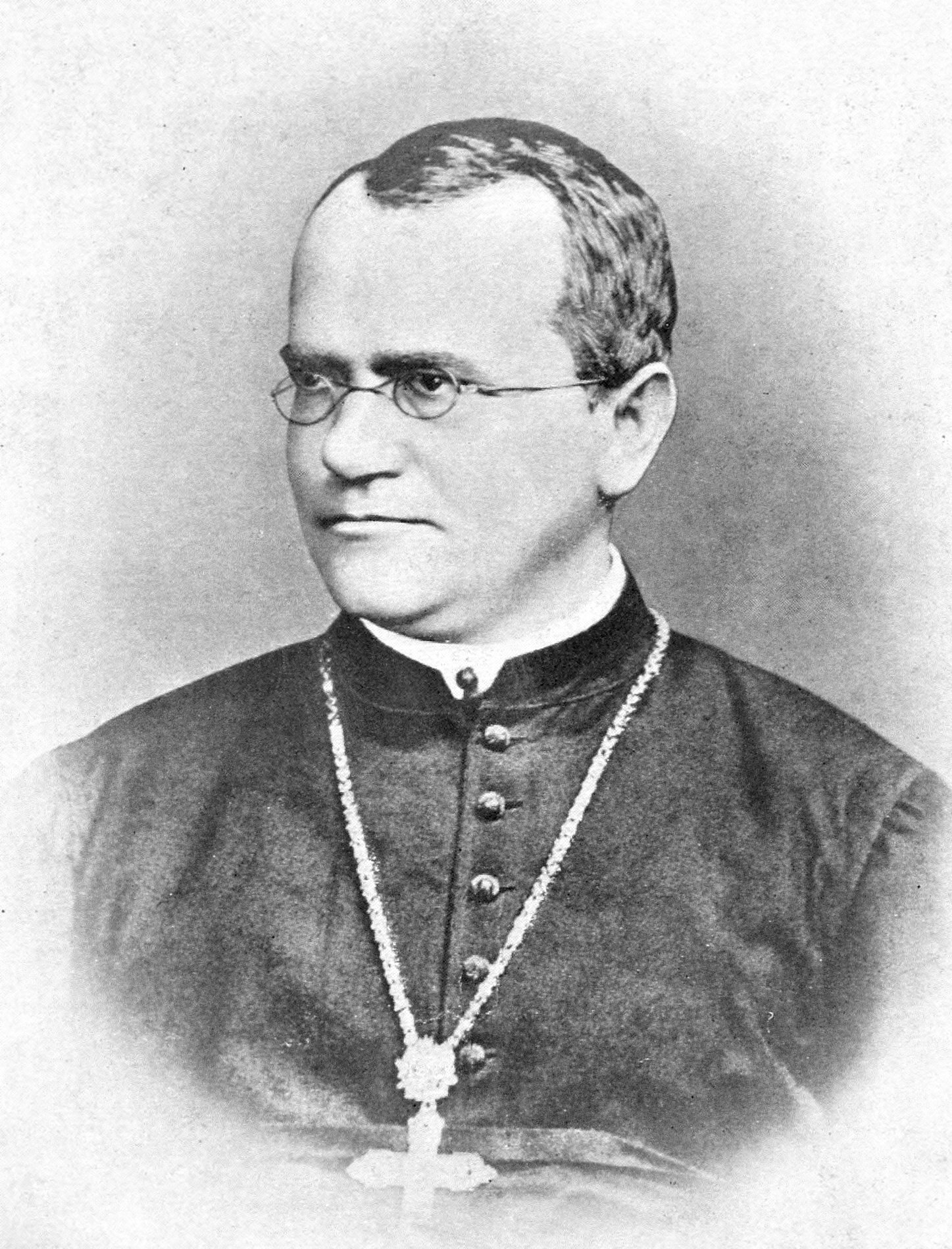
Gregor Johann Mendel


Austria 1822-1884


Gregor Johann Mendel is remembered for his foundational work in the field of genetics and is thus considered the Father of Modern Genetics. (1) There are three major laws of genetics are the Law of Segregation, the Law of Independent Assortment, and the Law of Dominance. The Law of Segregation states that each offspring inherits one gene from each parent with are made into a gene pair. (2) The Law of Independent Assortment states that genes for different traits are sorted separately so inheritance of one trait does not depend of the inheritance of another. (2)  The Law of Dominance states that an organism with alternate forms of a gene will exhibit the dominant trait. (2)

Gregor Mendel was originally named Johann Mendel, and born in 1822 on a farm in Heinzendorf, Austria, now Czechoslovakia. He stayed at the farm until the age of 11, when his teacher recommended he go to Troppau to continue his education. Although the education was a financial challenge for his family, he made it worthwhile by graduating in 1840 with honors. He continued to the University of Olmütz, again successful in his studies, this time supporting himself through tutoring.

Even so, the monetary issue was too severe, leading him to the St. Thomas Abbey, which belonged to the Augustinian order, and he commenced studying to become a monk. (5) This was against his father’s wishes as Mendel’s father wished him to return to the farm. He took the name Gregor, and was given access to the monastery's extensive library and experimental resources. In 1846 Mendel took classes under the leading authority in plant breeding, thus laying the groundwork for his later experiments. (3) He became a priest in 1847, and got his own parish in 1848 the minimum age, though this achievement was partly due to an infection which killed three priests in 1847. (5)

A couple of years later, in 1849, Mendel became ill and his superior realized he wasn’t able to be a parish priest. As a result, he was reassigned as a high school teacher. He was an effective teacher, and attempted to turn this into his career. Therefore, in 1850 he took the exams to become a high school teacher. He would have succeeded too, except for the zoology and geology sections. (4) He was sent on to the University of Vienna, learning mathematics and physics under Christian Doppler, the Doppler for which the effect is named. He learned botany from Franz Unger, who had been considering a theory of evolution (not inspired by Darwin). (1) In 1853, he finally completed his studies and in 1856 he decided to try the teaching exams once again. He’d practiced teaching while at the University of Vienna, and then… failed again. (5) As a result, he was very restricted in how much he could teach, only retaining the ability to teach at all because of his unique skill. (5) However, this could be seen as a semi-positive development because it gave him the time to conduct his most famous experiments.
,
In 1856 Gregor Mendel started his important experiments with peas. At this time, people already new about selective breeding, but it was believed that hybrid plants would revert to its original form, an idea known as blending. (1) Mendel's work spanned 7 years, 1856-1863, and was conducted with 15,000-30,000 pea plants. Mendel studied traits in the plants that were opposite of each other, he cross fertilized plants that were tall with shorts ones, and those containing green seeds with ones with yellow seeds. He found the same result for all the traits but the following diagram helps visualize the findings.

“When Mendel bred purple-flowered peas (BB) with white-flowered peas (bb), every plant in the next generation had only purple flowers (Bb). When these purple-flowered plants (Bb) were bred with one-another to create a second-generation of plants, some white flowered plants appeared again (bb). Mendel realized that his purple-flowered plants still held instructions for making white flowers somewhere inside them. He also found that the number of purple to white was predictable. 75 percent of the second-generation of plants had purple flowers, while 25 percent had white flowers. He called the purple trait dominant and the white trait recessive.”(3)


(3)

In 1866, Mendel published his results but people did not fully grasp its importance. It was only by 1900, after other studies found the same result that his experiment’s importance were realized.

Mendel’s story is fascinating because of the amount of failure he had to endure in order to succeed. His story sounds like the fears of college graduates, filled with failed tests and switching schools, until he finally makes a breakthrough while working as a teacher. It is illuminating however, to note that he received little recognition until, some time later,  other researchers were conducting experiments on the same topic and happened upon Mendel’s work. (5) The researchers concluded that their experiments had yielded the same results as Mendel’s, but that fact was only recognized posthumously. (5) The apparent upshot of all this is that if you work and and refuse to give up, even a seemingly monotonous existence as a teacher can give way to unimaginable fame, after death, that is.

Work Cited

  1. Gregor Mendel Biography https://www.biography.com/people/gregor-mendel-39282 
  2. Children resemble their parents. http://www.dnaftb.org/1/bio.html 
  3. Gregor Mendel https://www.famousscientists.org/gregor-mendel/ 
  4. Johann Gregor Mendel (1822-1884) https://embryo.asu.edu/pages/johann-gregor-mendel-1822-1884 
  5. Johann Gregor Mendel: Paragon of Experimental Science https://www.ncbi.nlm.nih.gov/pmc/articles/PMC4707027/ 
Further Reading
  • Mendel’s Principles of Hereditary https://archive.org/details/mendelsprinciple1902bate 

Monday, June 18, 2018

Albertus Magnus

Germany 1200-1280


Albert Magnus is perhaps the foremost example of a religious scientist. He explored so many topics he had no specific area of focus, writing on such diverse topics as rhetoric, math and logic to astronomy, theology, and politics.

 In short, however Albert’s work is best summarized by saying he wanted to explain everything. He did not have a specific discipline but worked to bring together all the knowledge of the time together. His aim was to explain the various scientific disciplines to be widely understood (Encyclopedia Britannica 2018). Many of his works were based on Aristotle, but when that was lacking, he created his own work, and even when basing his information off that of Aristotle, he was always making something new, shifting ideas and reformulating them to be more easily understood.

Albert was the preeminent natural scientist of his age, using faith and reason together. The truth could not be in conflict with itself, as it would be if faith and reason were mutually exclusive. Rather, ordinarily everything is explainable by both, though a few things may require faith. He created commentaries on a plethora of works, notably the Bible and the foremost theological textbook of the time, Peter Lombard’s Sentences, as well as examining and commentating on all the available works of Aristotle (Encyclopedia Britannica 2018). There were severe issues involved given the breadth of Aristotle’s work and the fact copies were often lacking, so Albert made do with what he could (The Book of Minerals). Simply commenting on Aristotle’s work was quite an undertaking as the subjects ranged from Physics, and Meteorology, to The Soul, Life and Death, and the Movement of Animals. Albert spent a great deal of time honing the specific ordering, starting with Physics and finally rounding out the collection of work with Animals. That being said, his collection of works under Natural Sciences also include entries not backed by actual Aristotelian works. Interestingly, Albert was quite ready to create a new piece of work if there was an apparent gap, thus such titles as The Book of Minerals, which covered the subject of geology and why different gemstones have differing properties (The Book of Minerals). Albert was unable to locate the ancient text, but since he was already ‘rewriting’ them, after a fashion, he delved into the subject.

While the science appears quite incomplete to the modern eye, at the time, science was a much more philosophical undertaking. Instead of numbers and measurements ruling everything, the qualitative data, the purpose of things was attempted to be understood. For example, when attempting to approach metals and gems, the question was what are the essential properties that make up that thing, and what are the accidental properties. Essential properties are the qualities that have to be present for the thing to be classified as what it is, while accidental properties are variable depending on the subject, like a person’s eye color. (The Book of Minerals xxxiii). At the time, of course, the kind of science we know today was not present, but science was more akin to philosophy, perhaps something somewhat akin to theoretical physics today.

Despite his fame, much of the information about Albert Magnus’s life is uncertain. He was born in Swabia, Germany in a noble family, around about 1200 AD, plus or minus about six years. (1) The nobility of his family, actual date of birth, and a myriad of other details, such as essentially his entire childhood, are extremely uncertain, likely due to his fame. (1)

The first sure detail is that he joined the Dominican order, though again the date is an issue. According to the Encyclopedia Britannica it was in 1223, but an expert who translated one of Albert’s books on geology found it more likely the date was 1226.
By 1245, his life was well underway, as his star pupil Thomas Aquinas arrived in Paris

Albert joined the Dominican order in 1223, and by 1245 had gone to Paris to study at the Dominican convent of Saint-Jacques. While at Saint-Jacques he commenced his teaching career, lecturing on the Bible and Sentences, the main theological textbook of the time, for two years apiece (Encyclopedia Britannica 2018). Even during his life, he was recognized as a great authority on various topics, and was sent to Cologne to advance learning by establishing the first Dominican ‘general studies’ school (Encyclopedia Britannica 2018). While acting as head of the school, he wrote and taught as he wished.

However, from 1254 to 1264 he had other duties. In 1254 he was made head of the German section of the Dominicans, holding the office for three years, still maintaining his writing and research. He decided to resign in 1257 so he could return to Cologne and then the Pope, Alexander the IV, appointed him Bishop of Regensburg. With the death of the Pope in 1261, Albert resigned his office, but was once again called by the Pope to serve Christendom. For 1263 and 1264 he assisted Urban IV by rallying support for the Crusades in Germany. After lecturing at a couple of other cities, he finally returned to Cologne. (Encyclopedia Britannica 2018)

Of course, even this did not last. In 1274, he was off to the second Council of Lyons. Once there, he assisted in choosing the German monarch (Encyclopedia Britannica 2018). Then a few years later, in 1277, he journeyed to Paris to Albert uphold Thomas Aquinas’ reputation and to explain their position on various points of Aristotle that were held in question (Encyclopedia Britannica 2018).


Albert Magnus’ extensive writing and enormous influence extends far beyond his own time, all the way to the present day, with such fervor as to be almost impossible to categorize. His work extended as far as the time would allow, most notably in the natural sciences perhaps, but astounding in every field. Not only was he a dedicated researcher, he was a prolific writer dedicated to explaining Aristotle’s thought processes and the world as a whole in simple enough terms for all to understand.


Works Referenced

  1. St. Albertus Magnus https://www.britannica.com/biography/Saint-Albertus-Magnus
  2. Albert Magnus: The Book of Minerals https://archive.org/details/308059821ALBERTUSMAGNUSTheBookOfMinerals 

Further Reading

Wednesday, June 13, 2018

Luca Pacioli


Italy 1445-1517


Luca Pacioli was a Franciscan Friar who taught at the University of Perugia and gained the Chair of Mathematics in 1477. (1) While at Perugia, Pacioli wanted his students to be able to apply the math they were learning, an uncommon tactic at the time. (4) Pacioli became a travelling mathematician in 1480, and arriving in Rome in 1487. The Pope, Sixtus IV, gave him particular privileges, causing friction between Pacioli and other Franciscans when Pacioli attempted to return to teach at his hometown, Sansepolcro. As a result, he was banned from teaching in 1491, though their stance had changed somewhat by 1493, since he was then invited to preach during Lent. (1, 2)

Pacioli wrote his first treatise on mathematics when he was nineteen, and created various other publications throughout his life. (1) His most influential work, published in 1494, was entitled The Collected Knowledge of Arithmetic, Geometry, Proportion, and Proportionality. This work was essentially an all-in one reprint of a variety of master mathematicians. Paicoli had not invented the math, merely repackaged it. (4) Still, it was a start and encouraged mathematical progress over the next decades. (2)

One particular piece of this work was of particular interest due to its effect on the field of accounting, the area which Pacioli is now most famous for.(4) Pacioli started, or at least was the first to record, the double entry bookkeeping system, the use of ledgers, and income statements. (1) The double entry system means a company would note money spent on food, for example, as negative in the general funds section, and positive in the food expense column. As long as the total amount of money doesn’t magically increase, this system helps to provide a clear indication of where money is being spent. (3) Pacioli altered the field of accounting so thoroughly he is now considered the Father of Accounting. (4)

The Collected Knowledge... was widely read and made Pacioli famous. (4) He was invited to Milan around 1496 and there met Leonardo da Vinci. The two became friends and spent the next seven years teaching each other what they knew of art and math. (4) Pacioli had learned from the painter and mathematician Piero della Francesca, an early architect of perspective in art. (2) Pacioli taught Leonardo about perspective which was then aplied in the Last Supper painting. Leonardo provided illustrations for another of Pacioli’s books, The Divine Proportion. (2, 4) The Divine Proportion was concerned with the properties of the Golden Ratio, which Paicili considered so sublime he compared to God. (5) Their friendship is fairly certain, as Da Vinci often mentioned Pacioli in his notes. (4)

Towards the end of his life, Pacioli once more returned to his hometown, and may have become abbot of the monastery there, though his four year stay ended in 1514 as he was summoned to Rome by the Pope. (4) Unfortunately, he died in 1517, before making the journey to Rome. (4) Unlike so many other mathematicians and scientists, Pacioli was actually able become famous within his own lifetime. Quite often, the merits of a scientist’s work is not appreciated until another person duplicates their findings and happens upon the former scientist at some later point. Nor has Pacioli’s work faded into obsolescence: a version of his system is still in use today. (2)

Works Referenced
  1. Luca Pacioli https://famous-mathematicians.com/luca-pacioli/
  2. Luca Pacioli http://www-history.mcs.st-andrews.ac.uk/Biographies/Pacioli.html 
  3. What is Double Entry Bookkeeping? https://www.accountingcoach.com/blog/what-is-double-entry-bookkeeping
  4. Luca Pacioli: The Father of Accounting http://flynf.tripod.com/pacioli.htm 
  5. The Divine Proportion by Luca Pacioli http://www-history.mcs.st-andrews.ac.uk/Extras/Divine_proportion.html