Showing posts with label geology. Show all posts

Saturday, December 29, 2018

Giuseppe Mercalli


Image result for Giuseppe Mercalli image
Italy 1850-1814 Giuseppe Mercalli was an Italian volcanologist, seismologist, and Roman Catholic Priest.(1) He is best known for developing an earthquake intensity scale. (1) Born and educated in Milan, he became a professor at a local seminary after graduating college. (1) Mercalli was soon removed from the seminary, but the Italian government quickly found him new positions in schools across the country.(1)


 In 1892, he had relocated to Naples, where he would spend the rest of his life by the volcano he studied most closely, Vesuvius.(1) He died a mysterious death in 1914, burning in a fire in his apartment. At first, it was deemed an accident, but within days speculation arose that he was murdered. (1)


His most famous achievement to solid earth science is his work on the earthquake intensity scale. While studying seismic activity in Italy in the late 19th century, his access to seismic instruments was limited. (1) Some seismographs and seismoscopes (devices that signal an earthquake has occured, and sometimes indicate direction) were available, but most of his information came from personal observation of damage and listening to accounts. (1) To provide some consistency to his earthquake analyses, he decided he need a method to rate the relative effects of each event.


 (1)  At first, his scale had six degrees, but he soon realized he needed more precision. (1) ARound the same time, another intensity scale, the deRossi-Forel scale was gaining in prominence. (1) It had ten degrees of intensity, but lacked detail in the description of each degree. In 1902 Mercalli modified this scale to include the detail he desired, and his new scale quickly caught on among Europe’s scientists. (1 )It was tweaked by other seismologists to twelve degrees and also had more refined descriptions. (1) This edited version was called the Modified Mercalli intensity Scale. (1)


The Mercalli intensity scale is from 1 to 12. This link will provide more information and a comparison between the Richter and Modified Mercalli scales: http://www.geo.mtu.edu/UPSeis/Mercalli.html


Works Referenced


Further Reading


Part 2 Earthquakes Intensity: Modified Mercalli Scale http://www.appstate.edu/~abbottrn/mercalli/intnsty.htm 

Niccolo Cabeo

Image result for niccolo cabeo image

Niccolo Cabeo (1561-1636)

Cabeo, a Catholic priest who joined the Jesuits in 1602, is known for his two major publications, Philosophia magnetica (Magnetic philosophy)and In quatuor libros meteorologicorum Aristotelis commentaria (Commentary in four books on Aristotle’s Meteorology).(1)

His academic career happened mainly in Parma, following typical Jesuit curriculum, and included studying logic, natural philosophy, metaphysics, and theology, as well as mathematics.(1) After finishing his studies in 1616, he taught theology, philosophy, and metaphysics at Parma until 1621, then spending several years living at the Jesuit college in Ferrara, his birthplace, and also taught theology in the late 1620s.(1)

 His first book explained not only his own experimental investigations of terrestrial magnetism but also Gilbert’s, as well as explaining magnetized iron and lodestone, the mineral magnetite. (2) He also contributed to physics experiments, observing the Giovanni Battista Baliani experiments about falling objects.(2)

 He also experimented with pendulums.(2) Niccolo thought that the earth was immobile, and had no magnetic field.(1) In his first book Philosophia magnetica Cabeo stressed that all of his work sought out the causes of natural effects, saying that every discussion and idea he had was based upon experimental work, with the experiments being repeatedly performed.(2) Cabeo also confirmed Galileo’s claims that two bodies, no matter the weight, tend to fall at the same rate, as opposed to the heavier one falling faster, as long as they were of the same material.(2)

 At the end of his life, he returned to teaching at a Jesuit college.(1)

Niccolo Cabeo presented a new style of natural and experimental philosophy, becoming one of the most influential Jesuit natural philosophers of his time.(2)

Sources cited:


Saturday, August 11, 2018

Father Eugene Lafont

Father Eugene Lafont started the science front in India, with his amazing presentations on new inventions, and with assisting in the formation of the The Indian Association for the Cultivation of Science. He used his observatory to predict a cyclone and save many lives, as well as aiding in the investigation of the rare Transit of Venus.

Eugene Lafont was born in March of 1837, in a southern town in Belgium called “Mons”.(1) His early education was at St. Barbara’s College at Ghent, where his father an army officer was posted.(1) Here he joined the Society of Jesus in December of 1854. After the necessary training of the Order, and being a teacher during 1857-1859 and 1862-1863, he went to Namur College for studying Philosophy and Natural Sciences, where he showed an aptitude for physical examination.(1;2) in 1865 the previous minister of Namur College, Father Deplechin, requested for the services of Father Lafont for teaching physics in the new (made in 1860) St. Xavier’s College in Calcutta(Kolkata), India.(1)

Father Lafont’s first assignment was to teach the 5th year or Pre-entrance class of the school.(1) Because the school was just made it did not have equipment for practical experiments, he fixed this by installing a laboratory, probably the first one in India, and an observatory.(2;3) In 1867 the observatory was able to, with the daily meteorological observations, anticipate a devastating cyclone and prevent the loss of many lives.(2) In the same year when the BA class opened at St. Xavier’s Father Lafont was promoted to take charge of the Natural Philosophy division. He also taught Mental and Moral Philosophy, and when he became comfortable with English (1870) he began to give scientific lectures for the public.(2) He had a gift in popularizing scientific knowledge, and all of the new scientific discoveries and inventions of the second half of the 19th century were made known with an examples of the invention.(2)

In 1871 he became the Rector of St. Xavier’s.(1) Three years later a high level international scientific expedition came to Calcutta on its way to Midnapore, a town to the south-west of Calcutta, to observe a rare astronomical event, the transit of Venus.(1) The leader of the expedition was Pietro Tacchini, the other members were Jesuit Angelo Secchi director of the observatory of collegio Romano, Alessandro Dorna of the observatory of Turin, Antonio Abetti of the observatory of Padua.(1) At the insistence of Father Lamouroux, Italian consul of Calcutta, and Lafont (who had been consulted), they went to the region now called West Bengal.(1) Lafont was invited to join the expedition, and he went with Prof. Dorna and carried out visual observations.(1) The spectroscopic observations were carried out by Prof. Tacchini and Abetti.(1) Weather hindered the observations, but they were still able to obtain important results.

Tacchini realized that having an observatory in India would work well because it’s warm climate would mean that they could be observing the stars even in the winter, as observatories do not work then.(1)Tacchini convinced Lafont to make an observatory in India at St. Xavier’s, and when the creation of the spectroscopic observatory in Calcutta was announced, the observatory was given grants by the government, and from the people. In 1875 Lafont wrote to Tacchini saying that the observatory would be complete in 18 months.(1) The observatory was the biggest housed on an educational campus. (3)

The Indian Association for the Cultivation of Science was established in 1876 with financial aid from Mahendra Lal Sircar.(2) It’s purpose was “to enable the Natives of India to cultivate Science in all its departments with a view to its advancement by original research, and (as it will necessarily follow) with a view to its varied applications to the arts and comforts of life.”(1) It was proposed to create mass interest in science and for the training of scientists for original research. (1) It was working in this institution that C. V. Raman brought the Nobel Science Prize to India.(1) Father Lafont lent his support to this idea, and also helped the Association develop in many ways.(1) The provisional committee that drew up a plan for the association was chaired by Lafont, and when the university began Lafont and Dr Sircar were honorary lecturers in Physics, with Dr. Kanai Lal Dey being an honorary lecturer in  Chemistry.(1) Father Lafont gave on average 20-30 lectures a year, but his oratory skills were proverbial, with his lectures containing experimental demonstrations.(1)

Father Lafont was the teacher of the first modern scientist in India Jagadis Chandra Bose.(1) It was Father Lafont that inspired him in experimental science.(1) Bose thought very well of Father Lafont with his patient skill, and brilliance of experimentation, and Lafont thought likewise of Bose calling him “one of the best students we had in our College Department.”(1) Father Lafont believed that Bose had priority over Marconi in inventing the wireless telegraph, asking for his assistance in his presentation on the his public lecture “Telegraphy Without Wires”(1)

He continued to give regular lectures until 1893, when he continued to give popular science lectures at the association, but less often, but he still he participated in the annual meetings.(1) His last lectures was in 1903, and on the 30th annual general body meeting he supported the idea that the Association should move away from teaching, and concentrate original research.(1)

Works Cited
Lafont Father Eugene http://vigyanprasar.gov.in/lafont-father-eugene/
Eugène Lafont http://enacademic.com/dic.nsf/enwiki/7760958
150-year-old St Xavier's College's observatory restored https://timesofindia.indiatimes.com/city/kolkata/150-year-old-St-Xaviers-Colleges-observatory-restored/articleshow/31811293.cms 

Monday, June 25, 2018

Juan Ignacio Molina

Chile 1740-1829


Juan Ignacio Molina was born in Chile in 1740 and was entered into the Jesuit Order when he was fifteen, though he was not a full Jesuit for the next eighteen years while he completed his training. He learned a variety of subjects, scientific and philosophical, and gained fluency in five languages: Spanish, Greek, Latin, Italian, French. (2) Additionally, Molina was a poet. A particularly notable poem, written in Latin and titled ‘Latin Elegies’ detailed his debilitating experience of smallpox. (2, 8) He was a teacher for a few years, though his talent was too great to solely be a teacher and he was reassigned to studying theology. (4) Throughout his scholastic career he shifted through the various towns of Chile, becoming a professor and librarian in the Jesuit’s Santiago station, capital of Chile. (4)

However, in 1767 all the Jesuits were exiled from Chile by order of the Spanish King, Carlos III (4) The Jesuits were exiled because of how they had hindered the colonizing efforts of various European powers. (7) Therefore, at age twenty-seven Molina and his fellow Jesuits were thrust into Europe. However, their journey was not quite direct. First, the Jesuits had to travel to Peru, then over the Atlantic Ocean. When he was exiled from Chile, he had to go to Peru first, then travel over the Atlantic to reach Europe. (9) Even during his exile to Europe, Molina continued note the wildlife around him, observing flying fish and whales. (9) Their journey did not end in Spain, the home country of the Jesuits, because other exiles had already filled their doors. Instead, Molina and the other Jesuits journeyed to Imola, Italy, a small town near Bologna. (4) 

Upon their arrival in Italy, in 1769, the Jesuits were first settled in Imola, a small town near Bologna. Immediately, Molina’s knowledge served him well as he was able to talk to the Italian governor and discuss natural history, a topic which fascinated the governor. (9) 

Eventually, Molina moved to the nearby city of Bologna and became the chair of Greek at the University of Bologna. Eventually, he became a professor of natural sciences, the work for which he is best known. (2) Molina was the first American member of Italian Institute of Science and Arts (2). He continued to study and teach, slowly making his way to official membership in the order. He finally passed the necessary exams and became a full member of the Jesuit order on August 15th, feast of the Assumption, 1773, at thirty-three years of age. (4) 

Then on August 25th, the Pope published the order to suppress the Jesuits and Molina was forced to leave the order, after mere ten days. (4) Nearly all the European nations had gotten tired of Jesuits resisting their wishes and pressured the Pope. Clement XIV, into suppressing the order outright. All Jesuits had to officially leave the order, though some former Jesuits were highly regarded. (7) Russia was the only exception to the suppression order and became the only country where the Jesuit order remained, preferring to have the Jesuits around to revitalize their educational system. (7)

Molina would remain in Italy for the rest of his life. It was here that he began publishing scientific works, all of which were in Italian. (3) The first was the ‘Compendium of the Geographical, Natural, and Civil History of the Kingdom of Chile’ which explained a variety of aspects of Chile from its geography animal life to historical and anthropological elements. (2, 5, 6) The work is divided among three parts, Geography, Natural History, and Civil History. (6). The geographic discussion included the approximate size of the country, the basic political division and some geological information. (5) Natural History was a catchall term for several pursuits including botany and zoology, but essentially means biology. The Civil History section detailed the history of Chile from a cultural perspective, how Chile came to be. 

Molina was a very thorough writer, trying to communicate information as swiftly and succinctly as possible, and used extensive footnote asides to achieve his aims. By necessity, this work was assembled from suboptimal sources; Molina’s manuscript had been detained at a ship in Peru, where the Jesuits had traveled before journeying to Europe. (2. 9)

In 1774, Molina moved to Bologna and started teaching at a school that taught a significant portion of the poorer students for free. (9) However, between widespread misinformation surrounding America, and his own nostalgia, Molina decided to write a book to explain Chile to Europe. (9) 

Molina’s first attempt was the ‘Compendium of the Geographical, Natural, and Civil History of the Kingdom of Chile,’ a work divided into two parts and published in 1776. (9) The first dealt with the geography of Chile, its mountains, its size, the landscape and so on; the second part explained the culture of Chile’s native and Spanish populations. (9)  The timing was excellent: interest in America had increased significantly because of the American Revolution, and Molina’s work provided insight into a portion of the New World. (9)

It was successful, but the sources were not as comprehensive as Molina wished; the majority of Molina’s meticulous notes had been taken by customs agents when left Chile. After some years, he acquired his notes, and started again. He was so dedicated to providing a superior source that he published this second volume at his own expense in 1784. It was entitled ‘Essay on the Natural History of Chile.’ (9) The ‘Essay on Natural History’ was more detailed than its predecessor, included a newer map, and was divided into four books. Molina aimed to use this book to prove the similarities between the New World and the Old, starting with a direct comparison in the introduction. (9) The ‘Essay on Natural History’ was extremely successful and translated into German, Spanish, French, and English. (2)

Molina’s writing was crucial because of its ability to dispel common myths of the time regarding America. Oftentimes, writers never actually had gone to America and were just making details up out of whole cloth. (9) Molina’s detailed and scientifically accurate work was a revolutionary take on America. Also, America was in a revolution at the time which generated significant interest in the American continent. (9)

Book One covered the geographical, climate, and natural disasters common in Chile, and Molina again made comparison to Italy. (9) One particular piece of misinformation Molina tried to correct was the notion that a 1751 earthquake had destroyed a city and redirected a river. (9) In reality, there were actually no casualties, in part because of a series of shocks before the main disaster. Molina continued this geological discussion, and used his own experience and observations to explain events, an attitude that distinguished him as a scientist. (9)

The Second Book examined the mineral aspect of Chile including rivers, lakes, rocks and soil. (9) As part of this section, Molina looked at the mining industry and agriculture. For one, Molina describes in detail the process of acquiring gold, from mining the ore to processing it at the foundry. (9) Molina also writes about geography in this section, noting the presence of various marine caves in Chile. (9)

Books Three and Four changed the focus from geographic and geological to biological. (9) Here, Molina explored the flora and fauna of Chile and organized them according to Linnaeus’ system. (3) He also wrote wrote about crops, general vegetation in the area, herbs, and the wine of Chile as compared to Italian wine. (9) Book Four was concerned with animals of all kinds whether in the sea, the air, or on the land. Molina also described the culture of Chile once again. (9)

Molina finished the book with two catalogs. The first listed all the new species he had described, even including rocks and minerals, according to Linnaeus’ classification. The second catalog was a glossary of various words particular to natural sciences at the time. (9) Even though it was a nostalgic work, it was very clearly of scientific value. 

Molina continued as a professor of natural history in Bologna, though he contributed a last influential volume during this time. This volume, titled Memories on Natural History, was a collection of fourteen ‘memories,’ lectures Molina delivered from 1805 to 1815. (9)

  1. Study of thermal springs 
  2. Physical and Mineral Study of the Bologna Mountains 
  3. On the Cultivation of Olives 
  4. On Marls 
  5. Coffee 
  6. ‘Less Noticed Analogies of the Three Kingdoms of Nature’
  7. Gardens in Towns (green cities)
  8. Whales in the South
  9. Growing Trees
  10. On Coal
  11. Peru’s Mountain of Silver
  12. ‘On the Propagation of the Human Race in Different Parts of the World’
  13. Cocoa, Vanilla, and Canela
  14. Sugar

The sixth was the most controversial, though the twelfth is also particularly noteworthy. (9) Overall, his lectures demonstrate an extensive grasp of scientific knowledge, but can mainly by split into two categories: geology and biology. (9) Lectures 1, 2, 10, and 11 deal with geology and mineralogy while lectures 3, 4, 5, 6, 7, 8, 9, 10, 12, 13, and 14 deal principally with biology and agriculture.

Agriculture and environmentalism were a significant topic among these lectures; four of the fourteen were dedicated to the subject in various forms.The first lecture on the subject [#3] discussed the possibility of growing olives in the area around Bologna. Then, Molina discussed marls in #4, a type of calcium rich mud and its possible application as fertilizer. (9) He drew on his geological knowledge to explain the two varieties, marine volcanic and outcropper. He exposited why volcanic was the inferior option, and how to test for the ratio of clay to calcium carbonate. He recommended marls as fertilizer particularly in acidic soils, because of the presence of the basic calcium carbonate, and argued England already was using marls as fertilizer. Molina even had samples on hand for after the lecture. (9)
Molina was well-known for his knowledge of Agriculture and was given honorary membership of the Academia Private dei Georgofili in 1817 as a result. His seventh lecture was on the subject of enhancing the greenery in cities, again arguing England had already introduced this to their cities. Molina closed the lecture by discussing various types of trees present in the area near Bologna. The ninth lecture continued in that same vein by discussing the possibility, or necessity, of regrowing trees. (9)

His eighth lecture, Whales in the South, would be an environmental topic today, but at the time it was simply another scientific lecture. Molina set out to prove that European scientists were wrong about Chile and that whales actually existed in that region of the world. Discussed the methods of whale-hunting. (9) Molina also discussed various exoctic plants and possible health hazards. Specifically: Coffee [#5], Vanilla and other spices [#13], and Sugar [#14]. He also covered the coffee plant and how the drink was prepared in various places. Molina also brought up an example of fatal coffee overdosage. (9) Vanilla and other spices were commonly assumed to have health benefits, though these spices could pose a health hazard. He also talked about the widespread use of sugar and its health effects (9)

His sixth lecture was the one that merited the most controversy, however. He gave this lecture in three parts, and it was called ‘Less Noticed Analogies of the Three Kingdoms of Nature’ (9) It was delivered in 1815. Molina thought that the Three Kingdoms: Animal, Vegetable, Mineral, are interconnected. (9) He provided various evidence including the similarities between animal eggs and plant seeds, and the shape of crystals and plants’ fractal-like shapes. However, in discussing the widespread similarities, Molina unclearly used words so that it sounded as though he was attributing intelligence and reason to animals. (9) It could also be construed as an early version of evolution. (3)

This went against the philosophy of the time, the Great Chain of Being, which stated that everything exists in hierarchy in which God is at the summit and goes down to angels, men, animals, plants, and eventually matter in general. Each category has at least one superior attribute the category below lacks. (10) For example, Animals have existence, life, and a will, but not reason while humans have existence, life, a will and reason. (10) The categories are subdivided into further chains. For animals, the more rational-acting and noble a creature is, the higher it is on the chain, though still without reason. (10)

He was investigated for heresy and lost his teaching license. After years of investigation, he was finally acquitted, though his books were still reviewed and censored as deemed necessary. (9) Molina explained he had meant the words as an analogy, not literally. (9)

Rather than evolution however, Molina’s theory could be seen as reinforcing the preexisting philosophy of the ‘Great Chain of Being.’ Molina’s work fits well into this idea, and not as much into evolution. His work did not suggest that different categories of living things morphed from one to another, merely that they were connected more directly than previously assumed. (9, 10) Furthermore, Molina still believed everything was planned and created by God. (9)

Molina also wrote about the migration of humans to spread out across the Earth and argued they had crossed all manner of natural barriers, arguing humans did not just appear in Italy, as some people claimed at the time, but had travelled there. Molina also lectured on the settlement of America. He claimed that various parts of America were peopled at different times due to cultural differences. (9) The first humans appeared in America about a century after the biblical Great Flood, which was then believed to have been responsible for all fossils observed. (9) Later on, people like the Chilean natives came. Molina argued they arrived around the time Alexander the Great came to the Indus River because of the significant similarities to the Grecian and Asian culture. Molina also explained that people appear different because of their environment, not because they are actually that different. Humans at similar latitudes turned out completely differently given differing climates. (9)

The first, second, tenth, and eleventh memories were concerned with mineralogy and geology. (9) A smaller number of lectures perhaps, but still a significant portion of Molina’s work. None of these were so eye-catching as memories #6 or #12, just solid scientific work.

The first memory detailed his scientific expedition to thermal springs near Bologna where he conducted a geological analysis. He argues these springs could not have been created by volcanoes. It was too localized for seismological activities and lacked evidence for volcanic activity. (9) Instead, he argues that it was formed by flooding. The theory of diluvialism was quite popular at the time. Diluvialism was the idea that the Great Flood of Noah caused fossils. (9) In addition to his theories of how the mountains were formed, Molina returns to his favorite subject: the similarities between Chile and Italy. This time, the characteristics of volcanoes off the coast. (9)

The second memory was concerned with the allegation of the presence of gold, silver, and copper in the area, but Molina doubted the truth of these tales. (9) He argued ores similar in appearance, such as pyrite may have started these rumors, but they were definitely untrue. (9) He also discussed other materials like sandstone and gypsum, proposing his own theories and trying to correct misinformation. (9) The tenth memory was concerned with coal including how it was mined and used. (9) In the eleventh memory, Molina talked about Peru’s Mountain of Silver and its alleged existence. (9)

In 1798, the new king of Spain, Charles IV, allowed the former Jesuits to return to Chile. Molina decided not to; by that point, the political situation in Chile was volatile and Molina was in already almost sixty. (9) Only thirty-one Jesuits actually decided to return to Chile. (9)

Molina’s work is also notable because of the turbulent times in which he was writing. The Bologna Institute of Science had been pillaged in 1796 by the French, and Bologna’s scientific reputation was starting to fall by the wayside. (9) Napoleon was causing international strife for much of Molina’s publication career. (9)

In 1814, after the destruction wrought by the the French Revolution and Napoleon’s conquest, Pope Pius VII decided to reinstate the Jesuits officially so they could assist the rebuilding of Europe (7). Molina therefore, had the opportunity to return to to the Jesuit order, though he did not. He had maintained cordial relations with other exiled Jesuits. (1)

Molina had a bold style, often refuting the knowledge of the time when he had reason to believe it wrong . Knew what subjects he excelled in and worked tirelessly observing the natural world and theorizing based on his observations. He provided a fascinating look at Chile, applied his knowledge to a new land, kept his knowledge relevant by relating it to the local area, and tried to show how the Old World and New World were really all part of the same Earth. Molina wanted to connect things, to explain geology, the connections between species, how the human race spread across the globe and the mechanisms of agriculture. His areas of knowledge sounds small, but it turns out to be an almost all-encompassing study of nature.

When he was exiled from Chile, he did not protest, but just kept working as he went. No matter what challenges he faced, Molina decided not to complain. He turned his exile into a means of spreading knowledge of his country’s wonders, even at his own expense. All in all, a very accomplished naturalist and inspiring man.


Works Referenced
  1. Juan Ignacio Molina: The World’s Window on Chile (review) https://muse.jhu.edu/article/40584 
  2. The Abbot Juan Ignacio Molina (1740-1829) http://www.memoriachilena.cl/602/w3-article-590.html  
  3. Biography of Juan Ignacio Molina (1740-1829) http://thebiography.us/en/molina-juan-ignacio 
  4. Juan Ignacio Molina (Abate) http://www.profesorenlinea.cl/biografias/MolinaAbate.htm  
  5. The Natural History of Chile [excerpt] http://assets.cambridge.org/97811080/49450/excerpt/9781108049450_excerpt.pdf
  6. Table of Contents http://assets.cambridge.org/97811080/49450/toc/9781108049450_toc.pdf 
  7. The Suppression and Restoration of the Jesuits http://www.jesuit.org.uk/suppression-and-restoration-jesuits 
  8. Latin elegies http://www.memoriachilena.cl/602/w3-article-93509.html 
  9. The geological perspectives of the Abate Juan Ignacio Molina on Italy and Chile between the 18th and 19th centuries  http://www.scielo.org.ar/scielo.php?script=sci_arttext&pid=S0004-48222011000300017 
  10. Great Chain of Being http://faculty.grandview.edu/ssnyder/121/121%20great%20chain.htm

Monday, June 18, 2018

Albertus Magnus

Germany 1200-1280


Albert Magnus is perhaps the foremost example of a religious scientist. He explored so many topics he had no specific area of focus, writing on such diverse topics as rhetoric, math and logic to astronomy, theology, and politics.

 In short, however Albert’s work is best summarized by saying he wanted to explain everything. He did not have a specific discipline but worked to bring together all the knowledge of the time together. His aim was to explain the various scientific disciplines to be widely understood (Encyclopedia Britannica 2018). Many of his works were based on Aristotle, but when that was lacking, he created his own work, and even when basing his information off that of Aristotle, he was always making something new, shifting ideas and reformulating them to be more easily understood.

Albert was the preeminent natural scientist of his age, using faith and reason together. The truth could not be in conflict with itself, as it would be if faith and reason were mutually exclusive. Rather, ordinarily everything is explainable by both, though a few things may require faith. He created commentaries on a plethora of works, notably the Bible and the foremost theological textbook of the time, Peter Lombard’s Sentences, as well as examining and commentating on all the available works of Aristotle (Encyclopedia Britannica 2018). There were severe issues involved given the breadth of Aristotle’s work and the fact copies were often lacking, so Albert made do with what he could (The Book of Minerals). Simply commenting on Aristotle’s work was quite an undertaking as the subjects ranged from Physics, and Meteorology, to The Soul, Life and Death, and the Movement of Animals. Albert spent a great deal of time honing the specific ordering, starting with Physics and finally rounding out the collection of work with Animals. That being said, his collection of works under Natural Sciences also include entries not backed by actual Aristotelian works. Interestingly, Albert was quite ready to create a new piece of work if there was an apparent gap, thus such titles as The Book of Minerals, which covered the subject of geology and why different gemstones have differing properties (The Book of Minerals). Albert was unable to locate the ancient text, but since he was already ‘rewriting’ them, after a fashion, he delved into the subject.

While the science appears quite incomplete to the modern eye, at the time, science was a much more philosophical undertaking. Instead of numbers and measurements ruling everything, the qualitative data, the purpose of things was attempted to be understood. For example, when attempting to approach metals and gems, the question was what are the essential properties that make up that thing, and what are the accidental properties. Essential properties are the qualities that have to be present for the thing to be classified as what it is, while accidental properties are variable depending on the subject, like a person’s eye color. (The Book of Minerals xxxiii). At the time, of course, the kind of science we know today was not present, but science was more akin to philosophy, perhaps something somewhat akin to theoretical physics today.

Despite his fame, much of the information about Albert Magnus’s life is uncertain. He was born in Swabia, Germany in a noble family, around about 1200 AD, plus or minus about six years. (1) The nobility of his family, actual date of birth, and a myriad of other details, such as essentially his entire childhood, are extremely uncertain, likely due to his fame. (1)

The first sure detail is that he joined the Dominican order, though again the date is an issue. According to the Encyclopedia Britannica it was in 1223, but an expert who translated one of Albert’s books on geology found it more likely the date was 1226.
By 1245, his life was well underway, as his star pupil Thomas Aquinas arrived in Paris

Albert joined the Dominican order in 1223, and by 1245 had gone to Paris to study at the Dominican convent of Saint-Jacques. While at Saint-Jacques he commenced his teaching career, lecturing on the Bible and Sentences, the main theological textbook of the time, for two years apiece (Encyclopedia Britannica 2018). Even during his life, he was recognized as a great authority on various topics, and was sent to Cologne to advance learning by establishing the first Dominican ‘general studies’ school (Encyclopedia Britannica 2018). While acting as head of the school, he wrote and taught as he wished.

However, from 1254 to 1264 he had other duties. In 1254 he was made head of the German section of the Dominicans, holding the office for three years, still maintaining his writing and research. He decided to resign in 1257 so he could return to Cologne and then the Pope, Alexander the IV, appointed him Bishop of Regensburg. With the death of the Pope in 1261, Albert resigned his office, but was once again called by the Pope to serve Christendom. For 1263 and 1264 he assisted Urban IV by rallying support for the Crusades in Germany. After lecturing at a couple of other cities, he finally returned to Cologne. (Encyclopedia Britannica 2018)

Of course, even this did not last. In 1274, he was off to the second Council of Lyons. Once there, he assisted in choosing the German monarch (Encyclopedia Britannica 2018). Then a few years later, in 1277, he journeyed to Paris to Albert uphold Thomas Aquinas’ reputation and to explain their position on various points of Aristotle that were held in question (Encyclopedia Britannica 2018).


Albert Magnus’ extensive writing and enormous influence extends far beyond his own time, all the way to the present day, with such fervor as to be almost impossible to categorize. His work extended as far as the time would allow, most notably in the natural sciences perhaps, but astounding in every field. Not only was he a dedicated researcher, he was a prolific writer dedicated to explaining Aristotle’s thought processes and the world as a whole in simple enough terms for all to understand.


Works Referenced

  1. St. Albertus Magnus https://www.britannica.com/biography/Saint-Albertus-Magnus
  2. Albert Magnus: The Book of Minerals https://archive.org/details/308059821ALBERTUSMAGNUSTheBookOfMinerals 

Further Reading

Friday, April 13, 2018

James B. Macelwane

America
1883—1956

James Macelwane was born near Sandusky Bay, Ohio, the second eldest in an Irish family of nine children. His father was a fisherman and farmer, his childhood spent helping his father with the nets. He joined the Jesuits in 1903, intending to be a missionary. To that end, he trained with German Jesuits, in order to learn a foreign language. He would end up being conversant in German, French, Spanish, Italian, Greek and Latin. Assigned to the Missouri Province, he took his first geology course in 1910 at St. Louis University, just as Father Odenbach began to organize the Jesuit Seismological Service throughout the US and Canada. Odenbach installed eighteen seismographs across the continent at Jesuit colleges, the data was sent to the International Central Station in Strassburg. Macelwane, still a student was asked to assist with setting up and monitoring the SLU station. When the seismograph malfunctioned, Macelwane and a friend took it apart and repaired it. Macelwane used the experience to publish his first paper, “The Physics of the Seismograph”.

Since the seismograph station was in the meterological observatory, he also became interested in meterology.  This provided the foundation for his later discovery, that microseisms, barely detectable shaking in the earth’s crust, were caused by storms at sea. Macelwane was ordained a priest in 1918, after obtaining an MA in science, and moved to the University of California to obtain his Ph.D under Professor Elmer E. Hall, the first man to measure vibrations in buildings. With Dr. Hall’s assistance, he established the first chain of seismographs in northern California and studied several California earthquakes. He received the first US doctorate in physics with a seismological dissertation and organized the first direction to the University of California’s graduate studies in seismology. Returning to St. Louis University, he set up the same program there. By 1944, he had established St. Louis University’s Institute of Technology and became its first Dean. The purpose of the program was, in part, to assist in the search for oil deposits. In this, it was very successful.

Shortly after, he re-built the Jesuit study of this science into the Jesuit Seismological Association, with the central research center in St. Louis. He also helped organize the Eastern Section of the Seismological Society of America. During this time, he also directed several doctoral candidates in ground-breaking research.

In honor of his work, James Macelwane was elected to the National Academy of Sciences in 1944, received the Bowie Medal of the American Geophysical Union in 1948, and the Mendel Medal of Villanova University in 1955. In addition, he received honorary doctoral degrees from Saint Norbert’s College, Washington University, John Carroll University, and Marquette University. He served on Committees of Education of both the Society of Exploration Geophysicists (SEG) and the American Institute of Mining and Metallurgical Engineers (AIME). Both organizations honored him with their highest awards, the SEG with an honorary life membership and the AIME with the Jackling Lecturer award.  Fr. Macelwane is  the namesake of the the Macelwane Fellowship awarded by the American Meteorological Society (AMS) and also of the James B. Macelwane Medal awarded annually by the American Geophysical Union(AGU) The medal is regarded as the highest honor for young scientists in the field of Geological and Planetary Sciences. The geological division of the SLU Department of Earth and Atmospheric Sciences is housed in Macelwane Hall.

Thursday, May 4, 2017

Julian Edmund Tenison Woods

Priest and scientist, b. at Southwark, London, 15 Nov., 1832; d. at Sydney, New South Wales, 7 Oct., 1889, sixth son of James Dominick Woods, a lawyer, and Henrietta Mary St. Eloy (a convert), second daughter of Rev. Joseph Tenison, Rector of Donoughmore, Wicklow, Ireland. He was baptized in the Belgian Chapel, Southwark, and was confirmed by Bishop (later Cardinal) Wiseman; he was educated in a Catholic school at Hammersmith, and later at Newington Grammar School, Surrey. For a time he was employed on the staff of the "Times", and became interested in the work of the Catholic schools. In his eighteenth year he entered the Passionist novitiate, but, owing to ill-health, soon left. Going to the South of France he taught in Mont-Bel college for naval cadets at Toulon, where he developed a taste for geology and natural science.

In France he met Bishop Willson of Hobart Town, Van Dieman's Land (Tasmania), whom he accompanied thither in 1854 as assistant in the Catholic schools. Later he went to Adelaide, and became sub-editor of the "Adelaide Times". Meanwhile he studied with the Austrian Jesuits at Sevenhill and was ordained priest at St. Patrick's, Adelaide, on 4 January, 1857. A large tract of country in the south-eastern district, having Penola for a centre and extending over 22,000 square miles, was entrusted to his charge. To provide for the Catholic education of the children in his extensive parish he founded at Penola in 1866 the Sisters of St. Joseph of the Sacred Heart, placing a Miss Mary MacKillop in charge of the first school. From this humble beginning the Sisters under Mother Mary (MacKillop) of the Cross have grown into the present flourishing congregation with numerous houses spread over Australia and New Zealand.

In 1866 Bishop Sheil of Adelaide appointed Father Woods his private secretary, chaplain and director-general of schools. In 1867 Sister Mary, later mother-general, advisedly opened the novitiate of the Sisters of St. Joseph at Kensington near Norwood, Adelaide. She spent the whole of her religious life in Australia. In 1869 Father Woods founded the Brothers of the Sacred Heart, putting Brother Camillus (Terence Woods) at their head, for the work of boys' schools. At Father Woods's suggestion Bishop Sheil invited (1869) the Sevenhill Jesuits to establish themselves at Norwood. A gifted missionary, Father Woods, was invited (1870) by Bishop Quinn of Bathurst to give missions in his diocese; and for eleven years he laboured with great success in New South Wales, Queensland, and Tasmania. During his absence, however, difficulties arose; by episcopal authority the Brothers were disbanded and the Sisters for a time dispersed. Their manner of observing poverty and their freedom from diocesan control were objected to. In a short time the storm subsided. Father Tappeiner, S.J., of Norwood, took Father Woods's place as director and friend. Mother Mary was sent to Rome by Bishop Reynolds, then (1873) administrator of the Diocese of Adelaide. Pius IX, 20 April, 1874, approved of the rule of the Sisters after it had been revised and reported on by Father Anderledy, later General of the Jesuits. The Sisters were allowed to live under central government, possess property, and accept fees for tuition. This was affirmed anew when Leo XIII erected the institute into a congregation, 25 July, 1888. During his apostolic labours Father Woods found opportunity for scientific pursuits.

His "Geological Observations in South Australia" (London, 1862) won him the friendship of Sir Charles Lyell. In 1883 he accepted the invitation of Sir Frederick Weld to visit Singapore. He then explored Malacca for minerals, traversed Java, and spent some time in Siam. That same year he received a gold medal from the King of Holland in recognition of his scientific labours. The British Admiralty requested him to report on the coal resources of the East, as he was probably then the leading authority on this subject. His discoveries were of great benefit to the British navy, and he was munificently recompensed by the Admiralty, which placed his reports in its archives. After visiting China and Japan his health became impaired, and on his homeward journey in H.M.S. "Flying Fish", before landing at Port Darwin, he visited several islands previously unknown. At the request of the government resident at Port Darwin, he thoroughly explored the mineral districts of the Northern Territory of South Australia.

After a short visit to Queensland he returned to Sydney, where he gradually became paralysed. Some of his best work was done as an invalid. He received the Passionist habit on his death-bed, and was buried in Waverley Cemetery, Sydney. Father Woods was a fellow of the Geological Society of London (1859), and was elected president of the Linnean Society of New South Wales in 1880. In addition to the works mentioned above, he wrote: "Not quite as old as the hills" (Melbourne, 1864); "History of the Discovery and Exploration of Australia" (London, 1865); "Fish and Fisheries of New South Wales" (Sydney, 1882); "Australian Essays"; "Australian Bibliography"; "On Natural History in New South Wales" (Sydney, 1882); "On the Volcano of Taal Philippines" (Sydney, 1887); "North Australia and its Physical Geography" (Adelaide, 1887); "Fisheries in Oriental Regions" (Sydney, 1888); "Anatomy and Life History of Mollusca" (Sydney, 1888), a prize essay which won the W.B. Clarke medal; "Desert Sand Stone of Australia" (Sydney, 1889); "On Vegetation in Malaysia" (Sydney, 1889); and "Geographical Notes in Malaysia and Asia" (Sydney, 18888). The catalogue of the Public Library, Adelaide, contains the names of seventy-nine books, pamphlets, and articles written by Father Woods; the articles, which treat chiefly of geology, conchology, and zoology, were mainly contributed to the journals of the various Australasian scientific societies.

Jean-Baptiste Labat

Dominican missionary, born at Paris, 1664; died there, 1738. He entered the Order of Preachers in his native city at the age of twenty years and was professed on 11 April 1685. After the completion of his philosophical and theological studies he was ordained and for several years taught philosophy publicly to the secular students of Nancy. Abandoning this work he devoted himself to missionary activity and for many years preached in the various churches of France. The missionary fields of America were proving a strong attraction to the zealous clergy of his day, and Labat became filled with a burning desire to assist in the evangelization of the Indians. Accordingly, in 1693, he obtained permission from the general of the order to depart for those colonies of the West Indies which were then under French domination, and laboured among the Indians for thirteen years, until 1706, when he sailed for Italy in the interests of his mission. After attending a meeting of the order at Bologna, and presenting to the general a report of his work, he prepared to return to American, but was denied permission and detained in Rome for several years.

During this period he commenced a long contemplated history of the West Indies. The work was finally published in six volumes at Paris, in 1722, with copious illustrations made by himself ("Nouveau Voyage aux isles Françoises de l'Amérique", Paris, 1722). Labat had a wide reputation as a mathematician and won recognition both as a naturalist and as a scientist. He embodied in the history his scientific observations and treated comprehensively and accurately of the soil, trees, plants, fruits, and herbs of the islands. He also explained the manufactures then in existence and pointed out means for the development of commercial relations. He published similar works on other countries, drawing information from the notes of other missionaries. His two works on Africa have become well known: "Nouvelle relation de l'Afrique occidentale", Paris, 1728 and "Relation historique de l'Ethiopie occidentale" (Congo, Angola, Matamba, after the Italian of Father Cavazzi, Cap. (Paris, 1732). The latter treatise is supplemented with notes and statistics drawn from Portuguese sources.

Armand David

Missionary priest and zoologist, b. 1826; d. 1900. He entered the Congregation of the Mission in 1848, having already displayed great fondness for the natural sciences. Ordained in 1862, he was shortly afterwards sent to Peking, and began there a collection of material for a museum of natural history, mainly zoological, but in which botany and geology and palæontology were also well represented. At the request of the French Government important specimens from his collection were sent to Paris and aroused the greatest interest. The Jardin des Plantes commissioned him to undertake scientific journeys through China to make further collections. He succeeded in obtaining many specimens of hitherto unknown animals and plants, and the value of his comprehensive collections for the advance of systematic zoology and especially for the advancement of animal geography received universal recognition from the scientific world. 

He himself summed up his labours in an address delivered before the International Scientific Congress of Catholics at Paris in April, 1888. He had found in China altogether 200 species of wild animals, of which 63 were hitherto unknown to zoologists; 807 species of birds, 65 of which had not been described before. Besides, a large collection of reptiles, batrachians, and fishes was made and handed over to specialists for further study, also a large number of moths and insects, many of them hitherto unknown, were brought to the museum of the Jardin des Plantes. 

What Father David's scientific journeys meant for botany may be inferred from the fact that among the rhododendrons which he collected no less than fifty-two new species were found and among the primulæ about forty, while the Western Mountains of China furnished an even greater number of hitherto unknown species of gentian. The most remarkable of hitherto unknown animals found by David was a species of bear (ursus melanoleucus, the black-white bear) which is a connecting link between the cats and bears. Another remarkable animal found by him received the scientific name of elaphurus davidianus. Of this animal the Chinese say that it has the horns of the stag, the neck of the camel, the foot of the cow, and the tail of the ass. It had disappeared with the exception of a few preserved in the gardens of the Emperor of China, but David succeeded in securing a specimen and sent it to Europe. In the midst of his work as a naturalist Father David did not neglect his missionary labours, and was noted for his careful devotion to his religious duties and for his obedience to every detail of his rules.

St. Albertus Magnus

A German Dominican friar, Catholic bishop, and one of only 36 Doctors of the Church, St. Albert the Great (c. 1200-1280) was renowned not only for his sanctity but also for his learning. He was a lecturer at Cologne, as well as in Regensburg, Freiburg, Strasbourg, and Hildesheim before taking the Chair of Theology at the College of St. James at the University of Paris, where he taught another Doctor of the Church, Thomas Aquinas. Albert was not only the first to comment on virtually all of the writings of Aristotle, he also composed extensive commentaries on both Averroes and Avicenna. He was bishop of Regensburg from 1260-1263, but was then recalled by the Pope to preach the eighth Crusade.  He helped found both the Angelicum in Rome, and the University of Cologne, the oldest university in Germany.

His encyclopedic knowledge led to writings on logic, theology, botany, geography, astronomy, astrology, mineralogy, alchemy, zoology, physiology, phrenology, economics, justice,  law, friendship, and love. He wrote extensively on proportions in music, particularly on the importance of silence as an integral part of music. He digested, interpreted, and systematized the whole of Aristotle’s works: most modern knowledge of Aristotle was preserved and presented by Albert.
His love of experimental science was so great that contemporaries sometimes accused him of neglecting theology. He laid down basic scientific principles: in De Mineralibus [lib. II, tr. II, I] Albert points out that “The aim of natural science is not simply to accept the statements of others, but to investigate the causes that are at work in nature.” Similarly, in his treatises on plants, he states “Experiment is the only safe guide in such investigations” [De Veg., VI, II, I]. “In studying nature we have not to inquire how God the Creator may, as He freely wills, use His creatures to work miracles and thereby show forth His power: we have rather to inquire what Nature with its immanent causes can naturally bring to pass” [Coelo et Mundo, I, tr. IV, X].

He is named the discoverer of the element arsenic and experimented with photosensitive chemicals, including silver nitrate.  He also makes one of the first references to sulfuric acid. Humboldt praised his knowledge of physical geography (Cosmos, II, vi). Meyer writes (Gesch. der Botanik): “No botanist who lived before Albert can be compared with him... and after him none has painted nature in such living colours, or studied it so profoundly, until the time of Conrad, Gesner, and Cesalpini. All honour, then, to the man who made such astonishing progress in the science of nature as to find no one, I will not say to surpass, but even to equal him for the space of three centuries.” Albert gives an elaborate demonstration of the sphericity of the earth; his knowledge arguably led to the eventual discovery of America (cf. Mandonnet, in “Revue Thomiste”, I, 1893; 46-64, 200-221).

As the Encyclopedia Britannica points out, “Albertus’s works represent the entire body of European knowledge of his time not only in theology but also in philosophy and the natural sciences. His importance for medieval science essentially consists in his bringing Aristotelianism to the fore ... Albertus must be regarded as unique in his time for having made accessible and available the Aristotelian knowledge of nature and for having enriched it by his own observations in all branches of the natural sciences. A preeminent place in the history of science is accorded to him because of this achievement.”

Throughout his life, Albert rejected the idea of the “double truth”— one truth for faith and a contradictory truth for reason. He insisted  everything that all truths are joined in harmony. For these reasons and many more, he was declared Doctor of the Church in 1931 and patron saint of natural scientists in 1941.

Blessed Nicolaus Steno

Convert, Bishop, anatomist, geologist and saint, Blessed Nicolaus Steno is considered one of the founders of modern anatomy and the Father of Stratigraphy, also one of the founders of modern anatomy. Denmark (1638-1686)

“Steno’s general philosophy of science is one of the clearest formulated philosophies of modern science as it appeared during the seventeenth century. It includes (1) separation of scientific methods from religious arguments; (2) a principle of how to seek “demonstrative certainty” by demanding considerations from both reductionist and holist perspectives; (3) a series of purely structural (semiotic) principles developing a stringent basis for the pragmatic, historic (diachronous) sciences as opposed to the categorical, timeless (achronous) sciences; and (4) “Steno’s ladder of knowledge,” by which he formulated the leading principle of modern science, i.e., how true knowledge about deeper, hidden causes (“what we are ignorant about”) can be approached by combining analogue experiences with logic reasoning.” (On the origin of natural history: Steno’s modern, but forgotten philosophy of science, Jens Morten Hansen, Geological Society of America, 1 Oct 2008). Steno’s clear philosophy of science applied equally to anatomy, geology and theology. It is no coincidence that his greatest scientific theories were simultaneous with his theological conversion to Catholic Faith.

Steno began his career as a Lutheran physician. By 1662, he had discovered the excretory duct of the parotid gland (salivary gland in front of ear), which is today known as Stensen’s duct. He was the first to claim the heart is simply a muscle, nothing more. By 1666, he was professor of anatomy at the University of Padua, but soon moved to Florence to be the physician of the Grand Duke of Tuscany Ferdinando II de’ Medici, a supporter of arts and science whom Steno had met in Pisa. Steno went to Rome and met Pope Alexander VII and Marcello Malpighi, whom he admired. On his way back in June, 1666, he watched the Corpus Christi procession in Livorno: “I was in Livorno for the Corpus Christi feast and when I saw the consecrated wafer carried through the town with such great display of magnificence, this thought arose in me: either this consecrated wafer is a simple piece of bread and those who show so much veneration for it are fools or it is the true body of Christ and why then do I not venerate it myself?” (Nicolaus Steno: Biography and Original Papers of a 17th Century Scientist, edited by Troels Kardel, Paul Maquet, p. 156).

Just four months later, in October 1666, the Grand Duke tasked Steno to dissect a great white shark. As he worked, Steno was struck by the shark teeth’s resemblance to stony objects, called glossopetrae – literally ‘tongue stones’.  He contemplated the Eucharist. He contemplated the shark’s teeth and the glossopetrae.  He contemplated the contraction and expansion of muscles. His mind was a whirl. But things began to coalesce.

By April 1667, he used geometry to show a contracting muscle changes its shape but not its volume. On November, 3, 1667, Steno joined the Catholic Church.  By July 4, 1668, he had written his manuscript explaining how solids (like shark’s teeth) could be found encased in other solids, published under the title De solido intra solidum naturaliter contento dissertationis prodromus, or Preliminary discourse to a dissertation on a solid body naturally contained within a solid. He laid out the laws of stratigraphy, becoming the first man to use solid geometry as a way to measure time. He also showed that crystals would have constant interfacial angles, a fact now known as Steno’s Law. (The Abyss of Time: Unraveling the Mystery of the Earth’s Age,  Claude C., Jr. Albritto,, 1980, p. 39) He then turned his attention to the greatest science: theology. By 1675, he felt the call to the priesthood. He was ordained by Easter. Within three years, he was titular bishop, stationed in Hannover, where he lived a life of poverty so extreme, he gave even his pectoral cross and bishop’s ring for the poor.

According to Hansen (2009, p. 21), to his death, Steno considered scientific knowledge to be the highest praise to God. Bishop Steno is largely forgotten because he wrote in a beautiful and poetic Latin. His last major scientific work,  a comprehensive lecture entitled Prooemium, was not translated into English until 1994. Because he worked in Italy and converted to Catholicism, even his own countrymen ignored his accomplishments. It was only after Alexander von Humboldt rediscovered his work in 1830 that Charles Lyell, along with other famous geologists, came to regard Steno as the standard authority. With regards to his anatomical results, Steno has always been considered one of the founders of modern anatomy. In 1881, the Second International Geological Congress proclaimed him the Founder of Geology. In January 2012, he received a Google doodle in honor of his 374th birthday.

Louis Pasteur

Chemist, founder of physio-chemistry, father of bacteriology, inventor of bio-therapeutics; born at Dole, Jura, France, 27 December, 1822; died near Sevres, 28 September, 1895. His father was a poor tanner who moved to Arbois when his son was but two months old. Pasteur received his early education at the College Communal of Arbois, but paid little attention to his books, devoting himself to fishing and sketching. For a time it seemed as though he would become a painter. When science was reached in the course he grew interested. He received his degree at Besançon and then in order to devote himself to science went to Paris to study under Dumas, Balard, and Biot. His father helped him, but he had to support himself partly by his own labours. His first original work was done on crystals. Mitscherlich announced that two tartaric acids, apparently identical in chemical qualities and in crystalline form, acted differently in solution toward polarized light. Refusing to accept this dictum, Pasteur demonstrated that the crystals thought to be similar were different, and explained the seeming inconsistency.


His discovery attracted wide attention. As a result he devoted himself to the study of what he called dissymmetry, pointing out that inorganic substances are not dissymmetrical in their crystallization, while all the products of vegetable and animal life are dissymmetric. He concluded that there was some great biological principle underlying this. As the result of his discovery he was made (1848) professor of physics at the Lycee of Dijon; three months later he became deputy professor of chemistry at the University of Strasburg, and full professor in 1852; in 1854 dean and professor of chemistry at the new University of Lille; in 1856 the English Royal Society conferred on him the Rumford Medal for researches on the polarization of light with hemihedrism of crystals; in 1857 he became director of scientific studies at the Paris Ecole Normal, in 1863 professor of geology and chemistry at the Ecole des Beaux Arts, in 1867 professor of chemistry at the Sorbonne, where he remained till 1889, when he became the Director of the Pasteur Institute, founded in his honour.

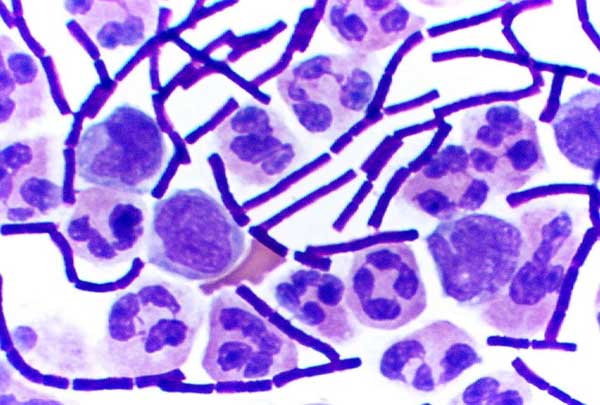
His early chemical studies led him to the investigation of fermentation and putrefaction, which he showed were due to living germs of various kinds. From this the demonstration that spontaneous generation does not take place was but a step. He showed that in highly-organized material, if the living germs are all destroyed, and if further access of germs be prevented, even though air may be allowed free access, fermentation or putrefaction does not take place. A piece of cotton wool, or a mere bending of the neck of the flask to keep germs from entering, is sufficient after sterilization to keep organic solutions quite sterile. The study of fermentations led Pasteur to studies in vinegar, wine, and beer. As the result of his successful investigation of ferments he was asked by the Empress Eugenie whether he would not now devote himself to the organization of great manufacturing industries for the benefit of France. He replied that he considered it quite beneath the dignity for a scientist to give up his time to commerce, and while he was willing that others should take advantage of his discoveries he wanted to push on to further scientific work.


This was a fortunate decision. His successful investigations led the French Government to appeal to him to study the silk-worm disease. This had produced such ravages in the silk industry in France that the end of it seemed not far off. Many expedients and supposed remedies had been tried. Fresh silk-worms had been brought from China on a number of occasions, but they succumbed to the disease, or their progeny became affected by it. Nothing availed and the case seemed hopeless. Pasteur found the silk-worm had been suffering from two diseases, pebrine and flacherie, and that the spread of these diseases could be prevented by careful segregation of healthy worms from those diseased. The announcement seemed too good to be true and was scouted. Pasteur demonstrated its absolute truth and his practical ability by taking charge of the villa of the French Prince Imperial, where the silk industry had been ruined. At the end of the year the sale of cocoons gave a net profit of 26,000,000 francs (over $5,000,000).


Naturally Pasteur proceeded to the study of diseases of animals and human beings. He demonstrated the bacterial cause of anthrax, which had made serious ravages among cattle in France. The organism was distributed by contact, real contagion. Earthworms, he showed, carry it up from the bodies of animals buried in shallow graves to infect grazing animals. He found further that he could by heat reduce the vitality of the anthrax microbe, so that it produced but a mild form of the disease which would protect cattle against the fatal form. Then he discovered the cause of fowl cholera. He cultivated it artificially and after a time his cultures would not produce the disease in fowl, though it served to protect them against injections of virulent cultures which would kill "control" fowl. The discoveries of vaccinating viruses for these two diseases saved France millions of dollars every year.


Pasteur proceeded with the development of bacteriology and its relation to disease. Having studied many cases of child-bed fever at the hospitals, he declared before a medical society that he had seen its cause, and challenged he drew a picture resembling a rosary of what we now know as a streptococcus, or chain coccus. He discovered other coccus (berry) forms of pathological microbes, some of them arranged in bunches like grapes, thence called staphylococci. Finally came his work on rabies. Unable to find the cause of the disease, which has not yet been discovered, he succeeded in making from the dessicated spinal cords of animals dead from the disease a vaccinating virus, which protects human beings bitten by a rabid animal again the development of rabies. This treatment met with great opposition. The Germans talked sneeringly of "a remedy of which we know nothing for a disease of which we know less". With time Pasteur's vindication came. The Russians, who suffered severely from rabies, from the bites of mad wolves on the steppes, found it of great service, and the tsar honoured Pasteur by a personal visit. Next the British in India found it wonder-working. Other countries adopted it. Finally the German Government established Pasteur Institutes, and acclaimed the discovery.


Many honours came to Pasteur. Besides the Rumford and Copley Medals (1856-1874), in 1868 the Austrian Government gave him a prize of 10,000 francs for this work on silk- worms; in 1873 the French Société d'Encouragement, a prize of 12,000 francs; the Russian Society of Rural Economy, a medal (1882); the Albert medal (1882); the Bressa Prize, 5000 francs (Turin Academy, 1888); the French Government, an annual pension of 12,000 francs (1874), increased in 1883 to 25,000 francs, and besides all the degrees of the Legion of Honour orders were conferred on him by Russia, Denmark, Greece, Brazil, Sweden, Turkey, Norway, and Portugal. Oxford gave him a D.C.L., Bonn, an honorary M.D., the English Royal Society, foreign membership, and the French Academy, its membership (1881). He was made Perpetual Secretary of the Academy of Sciences in 1887. There was a magnificent celebration of his jubilee on his seventieth birthday, 27 December, 1892, to which contributions were sent from every civilized country and all the great institutions of learning.

Pasteur's faith was as genuine as his science. In his panegyric of Littré, whose fauteuil he took, he said:
Happy the man who bears within him a divinity, an ideal of beauty and obeys it; and ideal of art, and ideal of science, an ideal of country, and ideal of the virtues of the Gospel.
These words are graven above his tomb in the Institut Pasteur. In his address Pasteur said further "These are the living springs of great thoughts and great actions. Everything grows clear in the reflections from the Infinite". Some of his letters to his children breathe profound simple piety. He declared "The more I know, the more nearly is my faith that of the Breton peasant. Could I but know all I would have the faith of a Breton peasant woman." What he could not above all understand is the failure of scientists to recognize the demonstration of the existence of the Creator that there is in the world around us. He died with his rosary in his hand, after listening to the life of St. Vincent de Paul which he had asked to have read to him, because he thought that his work like that of St. Vincent would do much to save suffering children.

Pasteur's principal works are: "Etudes sur Vin", (1866); "Etudes sur le Vinnaigre" (1868); "Etudes sur la Maladie des Vers à Soie" (2 vols., 1870); "Quelques Réflexions sur la Science en France" (1871); "Etudes sur la Bière" (1876); "Les Microbes organisés, leur rôle dans la Fermentation, la Putréfaction et la Contagion" (1878); "Discours de Réception de M.L. Pasteur à l'Académie Française" (1882); "Traitement de la Rage" (1886).