Showing posts with label meteorology. Show all posts

Wednesday, June 27, 2018

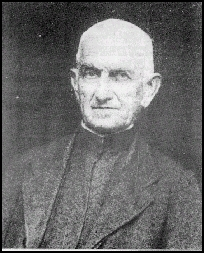
Father Benito Viñes


Spain/Cuba 1837-1893

Father Benito Viñes was a Jesuit famous for his meteorological work in Cuba. He came to Cuba to direct the Jesuit Meteorological Observatory of the College of Belén, but became famous for creating created the first system to accurately predict hurricanes. He became known as “Father Hurricane” and “Founder of Tropical Meteorology.” (2, 3)

The former director of the Observatory after getting financial backing to upgrade the Cuban Observatory had left for France… only for the ten-year Cuban uprising to start. He never actually returned to Cuba, though he did continue to publish papers on cloud structure and hurricanes. (5)

Fr. Viñes, on the other hand was experiencing the 1868 revolution in Spain that sparked the Cuban revolution, so he left for France and was ordained. He was then assigned to Cuba to the Observatory at the College of Benén in Havana. (5) Fr. Viñes arrived at the Cuban Observatory in 1870 and before the year was out, a hurricane arrived and ripped the metal roof off of his observatory. (4, 5) After this harrowing experience, and because of hurricanes’ effects on the populace, Fr. Viñes dedicated his life to understanding the patterns of hurricanes. (4, 7) Cuba was a useful post for this mission because of the frequency of storms passing through the Gulf. (5) He looked everywhere he could to understand hurricanes: books, newspapers, the ocean levels, previous storm paths, and hurricanes themselves. (4) He kept notes on anything to help him in his quest; clouds, conversations with ship captains, telegraphs, and newspapers. (5)

Eventually, Fr. Viñes decided he needed to a network of observers to gather more data including sailors and reporters. The network reported to him by telegraph, and he shared the data he gathered with other weather watching organizations. (4)  Fr. Viñes took exhaustive measurements; ten observations daily including, though not limited to, barometer readings, evaporation levels, rainfall amount, wind speed,and cloud formation. (1)

However, over the next five years no seriously threatening hurricanes arrived. By then, he was ready. On September 8th, 1875, Fr. Viñes received telegraph reports through the Spanish navy that a hurricane had made landfall at Puerto Rico. (4, 5) He published a forecast in the newspaper and warned ships not to sail north or east out of Havana so they wouldn’t sail straight into a hurricane. (4) The only American ship that ignored the warning sailed into the hurricane and all the crew perished, though no Cuban passengers were aboard. (5)

In 1876, based solely on his own measurements, Fr. Viñes predicted an incoming hurricane two days before it made landfall. (5) This success gave Fr. Viñes the fame he needed to acquire a series of tours across the affected areas in Cuba, Hispaniola, and Puerto Rico over the 1876-1877 winter. (5) His interviews with the victims and observation of the physical evidence afforded him enough information to publish his first book describing hurricanes. It was published in English as “Practical Hints in Regard to West Indian Hurricanes” by the US Army (3) While only fifteen pages long, it contains a wealth of information and practical advice regarding identification of an approaching hurricane and how to navigate away from it. (10) 

He also distilled his extensive knowledge of hurricane detection into a device known either as an ‘inner phase cyclonoscope’ or an ‘antilles cyclonoscope.’ which assists meteorologists in locating the eye of a hurricane (2, 4, 7) The cyclonoscope was somewhat like a slide rule and was composed of two cards. Based on cloud and wind observations at the meteorologist’s site, the inner card could be rotated and the direction of the hurricane’s center could be determined. (7, 11) This simple tool simplified his years of observation and experience into essentially a hurricane calculator.

Fr. Viñes started exploring the possibility of assembling a network of amateur storm contacts by telegraph to expand his data before the 1876 season had ended, enlisting the aid of the Spanish Navy’s observations through various contacts including Cuban railroad operators, US Army signal corps operators. (5) Fr. Viñes also contacted a Spanish Jesuit in charge of the Manila observatory and inspired him to start issuing hurricane warnings in the Philippines. (5) The Filipino contact network even outlasted and outperformed Fr. Viñes’ significant efforts. 

Fr. Viñes traveled to England in 1882 to acquire more sophisticated observation equipment and the head of the Jesuit Observatory at Stonyhurst, Stephen Perry, personally trained Fr. Viñes and calibrated the equipment. (5) Later that year, Fr. Viñes also observed the transit of Venus. (5)

After a tremendously destructive hurricane season in 1886, Fr. Viñes finally got his wish to have a warning network that stretched across the Caribbean. In 1887, the Cuban Chamber of Commerce pitched in, creating a telegraphic network which included Spanish, British, French, Venezuelan, and Dominican lands, among others. Additionally, they placed the entire network at Fr. Viñes’ disposal. (5) Telegraph, railroad, and steamship companies were willing to offer their service for free to assist his lifesaving ventures. (8) Fr. Viñes was able to use his telegraph network to send warnings out across the Caribbean when he found a storm was approaching. (7)

The US foremost expert on hurricanes, Everett Hayden, traveled to Cuba to learn from Fr. Viñes and Hayden later mentioned Fr. Viñes’ work several times in his book, ‘The Modern Law of Storms’ (5, 6) The ‘Law of Storms’ that preceded Hayden’s book, attempted to predict storm behaviour, including hurricanes, by using winds at sea level. (12) Fr. Viñes’ criticized this theory as far too simplistic in his final work: ‘Investigation of Cyclonic Circulation and the Transitory Movement of West Indian Hurricanes’. Rather than seeing the complex structure and variation in wind direction and speed at different altitudes, it assumes that the wind at sea level is indicative of the entire structure. Fr. Viñes’ theory includes wind and cloud throughout the cloud to create a three dimensional understanding of hurricane structure. (9) 

The 35 page ‘Investigation of Cyclonic Circulation and the Transitory Movement of West Indian Hurricanes’ was finished two days before he died and contained of Fr. Vines’ rules for predicting hurricanes. It noted intricacies such as how hurricane season operates on a a sort of mirrored schedule so the first week of June ramps up around the same rate as the end of October ramps down. (9) 

To pull a couple of examples, cirrus clouds were useful as a first indicator of a hurricane’s location because they “fired out from the center of the hurricane.” (2) The color and type of clouds also helped him determine where the hurricane was located. (5)

The most difficult piece to accurately predict was the “law of recurvature” which came about as a result of the general tendency of hurricanes to head west and then turn to the northeast after a period. Many hurricanes followed this rule, but a significant portion failed to follow this idea, with one actually turning south instead of north. (5, 6)

That being said, his theory was a tremendous leap forward for storm prediction . After his death and with the US occupation after the Spanish-American War, the Caribbean network of storm observers no longer answered to the head of the Belén College so the new director was unable to issue a hurricane warning for a 1900 cyclone. The storm made landfall in Galveston on September 8th as predicted by Fr. Viñes’ theories and because of the lack of warning, it became the deadliest hurricane in US history. (5)

Before Fr. Viñes, there was no way to forecasting hurricanes. Through careful observation and study he created a new field, enlisted the help of hundreds of others, and helped save thousands of lives.In addition to his two books, Fr. Viñes wrote various articles on the subject of hurricanes that illuminated hurricane structure and motion. (4) Fr. Viñes was so influential that for a while, Hurricanes were just ‘Viñesa’ followed by a number, in honor of his work. Sadly, this didn’t last and his name has fallen into unwarranted obscurity. (2) 

Works Referenced

  1. Father Benito Viñes: The 19th Century Life and Contributions of a Cuban Hurricane Observer and Scientist by Luis E. Ramos Guadalupe (review) https://muse.jhu.edu/article/640782 
  2. Father Hurricane: A genius of meteorology  https://www.miamiarch.org/CatholicDiocese.php?op=Article_131017125417303 
  3. The Legacy of Fr Benito Vines http://www.actforlibraries.org/the-legacy-of-fr-benito-vines/ 
  4. 140th Anniversary of first hurricane forecast https://noaahrd.wordpress.com/2015/09/15/140th-anniversary-of-first-hurricane-forecast/ 
  5. Viñes Martorell, Carlos Benito José https://www.encyclopedia.com/science/dictionaries-thesauruses-pictures-and-press-releases/vines-martorell-carlos-benito-jose 
  6. The Modern Law of Storms https://books.google.com/books?id=5BLkVqGRrg8C&pg=PA181&lpg=PA181&dq 
  7. The Hurricane Man in Havana https://www.irishtimes.com/news/the-hurricane-man-in-havana-1.112176 
  8. Hurricanes: A Reference Handbook https://books.google.com/books?id=aJz0y__JHsYC&pg=PA228&lpg=PA228&dq
  9. Investigation of Cyclonic Circulation and the Transitory Movement of West Indian Hurricanes https://books.google.com/books/about/Investigation_of_the_Cyclonic_Circulatio.html?id=Tt4lAAAAMAAJ&printsec=frontcover&source=kp_read_button#v=onepage&q&f=false 
  10. Practical Hints in Regard to West Indian Hurricanes https://books.google.com/books?id=F8oOAAAAYAAJ&printsec=frontcover#v=onepage&q&f=false 
  11. The Century Dictionary and Cyclopedia https://books.google.com/books?id=oiFJAQAAMAAJ&pg=PA1423&lpg=PA1423&dq=
  12. The Law of Storms https://www.gutenberg.org/files/55774/55774-h/55774-h.htm 


Wednesday, June 13, 2018

Gyula Fényi

Hungary 1845-1927


Gyula Fényi, also known as Julius Fényi, was born in Sopron Hungary, in 1845 and joined the Jesuit order in 1864. (1)  His first name, Gyula, or Julius, was actually the name he took upon becoming a Jesuit. (2) As a Jesuit, he learned natural science in addition to his theological and humanities studies. (2) Fényi hoped to become a missionary, but that was never to be and instead he joined the Kalocsa Observatory.(2)

After some years he became the director of the Observatory, serving from 1885 to 1913 and taking solar observations regularly with a spectrometer (1). It was a humble post, not at all like the setting he had dreamed of, and longed for. (2) But he was obedient to his superiors and faithfully recorded solar measurements as was his duty. The Observatory had been commissioned by the Archbishop of Kalocsa, Ludwig Haynald, in 1878 so the structure itself was relatively new, though the instruments were moderate, at most. (1, 2)

Fényi kept detailed records of his solar observations for thirty two years, though that hardly conveys his dedication to this seemingly monotonous, or onerous, task. (1) A large component of Fényi’s work was creating detailed “almost artistic” drawings filled with meticulous detail that many other astronomers neglected. (2) These drawings are of special importance as they are from the final period in which it was necessary to create scientific drawings, as cameras were not yet readily available. (2)

Solar research, and astronomy in general, was a common theme in the Jesuit order. (2) They often had to make do with relatively limited equipment. (2) Fényi decided he was going to be deeply involved in his work, making observations from 1885 until 1913 in a highly regulated manner. (2) His work included datasheets as well as drawings. He did not simply record numbers, but spent long hours creating amazingly intricate sketches. (2) The general policy was to ignore any solar prominence that appeared to be less than thirty seconds, about eight tenths of a percent of a degree, yet Fényi was willing to include even such minutiae, thereby giving us an insight into the sun’s general slightly uneven shape. (2)

His work brings to light what the sun did over those three decades, providing examples of all the solar prominences, loops of the sun extending out into space, and showing the complex detail in each occurrence. (2) As a result, Fény’s data was extremely valuable. Indeed, it formed a third of Pettit’s basis for his statistical analysis of solar prominences in the 1920s. (1)

In addition to his solar recordings, which he documented several times a day, Fényi also observed sunspots and was also a meteorologist. Fényi theorized the solar prominences he observed affected terrestrial weather, an idea which has ultimately been borne out. (2) Fényi published his various theories and observations in a variety of magazines, eventually creating over 200 papers to catalogue his knowledge. (1) While he was conducting solar observations Fényi left Kalocsa only once for an extended period, in August 1905 to observe a total solar eclipse in Granada, Spain. (1)

To honor his prodigious work, the International Astronomical Union named a lunar crater ‘Fényi’. (1) His extensive drawings are housed in the Hungarian Sciences Academy, in Debrecen Hungary. His work is monumentally inspiring because it demonstrates the possibilities with perseverance and enthusiasm for your work. His life is also an important lesson to know when to ignore your dreams of glory and adventure and excel at your job, whatever that might be.

Works Referenced

  1. Short Biography of Julius Fényi http://fenyi.solarobs.csfk.mta.hu/fenyi.html
  2. The “Light” Phenomenon: Gyula Fényi and Jesuit Astronomy II. part https://translate.google.com/translate?hl=en&sl=hu&u=https://www.csillagaszat.hu/csilltort/magyar-csillagaszattortenet/magyar-19-20-sz-csillagaszata/a-8222-fenyi-8221-jelenseg-fenyi-gyula-es-a-jezsuita-csillagaszat-br-ii-resz/&prev=search  
  3. What is a solar prominence? https://www.nasa.gov/content/goddard/what-is-a-solar-prominence 

Thursday, May 4, 2017

Angelo Secchi

Astronomer, b. at Reggio in Emilia, Italy, 18 June, 1818; d. 26 Feb., 1878. He was the son of a joiner, Antonio Secchi. His mother (née Luise Belgieri), a practical middle-class woman, had her son taught even sewing and knitting. After studying for several years in the gymnasium kept by the Jesuits in his native town, Secchi in his sixteenth year entered the Jesuit Order at Rome on 3 Nov., 1833. After completing his humanistic and philosophical studies at the Roman College, on account of his extraordinary talent for the natural sciences he was appointed tutor of mathematics and physics at Rome in 1839, and professor of physics in the Jesuit college at Loreto in 1841. 

In the autumn of 1844 he began the study of theology under the most distinguished professors (Passaglia, Perrone, Patrizi, Ant. Ballerini), and on 12 Sept., 1847, was ordained priest by Mgr Canali. At the outbreak of the Roman revolution in 1848, he had to leave Rome with all his fellow-Jesuits. Accompanied by his teachers, de Vico and Pianciani, he travelled first through Paris to England, where he resided for a short period at Stonyhurst College. On 24 Oct., 1848, he sailed with twenty other exiled Jesuits from Liverpool to the United States, which he reached on 19 Nov. Secchi's companion, de Vico, renowned as the discoverer of several comets, had succumbed in London to typhus fever contracted in consequence of the hardships of the journey, and in death was honoured in an enthusiastic notice by John Herschel in the "Monthly Notices of the Astronomical Society". Secchi settled in Georgetown, near Washington, District of Columbia, where the American Jesuits conducted a university and an observatory (then under the care of Father Curley). Here he brought his suddenly interrupted theological studies to a close by a brilliant examination for the doctorate, and joined the faculty of the university as professor of physics. 

Astronomy as yet claimed little of his attention, as he wished to perfect himself as a physicist. Of decisive importance for his later achievements in the domain of meteorology was his close friendship with the celebrated hydrographer, meteorologist, and astronomer, M.F. Maury, who lived in Washington. To this friendship, through the medium of Secchi, Italy owed its first acquaintance with the epoch-making discoveries of the great American, whose valuable services in marine meteorology and navigation cannot be overrated. In later years Secchi dedicated to his friend, "as a token of our mutual friendship", his work, "Sui recenti progress! della Meteorologia" (Rome, 1861), and on his death in 1873 gave him an enduring memorial in a warm and touching necrology (cf. "Bullettino meteoroloigco del Collegio Romano", XII, Rome, 1873). 

Contrary to expectation, Secchi's residence at Georgetown soon came to an end, when the Roman revolution was forcibly terminated by the French general, Oudinot. On 21 September, 1849, he had to begin his return journey to England, and in 1850 he undertook the direction of the observatory in the Roman College, for which post his teacher de Vico had warmly recommended him on his death-bed. Because of the instability of the foundation walls and the want of modern instruments, Secchi was at first (1850-52) compelled to be content with his investigation concerning the radiation of the sun, the rings of Saturn, and the planetoids. By the end of 1852, however, his energy had succeeded in having a new observatory prepared on the firm vault of the Church of St. Ignatius in the Roman College, and fitted with new instruments. From this time date Secchi's brilliant scientific activity and the European fame of his observatory. On account of the extraordinary variety of his investigations, we must distinguish three persons in Secchi; the astronomer, the meteorologist, and the physicist.

As an astronomer Secchi began with a revision of the great catalogue of the doubgstars made by W. Struve at Dorpat (1824-37). After seven years of strenuous labour he was able to print the chief portion of his results in the "Memorie del Collegio Romano" (Rome, 1859) with 10,000 verified double stars; this was continued in two supplements, published by his assistant in 1868 and 1875. One of the best calculators of the courses of the double stars, the astronomer Doberck of Dublin, has to a great extent taken Secchi's catalogue as the basis of his calculations. Hand in hand with this gigantic task went his study of the physical conditions of the planets Saturn, Jupiter, and Mars, and of the tour great moons of Jupiter. On the discovery of spectrum analysis by Kirchhoff and Bunsen (1860), Secchi was the first to investigate closely the spectra of Uranus and Neptune. From 1852 the moon also became the subject of his investigations. He made so exact a micrometrical map of the great crater of the moon (Copernicus) that the Royal Society of London had numerous photographic copies made of it, and had them distributed among those interested in astronomy. All Secchi's studies on the planets were included in his great work, "II quadro fisico del sistema solare secondo le piu recenti osservazioni" (Rome, 1859). However, the chief object of his study was the sun, with its wonderful faculae and spots, to which he devoted from the very beginning his incessant attention, industriously registering his observations. Epoch-making for the study of the sun was his expedition to Spain to observe the total eclipse of 18 July, 1860, because by him and his fellow-observer it was first definitively established by photographic records that the corona and the prominences rising from the chromosphere (i.e. the red protuberances around the edge of the eclipsed disc of the sun) were real features of the sun itself, and not optical delusions or illuminated mountains on the moon. When, on the occasion of the eclipse of the sun of 18 August, 1868, the French astronomer Pierre Janssen demonstrated practically the possibility of studying the protuberances even in clear daylight by certain manipulations of the spectroscope (this had been independently shown in theory by Norman Lockyer in London), Secchi was one of the first to keep a regular diary of all phenomena connected with the protuberances and of all other data concerning the physics of the sun. He thus laid the foundation of the unique "Sun Records", which have been continued to the present day; no other observatory in the world possesses a work of this character which has been kept so long (cf. Millosevich, "Commemorazione del P. Secchi" Rome, 1903, p. 20).

Secchi also took part in the Italian expedition to observe the eclipse of the sun on 22 Dec., 1870, in Augusta, Sicily. Although his observations were not favoured by the weather, he was repaid for this journey by the discovery of what is called the "flash spectrum" which is considered a direct proof of the existence of a "reverting stratum" ("umkerenden Schicht"), a mixture of glowing metal vapours which lies over the photosphere and by its elective absorption produces the dark Fraunhofer lines in the sun's spectrum. During this same eclipse Professor Young of the American expedition saw clearly in his spectroscope the bright lines of the flash spectrum. Secchi published the results of his own investigations and those of others in a French work long regarded as standard: "Le soleil. Expose des principales découvertes modernes" (Paris, 1870). The second appeared in two volumes as an edition de luxe (Paris, 1875-77), after the German translation by Schellen had appeared under the title "Originalwerk bezuglich der neuesten vom Verfasser hinzugefügten Beobachtungen u. Entdeckungen" (Brunswick, 1872). In the study of the fixed stars Secchi distinguished himself not only by the invention of new instruments (heliospectroscope, star spectroscope, telespectroscope), but especially by the discovery of what are known as the five Secchi types of stars deduced from about 4000 spectra of stars, on which he had been at work since 1863. The unexpected discovery that all fixed stars may, according to their physico-chemical nature, be reduced to a few spectral types, was an achievement of as great significance as Newton's law of gravitation. This great law was confirmed by the works of d'Arrest of Copenhagen and E. C. Pickering of Harvard (in his well-known "Draper Catalogue"). When H. C. Vogel of Potsdam (1874) changed Secchi's purely empirical division of the stars into a genetic development of the stars from type to type, the theory of the unity of the world and of the identity of the fixed stars and the sun received most profound scientific demonstration and confirmation. Secchi published his views concerning the world of stars in "Le Stelle" (Milan, 1877), which appeared in German as the thirty-fourth volume of the "Internationale wissenschaftliche Bibliothek" (Leipzig, 1878). Passing over his other investigations concerning comets, groups of stars, and nebulous stars, we may remark in passing that Schiaparelli's celebrated treatise on the relations between the groups of asteroids and comets was published in Secchi's "Bullettino meteorologico" (Rome, 1866).

As a meteorologist, Secchi was, as already said, an enthusiastic disciple of the American M.F. Maury, whose discoveries he utilized and continued with uninterrupted zeal throughout his life. He turned his attention to the most varied phenomena, e.g. the aurora borealis, the origin of hail, of quicksand, the effects of lightning, the nature of good drinking water, etc. He was the first to ascribe, on the basis of ingenious experiments, the telluric lines of the spectrum of the sun to the influence of atmospheric vapour. Secchi especially studied the "Roman climate". Still greater interest for him had the investigation of terrestrial magnetism and terrestrial electric currents. He was the first to organize a systematic observation of these currents as an eventual means of prognosticating the weather, and worked with good results in union with other observatories with similar aims (e.g. Greenwich, England). The Magnetic Observatory, arranged and fitted by Secchi in 1858, was for a long period the only one in Italy. Commissioned by Pius IX, who promoted all his undertakings with princely liberality, he made long travels through France and Germany in 1858 to procure the most suitable projection lenses for the lighthouses of the papal harbour towns. He secured, however, his greatest fame by his invention of the "Meteorograph", a skilfully-constructed weather machine, which works day and night and records the curves of atmospheric pressure, temperature, rainfall, rainy season, . strength of wind, and relative dampness of the atmosphere. In its original form the "Meteorograph" was extremely simple, but in 1867, through the munificence of Pius IX, it received a magnificent case, and in this form claimed the admiration of everybody at the Paris Exhibition of 1867. It created a great sensation, and Secchi received as prize of honour from the hands of Napoleon III the large gold medal and the insignia of Officer of the Legion of Honour; from the Emperor of Brazil he received the Order of the Golden Rose. An exact description of the apparatus with illustrations is given in the brochure, "II meteorografo del Collegio Romano" (Rome, 1870).

As physicist Secchi was a disciple of Piancini, and devoted himself from the beginning preferentially to astrophysics, then to a great extent regarded as of secondary importance. American readers will be interested to learn that Secchi contributed one of his best works on "Electrical Rheometry" to the "Smithsonian Contributions to Knowledge", III (Washington, 1852). If we may include in physics geodetic measurements, the calculation of the trigonometric basis on the Appian Way for the future triangulation of the Papal States especially deserves honourable mention. By discharging this tedious and difficult task on the commission of the papal government between 2 Nov., 1854, and 26 April, 1855, he supplied one of the most important fundamental data for the subsequent gradation of Southern Europe. His results were edited in model fashion in the great work, "Misura della Base trigonometriea eseguita sulla Via Appia" (Rome, 1858). He acquired world-wide fame as a physicist by his greatly-admired work, "Sulla unitá delle forze fisiche" (Rome, 1864), which attempts to trace all natural processes to kinetic energy. With astounding acumen he here combines in a uniform picture all the results of earlier natural science, and anticipates and even in certain ways outstrips later investigations and views. The second edition (2 vols., Milan, 1874) was translated into French, English, German, and Russian. 

Secchi was, however, too much of a philosopher and a Christian to venture, after the fashion of more modern Materialists and Monists, to extend his "kinetic atomistics" to the domain of the soul and the intellectual. On the contrary, his whole natural system was founded on a theistic basis, inasmuch as he traced back the world of matter and its motion to a Divine creative act. In two magnificent lectures, which he published at the beginning of his "Lezioni elementari di fisica terrestre" (Turin and Rome, 1879) and independently in a German translation by Dr. Güttler (Leipzig, 1882; 4th ed., 1885), he gave a more than eloquent expression to his Christian view of life. After the capture of Rome by the Piedmontese in 1870, his firmness of faith and his fidelity to the pope and the Jesuit Order were more than once put to a rude test. But no enticements, however alluring, of the new rulers (e.g. the general supervision of all the observatories; the granting of the senatorial dignity with express release from the constitutional oath) could induce him to falter in his loyalty or fidelity. The new authorities did not venture to expel him from his laboratory, and he continued his investigations until he succumbed to a fatal disorder of the stomach.

Urbain-Jean-Joseph Le Verrier

An astronomer and director of the observatory at Paris, born at Saint Lô, the ancient Briodurum later called Saint-Laudifanum, in northwestern France, 11 May, 1811; died at Paris, 25 September, 1877. 

From 1831 the talented youth studied at the Ecole Polytechnique with such success that at the end of his course he was appointed an instructor there. While connected with the school he showed a strong predilection for mathematical studies, above all for such problems as Laplace had so skilfully treated in the "Mécanique céleste". Le Verrier soon received an appointment in the government administration of tobaccos; later he became a professor at the Collège Stanislas at Paris, and finally, in 1846, he was appointed professor of celestial mechanics in the faculty of sciences at the University of Paris. 

As early as 1839 he published a calculation of the variations of the planetary orbits for the period of time from the year 100,000 B.C. to the year 100,000 A.D., in which he proved by figures the stability of the solar system, which Laplace had only indicated. His calculation of the transit of Mercury of 1845 and of the orbit of Faye's comet demonstrated his ability in that province in which he was soon to gain an almost undreamed-of triumph from the discovery, by means of theoretical calculations, of the planet Neptune. The variations observed in Uranus, up to then the most distant planet known, led him to look for the cause of the disturbance outside of its orbit. His calculations enabled him to specify the very spot in the heavens where the body causing the perturbations in question was to be sought, so that the astronomer Galle of Berlin was able by the aid of his specifications to find the new planet at once upon looking for it, 23 September, 1846. In this way Le Verrier gave the most striking confirmation of the theory of gravitation propounded by Newton. 

He now became a member of the Academy of Sciences, in 1852 was made a senator, and after Arago's death (1853) was appointed director of the Paris Observatory, a position he held with a short interruption (1870-73) until his death. Under his skilful and prudent administration the observatory made important progress both as to equipment in instruments and, more particularly, as regards preeminent scientific achievements of which Le Verrier was the inspiration. He was the founder of the International Meteorological Institute and of the Association Scientifique de France, being the permanent president of the latter. He also gave careful attention to the geodetic work which was intended to give the most complete presentation possible of the configuration of the earth. The instruments of precision with which, in order to attain this end, he equipped the observers were remarkably complete.

His most important work, however, was the construction of tables representing the movements of the sun, moon, and planets: "Tables du Soleil" (1858); "Tablesde Mercure" (1859); "Tables de Vénus" (1861); "Tables de Mars" (1861); "Tables de Jupiter" (1876); "Tables de Saturne" (1876); "Théorie d'Uranus" (1876); "Théorie de Neptune" (1876); "Tables d'Uranus" (1877). All these publications were preceded by theoretical investigations: "Théorie du mouvement apparent du Soleil" (1858); "Théoriede Mercure" (1859); "Théorie de Vénus" (1861); "Théorie de Mars" (1861), etc. Considerations similar to those which led to the discovery of the planet Neptune caused Le Verrier to infer the existence of a planet between Mercury and the sun. But far greater difficulties both were and are here connected with actual discovery than was the case with Neptune. However, Le Verrier on this occasion also showed his masterly skill in handling the various problems of the reciprocal perturbations of the planets and other heavenly bodies, as is shown in his writings on the subject: "Formules propres à simplifier le calcul des perturbations" (1876); "Variations séculaires des orbites" (1876), etc.

With all his erudition Le Verrier was a zealous adherent and true son of the Catholic Church; even as deputy of the Assembly he openly acknowledged and defended his Catholic faith before all the world. He was also a ready speaker, one in no way discomposed by the attacks of opponents, for he knew how by profound and logical statements to convince his hearers quickly. When dying he said in the words of the aged Simeon: "Nunc dimittis servum tuum, Domine, in pace". 

Those who spoke at the funeral of this remarkable man could truthfully assert that the study of the star-worlds stimulated in him the living belief of the Christian to new fervour. Even in the sessions of the Academy he made no concealment of his faith nor of his childlike dependence on the Catholic Church. When, on 5 June, 1876, he presented to the Academy his completed tables for Jupiter, the result of thirty-five years of toil, he emphasized particularly the fact that only the thought of the great Creator of the universe had kept him from flagging, and had maintained his enthusiasm for his task. He also on this occasion spoke strongly, like his colleague Dumas, against the materialistic and sceptical tendencies of so many scholars. 


To Le Verrier is due the organization of the meteorological service for France, especially the weather warnings for seaports, by which today the weather for the following twenty-four hours can be announced with much probability, a matter of especial importance for agriculture and shipping. The "Annales de l'Observatoirede Paris", published during the administration of Le Verrier, consist of thirteen volumes of theoretical treatises and forty-seven volumes of observations (1800-1876). At the time of his death he was making plans for equipping the observatory with a large new telescope, and it may be that the stimulating influence exerted in this direction contributed not a little to the result that everywhere, particularly in North America, generous-minded patrons appeared who, each in his own land, gave the money necessary to obtain larger instruments. On 27 June, 1889, a statue of the distinguished savant which cost nearly 32,000 francs ($6400), was erected by subscription in front of the observatory where he had laboured for so many years.