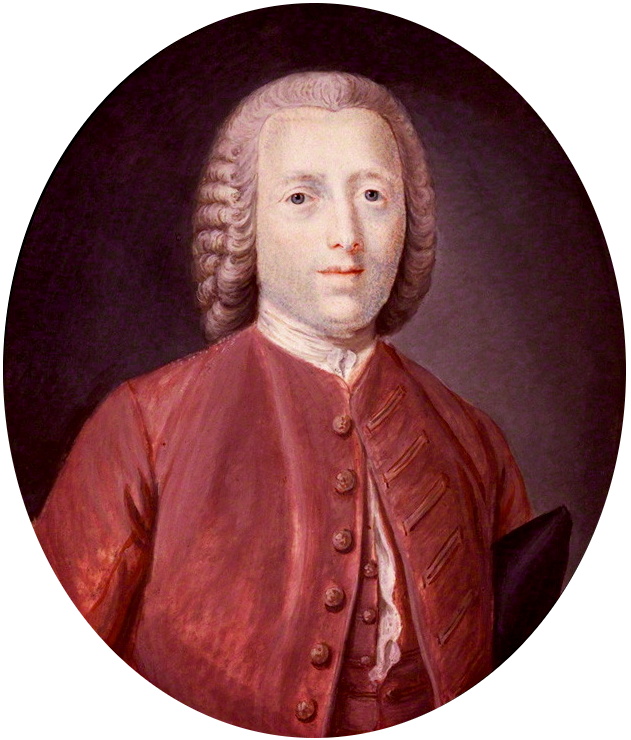
England 1214-1294
Roger Bacon, also known as the Doctor Mirabilis, or Wonderful Doctor, was born in Ilchester, Somersetshire, England in the early 13th century into a wealthy family, and was exposed to geometry, music, astronomy, the literary classics of the 13th century, and arithmetic early on. (1) When he was older, he pursued higher education at Oxford and in Paris, joined the Franciscans, and went on to work at Oxford, a school run by the Franciscan order.(2)
Beginning in 1247, Bacon devoted significant periods of time to experimental science. According to the Jacques Maritain Center, “he was the most important cultivator of the natural sciences who appeared during the Middle Ages.” (3) He was suspicious of rational deduction, preferring to “confirm experiences.” He carried out several in-depth experiments on light and rainbows, as well as several thought experiments on other topics. (1)
For some years, starting in 1260, the Franciscan Order prohibited its members to publish works outside of the order unless the work went through a detailed process, as a way to prevent the spread of heresy. The order was still fairly young, and it made sense to try to fix these problems internally. By 1266, however, the rule around publishing works had changed, which allowed Bacon to publish his books for the general educated public. (2)
Bacon wrote several works, but the most famous are his “Opus Majus” and the “Compendium philosophiae”. He was a philosopher, and within the Opus Majus he wrote at length about “the relation between theology and philosophy, ... that all science are founded on the sacred sciences, especially on Holy Scripture, [and on] the necessity of studying zealously the Biblical languages, as without them it is impossible to bring out the treasure hidden in Holy Writ.” (2)
The Compendium contained “an important section on his theory of language and translation” which included Bacon's belief that “name and signification are imposed on the present object, and these are opened to past and present on the basis of verbal tense.” Theoretically, this would result in less ambiguity in conversation, or at least less ambiguity if people pay strict and careful attention to how they phrase things. (4)
He also studied optics and alchemy, and was the first European to describe the process of making gunpowder (1). Bacon was the first European to propose the idea of flying machines, although he envisioned flying machines which relied on flapping mechanisms, not the stiff wings used in modern airplanes. This, one might argue, is because the scientists in those time periods had to rely on what observation they could capture at the speed of the human eye, and what those observations indicated was that birds flapped their wings to move forward and to stay up in the air. The observations didn’t capture the thermals (practically invisible to the human eye) that birds of prey used to make flight easier, and they didn’t capture the way that some birds shift between soaring on extended wings and flapping their wings to keep moving.
Bacon also proposed the idea of motorized ships and carriages, which is especially interesting when one considers that the electric motor was not invented until five and a half centuries later in 1760. This meant that Bacon was basing his ideas of motorized carriages and boats off of the types of motors used for watermills and windmills.
Roger Bacon is an excellent example of a man who worked on both the science of this world, experimental science, and the science that deals with the next world, theology. His extensive work in such wide-ranging fields truly earns him the title “Wonderful Doctor”
Works Referenced
- Roger Bacon: English Philosopher and Scientist https://www.britannica.com/biography/Roger-Bacon
- Roger Bacon http://www.newadvent.org/cathen/13111b.htm
- The Experimental Sciences -- Albertus Magnus -- Roger Bacon https://maritain.nd.edu/jmc/etext/staamp3.htm
- Roger Bacon https://plato.stanford.edu/entries/roger-bacon/